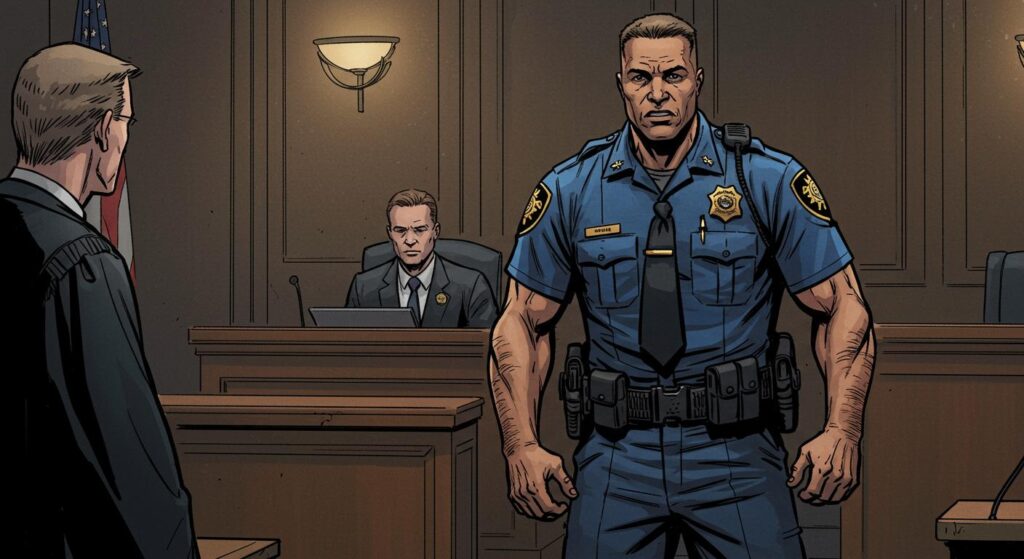
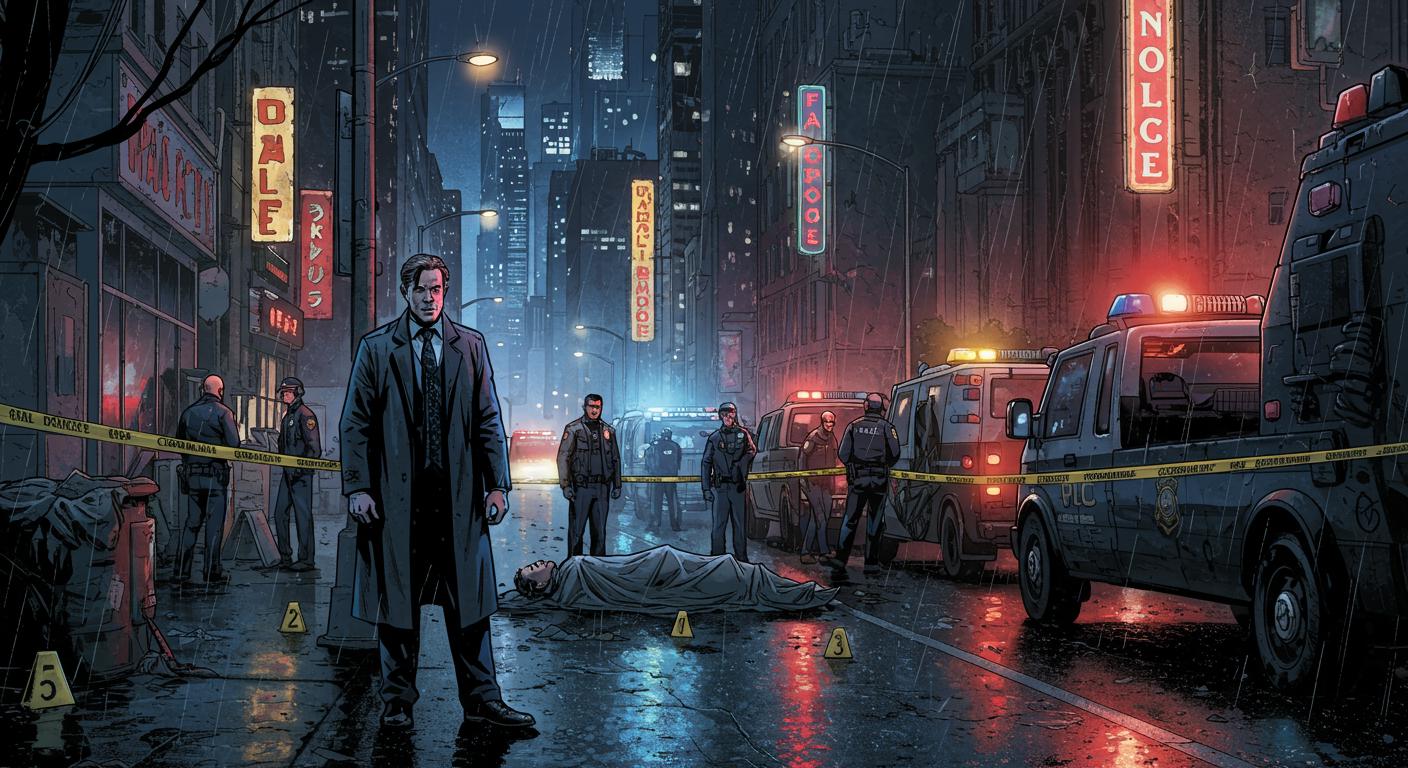
Sometimes, reality feels suspiciously scripted, as if fate itself is dabbling in deadpan humor. Case in point: an Adams County Coroner investigator, on the way to a homicide scene in Aurora, Colorado, fatally hits a pedestrian. If you’ve ever pored over the more peculiar footnotes of occupational hazards, this one deserves its own appendix. As documented by 9NEWS, it’s an event that folds coincidence and tragedy into a single, somber drive—a coroner en route to investigate a death ends up causing one instead. You can almost hear the universe muttering, “I’ll see your irony, and raise you.”
The Blurred Lines of Unintended Consequence
According to Aurora Police, the crash occurred near East Colfax Avenue and Scranton Street just before 11 p.m. The coroner investigator, presumably halfway into a mental checklist of crime scene protocols, encountered a pedestrian crossing Colfax Avenue outside of the crosswalk. Officers, as described by 9NEWS, provided aid until medics arrived, yet the pedestrian was ultimately pronounced dead at the hospital.
Police relayed that speed did not appear to be a factor, and the collision remains under investigation. The Denver Office of the Medical Examiner—a department perhaps all too familiar to the driver—will identify the victim. No word yet on how the coroner’s office handles case files where their own investigator is at the center of the event. Has any file ever been marked “For Internal Use (and Existential Dread) Only?”
As someone who’s traced bizarre bureaucratic overlaps through historical archives, I find this incident reminiscent of those moments where the observer inadvertently becomes the subject—think photographers in turn-of-the-century war zones struck by stray fire, or archivists whose collected works outlive their own residencies. Occupational hazard, meet existential punchline.
Accidental Deaths, Professional Proximity, and Where the Lines Blur
Not that fatal vehicle-pedestrian accidents are in any way rare—just rarely so eerily thematic. For context, the collision in Aurora occurred hot on the heels of another, more straightforward tragedy in Anderson, South Carolina. FOX Carolina reports that Wesley Vernard Porter, age 70, was struck and killed on East River Street. The Anderson County Coroner’s Office happened to both report and investigate, but unlike Aurora, there’s no extra twist of staff enmeshed in tragedy. Still, I can’t help but picture the circuitous path a case file must travel when coroner officials oversee incidents among their own—does it hit a little closer to home when your office ends up in your own paperwork?
The boundaries grow even stranger in rare, more sinister cases like the recent fatality in Bury, England. Manchester Evening News details how 19-year-old Brandon Kershaw was deliberately struck and killed in what police have called a “targeted attack.” Here, the overlap of homicide scene and traffic fatality becomes explicit and chilling, though with a very different intention than in Aurora. Again, the coroner—the one usually called after the sirens—carries the burden of both interpreting and, indirectly, participating in the city’s relentless ledger of loss.
The Strange Gravity of Occupational Irony
Returning to Aurora, the image lingers: a coroner investigator, prepared to catalog the echoes of a homicide, is instead thrust into the role of subject rather than chronicler. Police specified that the pedestrian wasn’t in a crosswalk, a mundane yet consequential detail. Speed wasn’t considered a factor, and—pending further investigation—responsibility may lean toward tragic accident rather than negligence. But for those who spend their days reconstructing other people’s worst moments, what’s the mental distance from observer to participant? In the annals of occupational ironies, how many other professions find the plotlines folding so sharply in on themselves?
Is it simply the randomness of the open road? Or does this suggest something deeper about the unpredictable collision of routine and disaster, especially for those who make a living cataloging human misfortune?
Professional Detachment, Existential Collision
These three incidents—the grim convergence in Aurora, the procedural aftermath in Anderson, and the deliberate violence in Bury—offer a cross-section of how professionals often find themselves tangled in the unpredictable threads they usually untangle for others. For coroners, police, and investigators everywhere, there’s often a quiet understanding that the line between work and the world outside can sometimes dissolve, even without cosmic prompting.
Maybe it’s just coincidence, or perhaps there’s a lesson rattling around somewhere in these strange recursions: none of us are so far removed from the stories we observe or report, no matter our professional detachment—or how well we think we know the path ahead.
For anyone mapping out life’s oddities, this is one to file under “grim symmetry.” Because, really… you can’t make this stuff up.