It isn’t often that an everyday headline could pass for something out of a satirical periodical, but the recent news from Chester, New York fits the bill: a town’s highway superintendent, John Reilly III, allegedly shot a lost DoorDash driver who stopped to ask for directions. When a “wrong address” collides with a drastically wrong reaction, things take an abrupt detour from minor inconvenience to critical injury.
Shot for Directions: The Delivery Gone Sideways
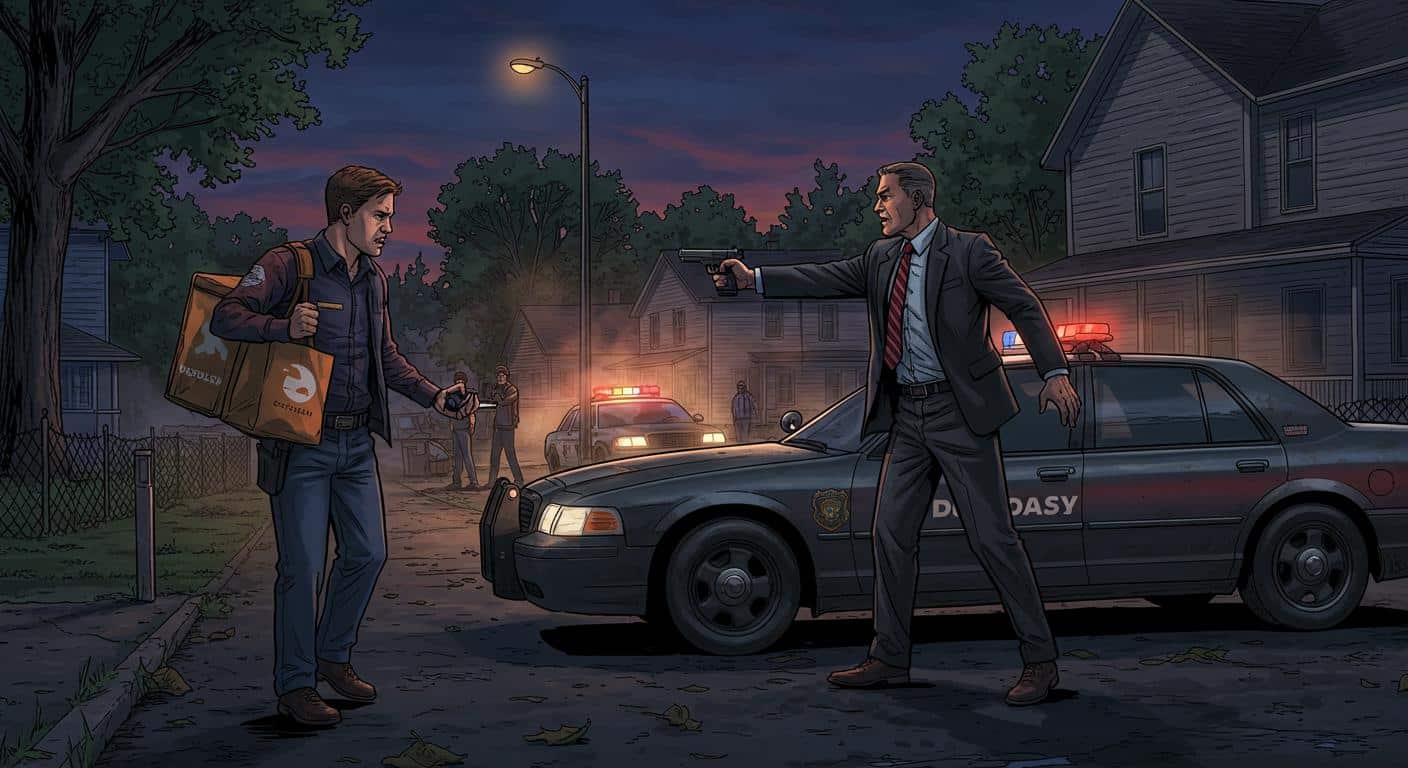
Piecing together the narrative, ABC News details that the 24-year-old DoorDash driver—recently relocated from West Africa to Middletown—was delivering food late Friday in Chester, a rural area about 50 miles north of Manhattan, when GPS failed him. While seeking his delivery address along Valerie Drive, the driver approached several homes asking for directions.
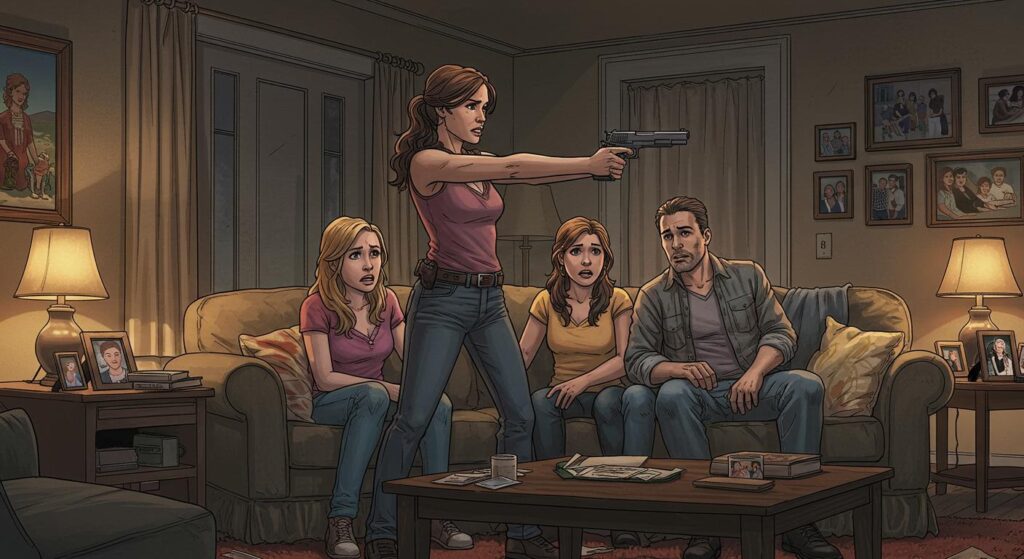
It was at the house of John Reilly III—the town’s highway superintendent and, as noted by iHeartRadio, a federally licensed firearms dealer—where things took a drastic turn. According to state police statements cited by ABC News, Reilly instructed the driver to leave his property. As the driver attempted to leave in his car, Reilly allegedly fired multiple shots, hitting him once in the back and causing serious—but not fatal—injuries.
Describing the aftermath, a relative of the driver told WABC (as highlighted by CNN) that he was so frightened he first stopped at a gas station before driving all the way home to Middletown. The victim remains hospitalized following surgery, but is in stable condition with a long recovery ahead.
Authorities confirmed to ABC News that Reilly faces charges of first-degree assault, second-degree criminal possession of a weapon, and possession of a firearm. He was arraigned and is being held pending a preliminary hearing, scheduled for May 9.
Patterns, Ironies, and the Growing List of “Wrong Door” Shootings
CNN draws direct parallels to other recent cases where innocent mistakes—ringing the wrong doorbell, pulling into the wrong driveway—resulted in violent responses. The outlet notes that the shooting of Kaylin Gillis in New York and Ralph Yarl in Kansas City both ended with criminal convictions for the shooters. In a detail highlighted by iHeartRadio, New York State Police Captain Joseph Kolek emphasized the DoorDash driver “had no malicious intent and was simply trying to make a delivery.”
There’s a certain irony in the specifics: Reilly is not only a public official, tasked with maintaining roads and, by extension, helping people get where they need to go, but also a firearms dealer. The very person you might optimistically expect to provide directions—at minimum, a non-ballistic refusal—responded instead with gunfire.
DoorDash, in a statement cited by ABC News and CNN, called the incident a “senseless act of violence,” and reiterated that “no one should ever fear for their safety just for trying to make deliveries in their neighborhood.” The company expressed devastation over the incident and pledged to work with law enforcement as the investigation continues.
Community Response and the Aftermath
Chester Town Supervisor Brandon Holdridge said in a statement published by ABC News and CNN that the board is “deeply troubled by what has been reported so far,” and expressed hope for the driver’s recovery. Holdridge also indicated that, due to the nature of the case, Chester police recused themselves and allowed New York State Police to handle the investigation to avoid conflicts of interest.
The entire episode prompts a tired kind of astonishment. The driver reportedly approached multiple homes beforehand, and as far as has been reported, all prior encounters ended with confusion or annoyance, but nothing more. Was it simply luck, timing, or individual temperament that determined which homeowner reacted with suspicion and violence?
Final Thoughts: Directions, Defenses, Directions Again
There’s an uneasy lesson in this: a universally familiar situation—being lost, knocking to ask a question, hoping for a house number or street sign—now risks not just embarrassment, but trauma and legal fallout. The contrast is stark: Reilly spent his career in public service and firearms sales, professions dealing in both guidance and defensive tools. What does it say about the current state of neighborliness when those collide, and a lost delivery driver is met with bullets instead of directions?
Was there ever a path where this night ended with a quick explanation and some delivered fries? Or has something shifted in the calculus of neighborly risk, where uncertainty defaults to armed confrontation?
Chester’s “wrong turn” looks set to become a cautionary tale for the age—a story that may surface the next time a navigation mishap is in the headlines. Somewhere, amid all this, a perfectly good meal almost certainly went cold, sidelined by the strange geography of fear.