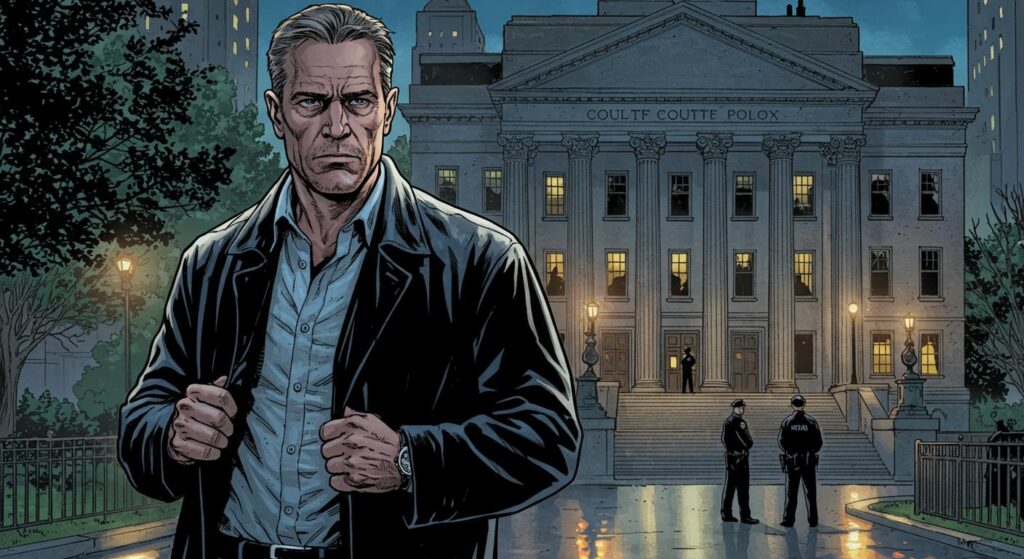
There’s a certain cascading absurdity to the Ivan Henry saga. After being wrongfully convicted for serial sexual assaults in Vancouver in 1983, then later acquitted and awarded over $8 million for nearly three decades in prison, Henry now says he’ll be left penniless – and potentially homeless – if compelled to pay damages in a civil suit brought by five women who still accuse him of crimes. As CBC reports, it’s a journey that reads less like “from rags to riches” and more like a round-trip ticket on the misfortune express.
From Exoneration to Financial Tightrope
Back in 2018, Henry was awarded one of the largest wrongful conviction settlements in Canadian history—a redress for lost liberty, strained family ties, and 27 years in what can only be described as a truly Kafkaesque legal marathon. That accomplishment, however, was quickly eclipsed. Reporting by The Star details how five women launched a civil suit soon after, arguing Henry had, in fact, assaulted them in the early 1980s. Despite his criminal acquittal, the B.C. Supreme Court found him liable in civil court—a verdict reached on the “balance of probabilities,” a lower standard than “beyond reasonable doubt.”
Henry’s affidavit to the court, as described in Castanet, reveals a portrait of evaporating assets: millions spent on legal fees, more than $2 million “gifted” to family and a former partner, and the remainder gradually eaten up by living expenses and donations. Now at 78, he claims to survive on Old Age Security and the Canada Pension Plan while residing alone in Hope, B.C., in a house assessed at $650,000, and owning two vehicles (combined value: $40,000).
Yet, Castanet also notes the financial tale has become distinctly foggy. The Court of Appeal’s ruling identified about $1.8 million in Henry’s finances that “remains unaccounted for.” Discrepancies in Henry’s statements—where sometimes he described handing out $3 million in gifts, other times blaming legal costs and other factors—prompted Justice Nitya Iyer to freeze select assets and require Henry to deposit $232,000 in a trust. For now, the women seeking damages cannot seize his home or vehicles, pending resolution of both parties’ appeals.
When Justice Loops Back Around
Here’s where legal déjà vu creeps in. As CBC points out, the civil court’s assessment—“more likely than not” that Henry committed the assaults—stands in uneasy parallel to his criminal acquittal: perfectly legal, but likely raising eyebrows for anyone uninitiated into the finer points of evidence thresholds. Both Henry and the plaintiffs are appealing elements of the verdict, and the outcome remains suspended somewhere between this fall’s court date and an anticipated decision in spring 2026.
It’s worth mulling over, if only for the irony. The system that once imprisoned Henry with too little evidence now subjects him to fresh liability in a forum where less certainty is—paradoxically—enough. Legal scholars might call this “complementary justice.” The rest of us might call it a very expensive loop.
The View from the Ledger
One quiet oddity in this narrative is that settlements for wrongful conviction in Canada aren’t shielded from civil claims—they’re as vulnerable as any lottery windfall. According to Castanet, Henry maintains most of the $8 million has already departed his accounts, one way or another, and only remains in the form of a mortgage-free house and a thinning cushion of savings. Justice Iyer, in the appeal judgment cited by The Star, did acknowledge the possibility that Henry might truly lack funds to pay the $1.875 million owed to the five women, while simultaneously highlighting unresolved “real questions” about where the rest of the money actually vanished.
The prospect then arises: if Henry’s appeal fails, that multi-million-dollar government mea culpa might serve primarily to fund this new set of civil damages—a bizarre twist, where restitution for a monumental state error might end up compensating accusers in a process that never fully reconciled criminal doubt.
Whose Justice – and Whose Pocketbook?
The case, as CBC encapsulates, is a strange dance between two justice systems, each following different rhythms and rules. Criminal acquittal; civil liability. Payout meant for state-atoned suffering; payout contested as remedy for private civil harm. Add a cloud of mysteriously missing money and it’s hard to know who, if anyone, ultimately sees closure.
If the intent behind Henry’s compensation was to right a wrong, the result appears to be an embattled man with vanishing resources and open wounds for all involved. Perhaps the hardest question isn’t who is responsible—or even who should be paid—but whether it’s ever possible to untangle human harm, state error, and personal accountability in a way that feels like a fitting epilogue. For now, the ledgers and the courtrooms continue to circle, and the archive of unbelievable-but-true stories grows a little richer…and a lot weirder.