
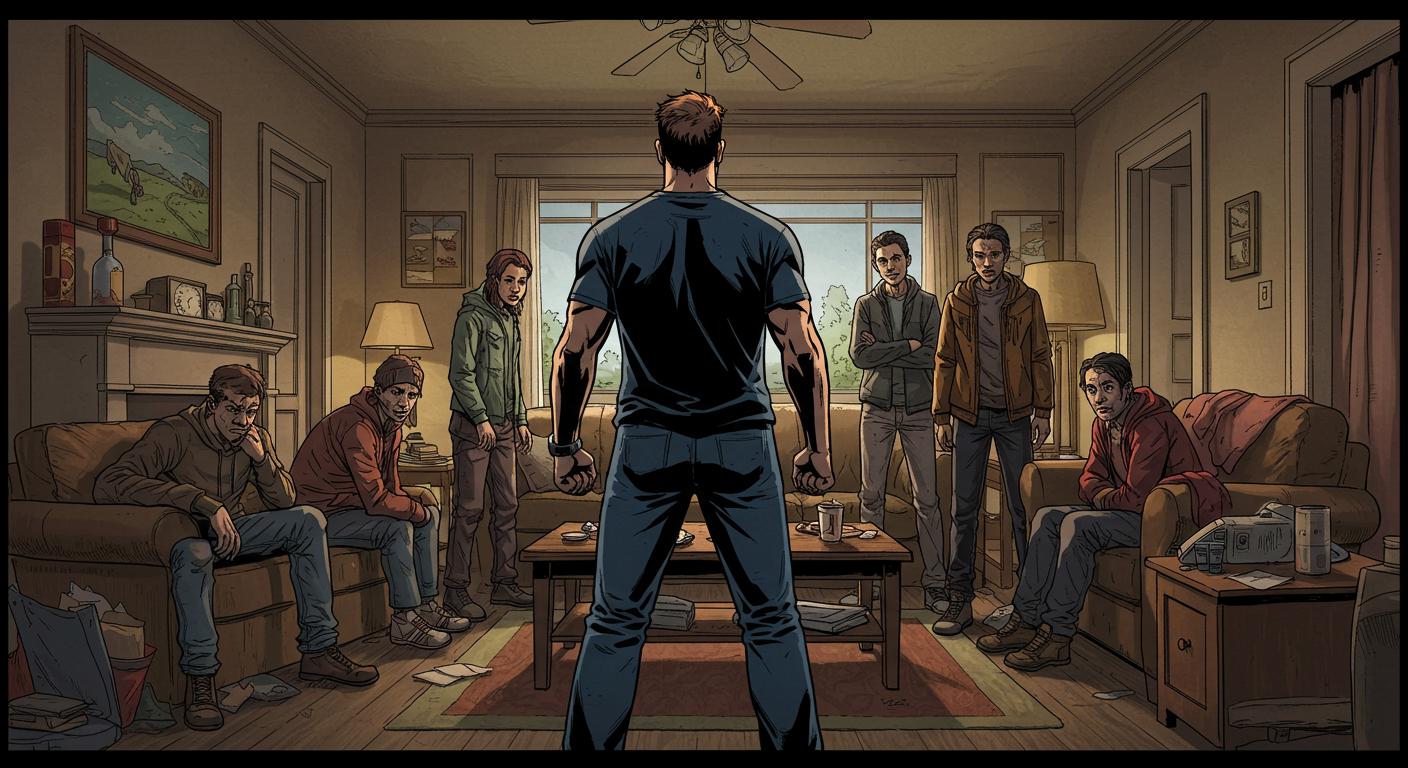
There are plenty of stories about homeowners who return from vacation only to find a stranger in the living room and the locks switched out. But what unfolded on Chicago’s South Side this spring brings a peculiar twist to the genre: when Marco Velazquez found alleged squatters in his for-sale house, he simply decided to move in with them. If you’ve ever wondered where creative problem-solving meets uncomfortable house guest dynamics, consider that question fully answered.
The Stand-Off That Turned Into an (Un)Invited Sleepover
According to ABC7 Chicago, the drama began when Velazquez’s realtor arrived at his South Side property with a prospective buyer, only to discover two people—Shermaine Powell-Gillard and her partner Codarro—already living inside. The pair claimed to have recently purchased the home and presented a mortgage document to back up their story. However, as Cook County officials confirmed to the outlet, no such mortgage existed in the public record.
Police arrived but, as described in ABC7’s reporting, declared the matter a civil issue rather than a criminal one—meaning the authorities couldn’t immediately evict anyone. Velazquez was told it would need to be resolved in civil court, a venue notorious for its glacial pace. “It was like a nightmare,” Velazquez reflected to reporters, sounding understandably weary.
Faced with a legally locked door, Velazquez pivoted to the unconventional: he called his wife and a few friends, and the group settled in for a stakeout—his living room their front line, while the alleged squatters took refuge in a bedroom. “We stayed a whole night with them,” Velazquez recounted. It likely wasn’t the home’s warmest gathering, unless you count the slow burn of mutual annoyance.
The next morning, it became clear that neither side was budging. Velazquez told the outlet the squatters initially demanded $8,000 to leave; negotiations resulted in a written cash-for-keys deal for $4,300. Velazquez explained the reluctant bargain: better four grand for a swift solution than spending months tangled in court while strangers turned his property into their own.
Weeks later, ABC7 notes, Velazquez learned from a police detective that Powell-Gillard allegedly repeated a similar routine in another Chicago home. In that case, she was arrested and charged with burglary, forgery, obstructing identification, and criminal residential trespass. If it feels a little like déjà vu—well, Chicago realtors have been warning about a rise in squatter scams for some time.
When the System Sits Down
The Independent documents the broader context: squatter scams aren’t exactly rare in the area. Agents have described incidents of fake documents, changed locks, and even new security systems installed by would-be residents. In one case recounted by a local realtor, squatters installed a Ring doorbell and told the agent to “get off our property.” Sometimes, modern security meets modern audacity.
The legal limbo isn’t lost on anyone. Civil remedies can take anywhere from months to over a year; waiting means potentially watching your investment deteriorate at the hands of strangers. Faced with that prospect, it starts to make sense why more homeowners consider settlements over slow-burning litigation. Is paying to reclaim your own house frustrating? Absolutely. Is it a creative workaround? In this legal climate, arguably yes.
Meanwhile, lawmakers are grappling with just how to patch these gaps. As noted by ABC7, the Illinois “Squatter Bill” is currently advancing through the state legislature, its supporters hoping for clearer boundaries between civil disputes and outright fraud. The aim: to make it easier—and faster—for rightful owners to reclaim their homes without resorting to sleepovers and standoffs.
Cash-for-Keys: Expedient, Absurd, or Both?
It’s hard not to admire the sheer improvisation of Velazquez’s approach: bypassing red tape by parking himself right in the middle of the problem. The negotiated “ransom”—$4,300—was a price he described as preferable to the stress of protracted legal battles, as detailed in ABC7’s reporting. He’s not alone in this calculation; more owners facing squatters are finding that cash resolves what courts cannot.
Still, the story leaves a few things open to interpretation. Powell-Gillard continues to maintain the allegations are “false and unfounded,” emphasizing “innocent until proven guilty.” Whether that’s the last word or just the mid-point in a longer series of property disputes remains unclear. Chicago police have not confirmed if investigations in Velazquez’s case are ongoing, underscoring how fluid—and frustrating—the boundary between civil and criminal resolution can be.
So what do we make of all this? There’s a peculiar irony in having to “join” your unwelcome guests just to get them to leave. It raises quietly unsettling questions about the balance between property rights, tenant protections, and loopholes in the law. Has the rise of creative squatter schemes finally met its match in creative—if slightly awkward—homeowner persistence? Or are we simply waiting for the next permutation of the standoff, perhaps involving bunk beds and a shared breakfast?
Somewhere between comedy, tragedy, and legal procedural, the saga reminds us: the weirdest solutions often emerge where the rules run out. For now, the unofficial rulebook might just read—if you can’t evict your squatters, you might as well bring a sleeping bag. How long until we see “squatter slumber party” added to the list of modern real estate contingencies?