
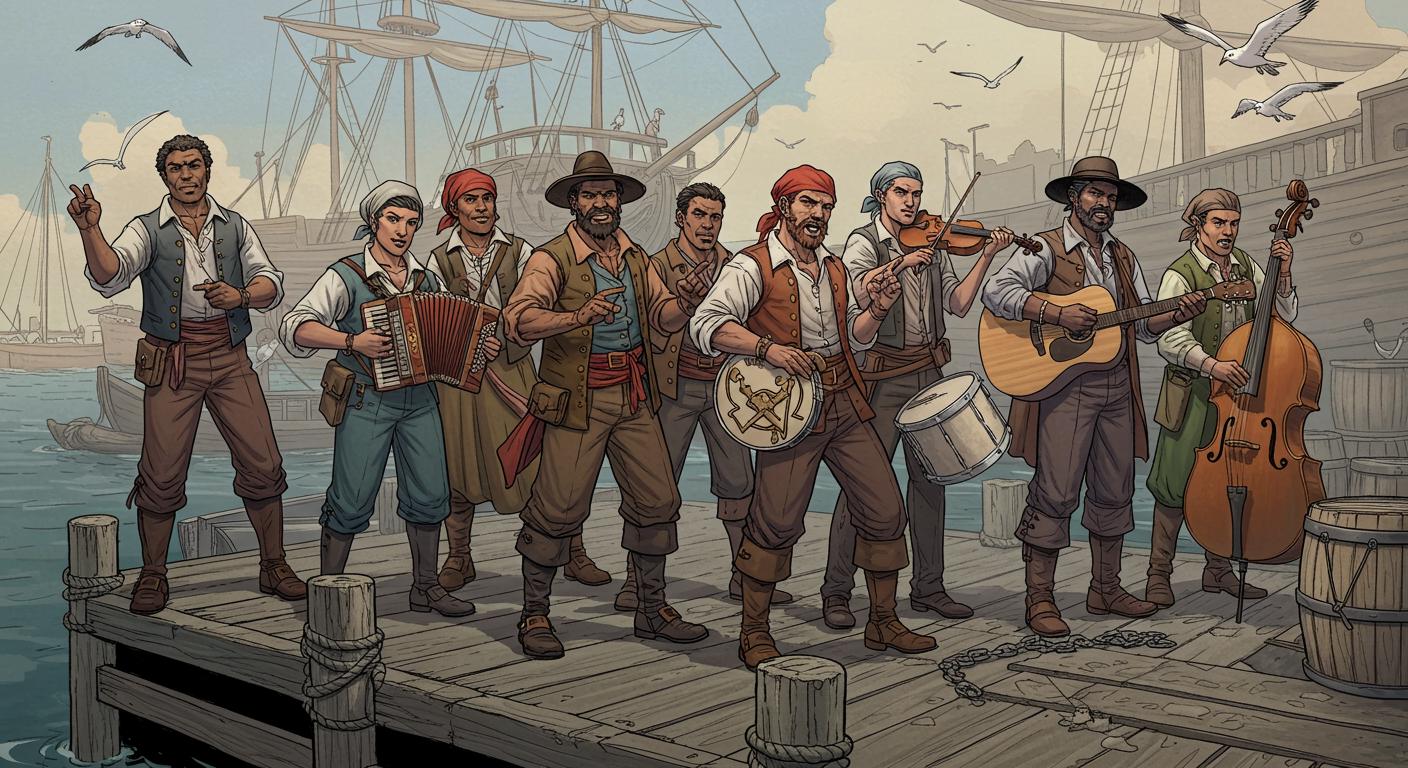
There’s never any shortage of oddities washing up in the daily news tide, but finding a beloved sea shanty troupe dragged into allegations of modern slavery? That’s a plot twist even the saltiest mariner might squint at. And yet, in a year already heavy with the improbable, the Tavistock Times Gazette describes just that—the Old Time Sailors, usually seen bringing a dash of pirate whimsy to festival fields, now wading through a swell of internet rumors and police inquiry.
Harmony, Highway, and Headlines
Traditionally, the Old Time Sailors invite their audiences to forget the century, clap along, and revel in nautical cosplay. Recently, their fortunes took a hard starboard turn: a traffic collision on May 19 in Tavistock led Devon & Cornwall Police to arrest six individuals on suspicions related to modern slavery. According to details relayed by police to the outlet, officers responded by identifying several people in the van as potential exploitation victims, immediately providing them with specialist support. Further searches in Gulworthy reportedly revealed even more individuals believed to be at risk, prompting coordinated safeguarding efforts between authorities and partner agencies.
While the investigation remains active and all arrested parties have been released on bail, the police have neither published names nor pointed fingers toward any musical ensemble—yet whispers, it seems, need less evidence than a sea breeze to get moving.
When the Internet Sails Ahead of the Facts
Since the incident, anonymous websites and Reddit discussions have linked the Old Time Sailors to the ongoing investigation, fueling what the band sees as a runaway narrative. Tavistock Times Gazette highlights that speculation seems to hinge largely on the group’s nontraditional, communal touring lifestyle—a setup that’s perhaps unremarkable to anyone familiar with bohemian bands, but evidently suspicious in the algorithms of online sleuths.
The group’s social media response, described in the outlet’s coverage, repeatedly and emphatically denies any wrongdoing. They reject the rumors as “scandalous accusations, speculation and fabrications,” insisting they are not based in truth. Their online statement makes clear that these claims have come with neither substantiation nor fact-checking and frames the wave of negativity as a targeted online hate campaign—one provoked, they say, by a disgruntled former band member whose exit allegedly precipitated threatening messages and then, suddenly, a storm of scurrilous allegations.
It’s hard not to notice the band’s frustration seeping through their message. They emphasize that their arrangement—a shared touring collective driven by a love of music and performance—remains above board, however unconventional it might appear to outsiders with vivid imaginations. The suggestion seems to be: if there’s a crime here, it’s one of gross misunderstanding.
The Fog of Suspicion
Parsing the public statements, one gets the sense that the actual investigation and the online outrage machine are running on parallel but disconnected tracks. Police, as the outlet documents, have confined themselves to carefully worded updates, outlining safeguarding procedures and urging anyone with concerns or information to come forward. Nowhere, so far, have authorities drawn a direct line from the accident or the arrests to the shanty performers who’ve made a habit (and seemingly a minor industry) out of pirate-themed revelry.
Still, once the rumor ship sets sail, it can be remarkably hard to turn about. What is it about a group of musicians living and traveling as a “family” that so quickly triggers suspicion in the internet age? Is it just the contrast between their merry stage persona and the stark reality of police action nearby, or is there something about modern collective living arrangements that makes people nervous? Or is this simply another case where coincidence is mistaken for conspiracy?
Storms, Shanties, and the Shadows in Between
The Old Time Sailors, for their part, are sticking to what they know best: playing music, encouraging fans to don pirate hats, and distancing themselves—both publicly and vehemently—from salacious speculation. Their statement, as relayed by the news outlet, closes with a familiar refrain: focusing on community, musical learning, and the “free life we chose.” There’s also a note of caution about the dangers of lifting “facts” from anonymous social media corners—a sentiment that probably resonates with anyone who’s ever tried searching for the truth in a digital fog.
Meanwhile, the reality on the ground—six arrests, multiple individuals under safeguarding, and an ongoing investigation—remains serious, no matter how theatrically unrelated it may be to the world of sea shanties. So far, the only thing firmly connecting the Old Time Sailors to the case is the digital rumor mill itself.
How often does a misinterpreted way of life or a messy falling out fuel wild speculation? The story serves as a reminder that the bizarre logic of the internet can draw perfectly ordinary oddballs (and, let’s face it, most touring bands qualify as oddballs in the best way) into the gravity of headline-making investigations. It’s a strange state of affairs when a van emblazoned with accordion stickers and battered tricorn hats is enough to make rumor-mongers reach for the word “slavery.”
One has to wonder if, at their next gig, the Old Time Sailors will raise a glass to surviving one of the more absurd tempests social media has to offer. For now, the case remains open, the facts remain under wraps, and somewhere in Tavistock, there’s a collective sigh as festival season rolls on—pirate costumes, shanty choruses, and all.