
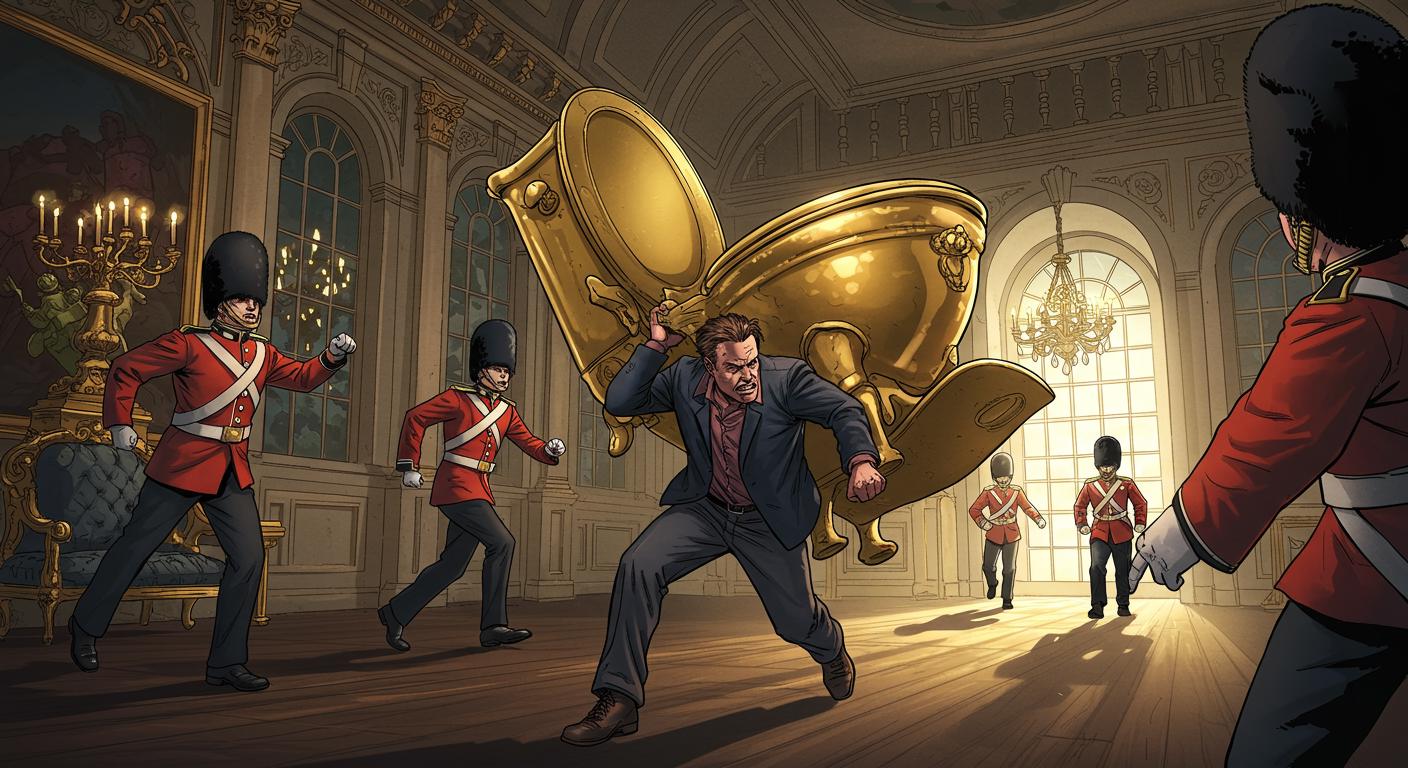
If ever there was an art crime begging the question “Is this satire, or is reality just enthusiastically following instructions?”, the saga of the stolen solid gold toilet from Blenheim Palace fits the bill. As Sky News reports, the tale involves five men, two stolen vehicles, and one interactive artwork: an 18-carat, fully functioning lavatory called “America,” weighing in at 98kg and insured for a neat £4.75 million. Crafted by artist Maurizio Cattelan, the piece did double duty—part installation, part genuinely usable facility—before being wrenched from its plumbing in a pre-dawn raid.
Five Minutes, Five Men, One Missing Masterpiece
Breaking through Blenheim’s gates with a VW Golf and an Isuzu truck, the crew wielded sledgehammers and a crowbar. According to prosecutor Julian Christopher KC, detailed in Sky News, the operation lasted all of five minutes—a smash-and-grab more fitting for a budget movie than a palace. Three men forced entry, smashed through a wooden door, and “tore the toilet from its fixings,” leaving behind both a hefty repair bill and a quandary for Thames Valley Police. The forces of order later tied James Sheen to the crime with DNA on a sledgehammer and gold fragments in tracksuit bottoms at his home; a crowbar and a distinctive trail of hurriedly plotted movements helped flesh out the rest of the picture.
Sky News documents that only Sheen and Michael Jones, the latter found guilty at trial, have so far faced justice; three accomplices remain elusive. None of the gold has surfaced since—police and prosecutors reasonably believe it was swiftly broken down, melted, and sold on.
It’s almost poetic, in a way: a public artwork designed to provoke thoughts about wealth, privilege, and access gone the way of any material excess—quietly atomized and repurposed into anonymous profit.
The “Middle Man” and the Blame Game
Here’s where things acquire that dash of tragicomedy: Frederick Doe, also known as Frederick Sines, from Windsor, was convicted in March of conspiracy to convert or transfer criminal property. The Express notes that Doe’s involvement began only after the initial theft, when he was approached by Sheen in the days following the burglary, seeking a path to sell part of the loot. The court accepted that Doe’s expertise—he had contacts in London’s Hatton Garden jewellery district—made him useful, if not exactly ambitious about the rewards.
During sentencing at Oxford Crown Court, Judge Ian Pringle KC, in comments reported by both the Express and Sky News, described Doe as a “middle man targeted by James Sheen,” emphasizing that Doe “agreed to assist Mr Sheen without any hope or expectation of a reward.” Previous good character was a mitigating factor, and the judge suggested Doe’s regret over five-and-a-half years was “no doubt” genuine. The result? Twenty-one months imprisonment, suspended for two years, and a stint of 240 hours’ unpaid work.
Outside the court, surrounded by friends who offered boisterous support (“he is a good person,” they chanted, as the Express observed), Doe himself told reporters his “good nature has been taken advantage of. I got caught up in something I should not have and now I just want to go home and enjoy my family.” Whether that’s earnest remorse or just relief at avoiding a prison cell may depend on one’s taste for dramatic irony.
An Artwork, A Throne, and an Absurd Aftermath
The specifics of the heist veer between the extravagant and the mundane. Sky News highlights coded messages between Doe and Sheen—ostensibly about “cars,” actually referencing gold by the kilo and quoted sales rates. In a courtroom moment balancing utility and the ludicrous, Jones admitted he’d actually used the golden artwork’s plumbing during a “scouting” visit the day before, describing the experience as “splendid.” When your target is a toilet, the research opportunities are immediate, if not exactly highbrow.
Neither source indicates any of the stolen gold has been recovered; the Crown Prosecution Service concludes it’s probably long since vanished into the scrap trade. The exhibit’s time as “star attraction” is now just a footnote in a very British sort of art caper—equal parts sophistication and slapstick.
Reflections from the Bowl’s Empty Pedestal
What do we make of all this? Viewed closely, the details are less about breathtaking larceny and more an exhibition of garden-variety folly. A lavish sculpture intended to provoke is now a cautionary tale about the limits of easy money and the dangers of playing the intermediary. Somewhere there’s a poignant intersection of high art, criminal ambition, and garden-variety regret.
Is a golden throne, designed to lampoon wealth, most at home on a plinth or as bullion buried in the supply chain? Does its ignominious end reinforce—rather than erase—its original message about waste and extravagance? And, perhaps less grandly, what sort of plan starts with a palace and ends with a suspended sentence and a pub celebration?
It’s not every week that a loo becomes the focus of both a royal estate’s anxieties and the public’s bemused imagination. Not all that glitters, it seems, stays bolted down—or safe from the occasional flush of criminal inspiration.