
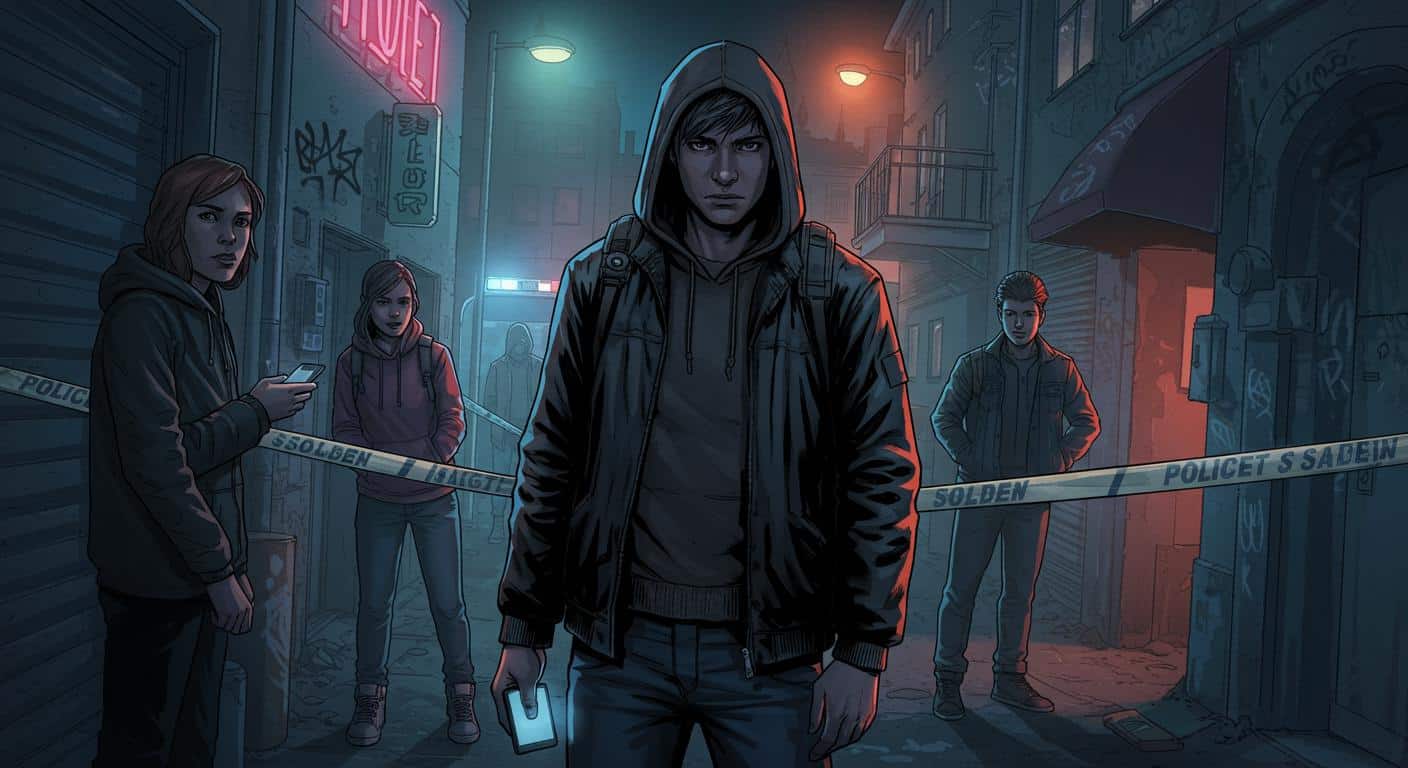
Something deeply strange is stirring in Sweden—and not the IKEA kind of strange, nor anything that involves herring or unpronounceable consonant clusters. According to a recent report from Le Monde, there’s a surge of assassins who aren’t old enough to vote, drive, or (legally) watch certain movies, but are being paid to kill.
Social Media Recruitment, Adolescents, and a Chilling Text
The opening scene, as described in Le Monde, would fit comfortably in a Scandi-noir thriller—if only it weren’t uncomfortably real. On a late summer night in 2024, a message was sent to a teenager Le Monde refers to as Samir: “Don’t take out any mothers (…). Just take the men. The fathers, the brothers and him. Take as many as you can.” The outlet explains that Samir, only 14 years old at the time, was heading to Skurup, a quiet residential town in southern Sweden. His target? Gustav Malmquist, a 55-year-old financial adviser, reportedly shot and killed in his own living room. Court records cited by Le Monde indicate Malmquist’s three sons survived the ordeal, though the eldest had already been marked by the Foxtrot gang—a group Le Monde calls one of Sweden’s most violent.
Further details highlighted by the outlet reveal that, prior to the attack on August 10, 2024, none of the accused teenagers had any known connection to the Malmquist family. Of the four perpetrators, only one had previously appeared on police radar. The randomness here feels almost algorithmic, with adolescents plucked from the digital void and thrust into organized crime’s most brutal role.
Outsourcing Violence to the Very, Very Young
As Le Monde reports, these four 15-year-olds—who now stand trial in a closed Malmö courtroom, accused of murder and attempted murder—were unknown to authorities, apart from one exception. After their arrests, the teens were placed in foster care. The outlet also notes these adolescents had, until then, been living ordinary lives—no criminal records, no ties to gangs—yet found themselves suddenly recruited as hitmen-for-hire.
All of this, documented by Le Monde, adds an unsettling twist to an already complicated criminal ecosystem. Organized crime in Sweden isn’t exactly a novelty, but the outlet suggests the deliberate subcontracting of contract killings to minors is a calculated evolution. The rationale? Sweden’s juvenile justice system, like those elsewhere, favors rehabilitation, leading gangs to exploit legal leniency by using younger and younger recruits.
It’s not the well-worn path of wayward troubled youths; rather, as described in the investigative piece, it’s ordinary kids drawn in via social media—where encrypted messaging, anonymity, and a kind of transactional bravado make the process chillingly efficient. Hours before, these teens might have been prepping for homework or lining up the perfect TikTok lip-sync video. Suddenly, they’re navigating murder contracts.
The Uncanny Ordinary
What Le Monde underscores is just how unremarkable these adolescents were—until now. Three out of the four had no previous records or run-ins with the law. By all appearances, these were typical Swedish teens, abruptly cast as antagonists in a story that would make most crime fiction editors balk at its implausibility.
Here’s the unnerving question: how does a society wrap its mind around the possibility that its next batch of school-leavers might be more likely to receive a DM from a gang recruiter than a prom invitation? And if digital-age criminal groups can turn unknown, otherwise “good” kids into trained assassins overnight, what does this say about the architecture and reach of these new criminal networks?
Reflection: Stranger Than Fiction
With Swedish juveniles now implicated in contract killings that only a decade ago would have seemed pulled straight from a rejected screenplay, it’s worth pausing to wonder where the line between fiction and reality is starting to blur. As chronicled by Le Monde, these events signal a disturbing mutation in organized crime: operating behind screens, recruiting on social media, targeting the obscenely young.
Is this a singular Swedish quirk, or is it an early chapter in a broader, stranger global story? And how long until other countries, watching the Stockholm newswire with that mix of disbelief and morbid curiosity, recognize flickers of the same pattern closer to home?
Either way, Sweden’s shift from clean-cut teens to clandestine teenage contract killers isn’t another quirky Nordic export—unless IKEA starts selling flat-pack moral dilemmas, assembly required.