
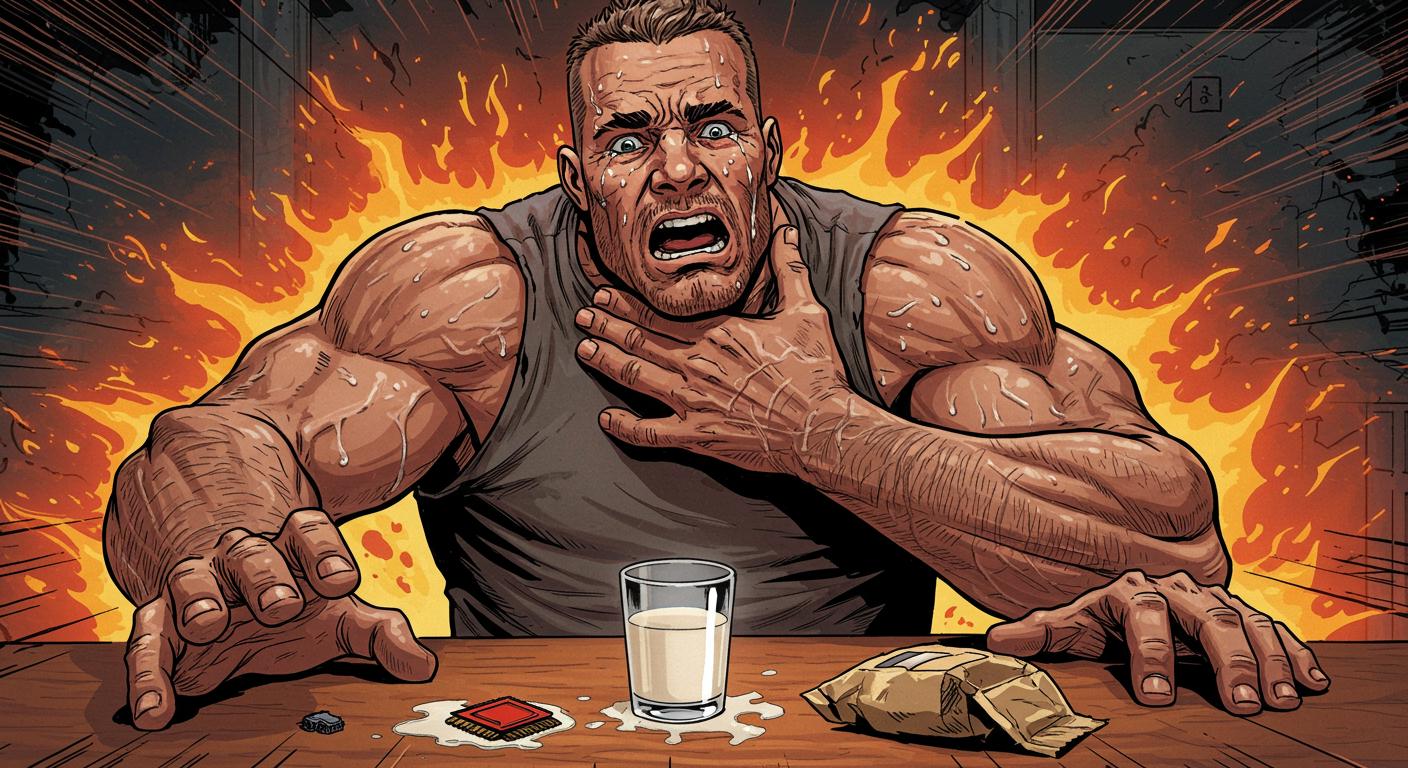
There are challenges, and then there are challenges. Most involve little more than pride—think of the humble cinnamon spoon, or that regrettable period when people planked atop unlikely surfaces. Yet for Darin Deilkes, a 36-year-old Floridian and former Coloradan, a single tortilla chip coated with scorching chili spices managed to turn a viral dare into a real-life detour back behind bars.
One Bite, One Swig, One Cell
As detailed in The Smoking Gun, Deilkes participated in the “Hot Chip Challenge” in late March, a stunt circulating on social media where the goal—if it can be called that—is to eat a tortilla chip covered with chili spices that approach the upper reaches of the Scoville scale. Court records indicate that, caught on video during the attempt, Deilkes ultimately reached for a Corona to calm the afterburn, admitting later to officers that the beer was a direct response to the chip’s heat.
The same probation officers who reviewed the footage—though it remains unspecified in the report exactly how it wound up with them—observed Deilkes in clear violation of his parole, which prohibits both consumption and possession of alcohol and the mere presence in establishments centered around its sale. Grouped together with a more recent citation for not carrying a required tracking device, these incidents made for a compelling case; an affidavit from a Probation & Parole officer even characterized Deilkes as “a risk to himself and others with any further alcohol use.” There’s an almost sardonic undertone in how easily a snack food dovetailed with an existing track record.
That criminal history is not exactly bite-sized. According to the same reporting, Deilkes’s rap sheet features convictions for dealing in stolen property, cocaine and heroin possession and sales, grand theft, credit card fraud, burglary, and violations of a domestic violence protection order—a resume spanning several departments of bad judgment. All of this landed Deilkes multiple stints in state prison throughout his adult life, with parole previously set to end in late 2026.
Capsaicin, Caution, and Consequence
For those who haven’t spent time in the stranger corners of the internet, the “Hot Chip Challenge” typically involves a single tortilla chip, saturated with chili extract designed for maximum discomfort and, arguably, maximum online humiliation. The Smoking Gun highlights that this brand of spectacle lives for the extreme, tallying YouTube exorcisms of pride and sinuses alike. Not every participant, however, faces the double jeopardy of viral regret and the attention of the Department of Corrections.
What’s notable here is the way a modern social ritual—record, post, endure, repeat—instantly wound back into the cycle of surveillance for someone under parole. The article leaves open the question of how precisely this moment made it to authorities, but in today’s connected world, it feels less like an exception and more like a cautionary pattern. Probationers’ digital lives are more closely watched than most, and what’s shared among friends can easily end up playing to a more official audience.
Reflecting on Deilkes’s predicament, it’s hard not to wonder at the irony. A simple culinary dare—marketed at thrill-seekers and middle schoolers—became the unlikely trigger for a parole violation. Would the aftermath have unfolded the same way if it hadn’t been captured on video? Is the real lesson here about chili powder’s potency, or the inescapability of digital documentation?
Reflection
If nothing else, this episode enriches the understated history of “arrested by snack.” The Smoking Gun’s account reminds us that even the most mundane actions can have weighty consequences given the right—well, wrong—circumstances. For Deilkes, one rash decision under the spotlight of social media led from a burning tongue, to a forbidden sip, to a jail cell.
How many among us, faced with similar discomfort and temptation, would have made a wiser choice—or simply avoided public proof? The strange alchemy of modern challenges guarantees that some stories will have far more bite than others. In Deilkes’s case, heat wasn’t just a flavor; it was a fate.