One expects a certain level of precision from an execution by firing squad. As NPR documents, the intended efficiency became anything but during South Carolina’s most recent effort. Mikal Mahdi, shot by three Department of Corrections employees, was supposed to die quickly. Instead, forensic reports, court filings, and eyewitness accounts suggest that something more akin to a medical misadventure unfolded. The shooters were aiming for Mahdi’s heart. They missed.
Target Practice and Reality’s Margin of Error
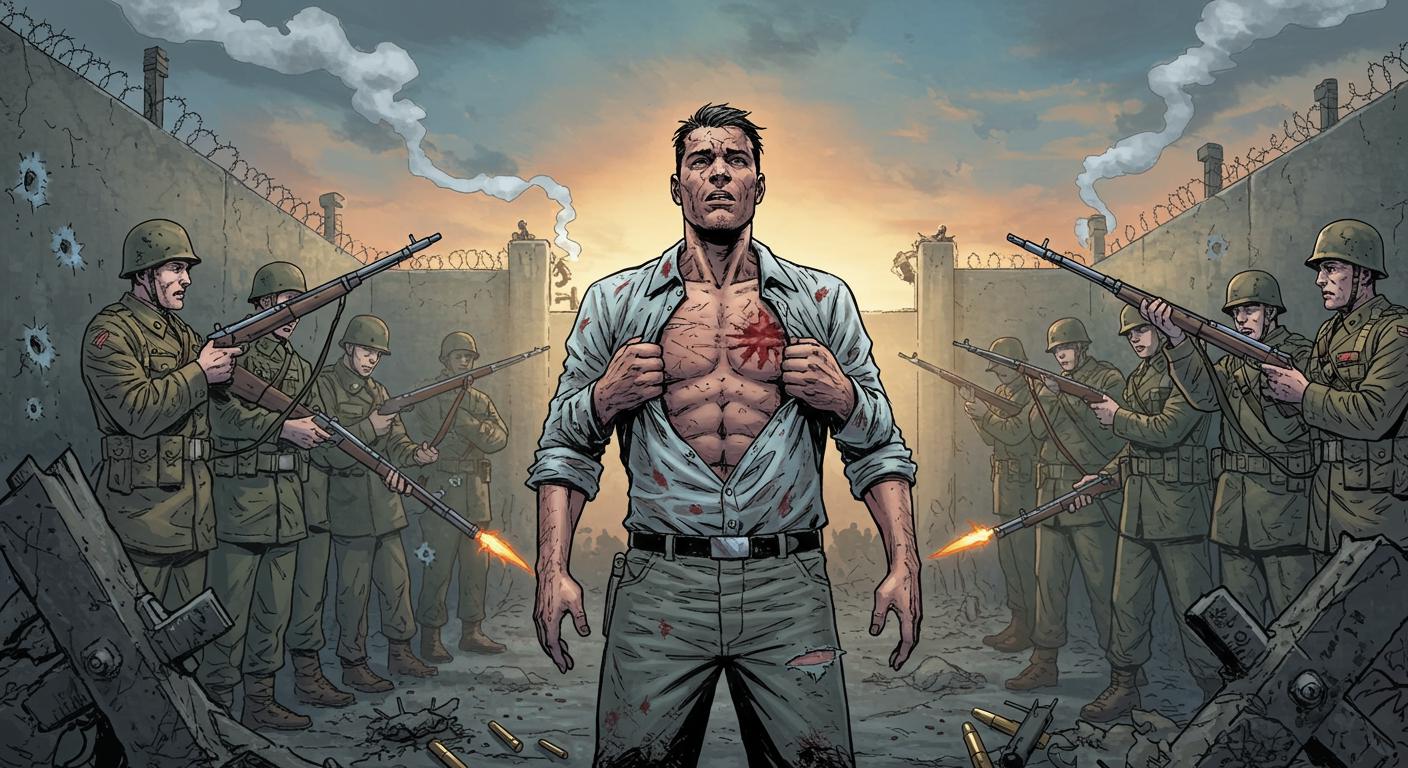
NPR reports that Mahdi’s autopsy showed two bullet wounds in his chest, rather than three. And, crucially, neither of those wounds hit the heart itself. Instead, the bullets caused significant damage to his liver and other organs, but permitted his heart to keep on beating—a complication that meant conscious pain and suffering for 30 to 60 seconds, according to reports reviewed by two independent forensic pathologists for NPR. Dr. Carl Wigren stated, without fanfare, that “instantaneous” death wasn’t how things turned out.
The justification for the firing squad, in both legislative and judicial settings, is speed and, theoretically, minimal suffering. The South Carolina Supreme Court, for example, reasoned that a properly performed squad execution wouldn’t extend pain beyond ten or fifteen seconds; their opinion allowed that only a “massive botch” involving misses by all shooters could result in a longer death. By all appearances, that’s precisely what was delivered.
The Curious Case of the Missing Bullet
As detailed in the NPR investigation, the physical evidence simply doesn’t add up: three shooters, two wounds. Doctors for the state floated the idea that two bullets may have passed through a single wound. Pathologists consulted by NPR, like Dr. Wigren, found this scenario “minuscule” in terms of probability—bullet trajectories and wound sizes tend not to cooperate for dramatic unison.
Unlike some states where not all rifles are loaded with live rounds, in South Carolina, all three shooters handle real ammunition. Yet the math remains unsatisfying. Did a rifle jam? Did someone aim wildly off target? As noted in NPR’s review, Mahdi’s lawyers observed the post-execution documentation for this case was sparse: only one torso photo was shared with them, with nothing like the comprehensive X-rays and clothing photographs that surfaced after South Carolina’s previous firing squad execution. The prior case—Brad Sigmon—was, for better or worse, a model of documentation thoroughness, with three clear bullet wounds all near the heart and a photo archive for the curious or the concerned. Here, the fog persists.
No clear answer emerges from the records. David Weiss, one of Mahdi’s lawyers, summed it up to NPR: “It’s not fully clear what happened. Did one of the gunmen not fire that one? Did their gun get jammed? Did they miss? We just have no idea at this point.” Not many professions allow you to miss your main objective with this sort of ambiguity.
How Precise Is “Humane” Supposed to Be?
The grim comparison, laid out by NPR, is that every option seems to come pre-loaded with its own flavor of unpredictability. Lethal injection—once touted as the scientific, clinical solution—has produced messy, drawn-out deaths. Multiple autopsies showed prisoners required more than one dose to die, their lungs filling with fluid, a sensation doctors have compared to drowning. Firing squads, in contrast, are supposed to offer certainty through kinetic force—if the aim is true.
So should we be surprised when human error creeps in? NPR describes Mahdi crying out after the shots, breathing heavily, groaning, freezing, and then being checked for a pulse. The sequence lasted significantly longer than official timelines would suggest. Eyewitnesses—the Associated Press among them—described a visible, audible struggle that corroborates the forensic evidence. As Dr. Jonathan Arden concluded in his analysis of the autopsy for NPR, both the medical record and the eyewitness testimony align: Mahdi was alive and suffering much longer than the rules intended.
South Carolina’s Department of Corrections, for its part, offered no comment to NPR about how this deviation could have happened. One can picture the red bullseye target (eyewitnesses said it seemed low on Mahdi’s chest) affixed carefully to the prescribed spot, but even so, intentions and outcomes did not perfectly align.
You don’t need to have a background in library science—or a wry appreciation for procedural oddities—to wonder how justice systems aiming for clinical neatness so often find themselves stymied by the misfires, literal and metaphorical, of process.
The Messy Realities of the “Ultimate Sanction”
As NPR highlights, several other states still have firing squads at the ready should the need arise. And as Mississippi schedules its own execution—the method left unspecified—the notion lingers that, with all our modern technological advances, the ultimate fate of the condemned can still hinge on the marksmanship of three people under institutional pressure, with consequences counted out in seconds of suffering.
Is there some lesson here about the perennial gap between regulation and reality? Perhaps the oddest twist is not the persistent errors themselves, but our enduring faith that we’ve finally engineered a clean fix for something so untidy. When the stakes involve literal life and death, is it any wonder that even textbook procedures can veer off course—sometimes with consequences as resistant to quick resolution as the wounds in Mahdi’s chest?
If clinical efficiency is the promise, South Carolina’s experience suggests it might still be shooting wide of the mark. Curious how often that’s true of other bureaucratic guarantees, isn’t it?