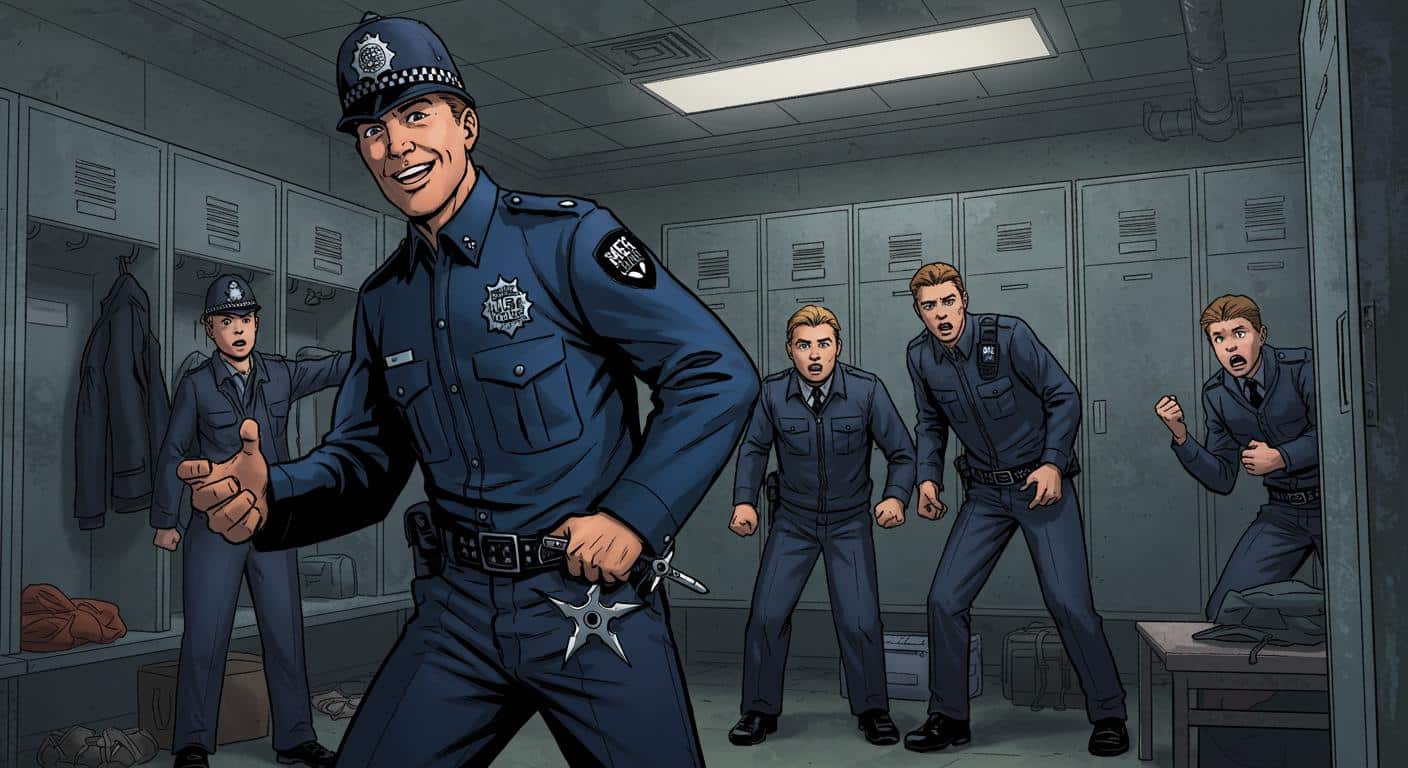
It’s not every day a news story manages to involve both a ninja star and an awkward police disciplinary. As detailed in a MyLondon report, the saga of former Metropolitan Police officer PC Stewart Clark takes the already fraught subject of police misconduct and sends it careening straight into the realm of the absurd.
Weighing the Weird: Tactical Weapons, Tactical Errors
According to findings reviewed in MyLondon, Clark’s ill-considered prank took place during a training exercise where officers simulate searching each other by hiding objects to be discovered. The tribunal records cited by the outlet indicate Clark upped the ante by concealing a throwing star—yes, an honest-to-goodness ninja star—in his boxer shorts, intentionally positioned close to his genitals. The panel described how, during the search, Clark prodded his female colleague to continue looking, remarking, “you are nearly there, keep looking,” before dismissing the incident as “only a bit of fun.”
The tribunal’s written decision, as highlighted in the MyLondon report, concluded Clark’s actions were calculated: he “deliberately placed the throwing star near his genitals” for his own sexual gratification or to cause embarrassment to the officer tasked with searching that area. One might pause and wonder: at what stage does an officer, dutifully folding a shuriken into their underwear, convince themselves this is all part of good-natured police camaraderie?
The “Fun” Didn’t Stop There
Stacking discomfort atop discomfort, Clark’s pattern of behavior went beyond hidden weaponry. As noted in further allegations chronicled by MyLondon, on another occasion—while discussing whether to patrol behind a leisure centre—Clark wiped his mouth and told the same colleague, “You are going to be coming out looking like this,” a comment the panel interpreted as a sexual innuendo referencing oral sex performed in the dark.
The panel, according to descriptions in the outlet, didn’t mince words in their summary. When considering Clark’s claim that “it’s only a bit of fun,” they outlined instead a persistent, sexually motivated campaign to embarrass and intimidate female colleagues.
MyLondon also documents that Clark was found to have slapped the backsides of two different female officers on separate occasions. The panel found both instances constituted sexual assault, stating their belief in the testimony of witnesses and complainants.
Disgrace and Departure, but No Denials
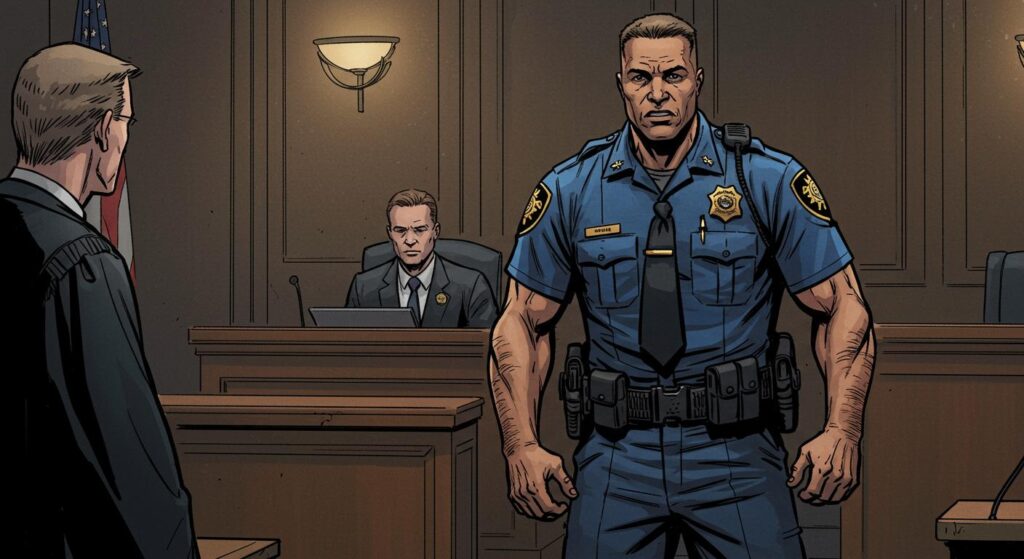
In a detail noted by MyLondon, PC Clark left the force ahead of his misconduct hearing and chose not to attend the proceedings. Despite his absence, the panel’s assessment was unequivocal: his conduct was “persistent” and, had he remained a serving officer, he would have been dismissed from the Metropolitan Police.
It’s tempting—given the surreal elements, from ninja stars to adolescent innuendo—to treat these escapades as sad office comedy. Yet, as the documentation in the misconduct hearing drives home, beneath the strange details is a clear pattern of workplace sexual harassment, one that places trust and professional boundaries firmly on the chopping block. Why does this sort of behavior persist in institutions where discipline and trust are supposed to come standard issue? Sometimes, the weapon of choice is less important than the mindset wielding it.
A Case Study in What Not to Conceal
In the end, tales like this linger not so much for the novelty (“Met officer conceals ninja weapon in pants” has a certain twisted headline appeal) as for the underlying discomfort they reveal. The MyLondon article lays out a scenario far removed from any conceivable “banter,” where bizarre objects and crude jokes serve as cover for serial disrespect. Whether this happens to be a singularly strange episode or a symptom of deeper institutional malaise remains open to debate—but it’s hard to ignore the legacy of such stories in shaping public trust.
One imagines a long line of future training officers looking at innocuous roleplay exercises and pondering, with due skepticism: Is this really the best place for historical reenactment—or ninja stars? The persistent question lurking underneath: what other boundaries are allowed to blur before someone speaks up?