If there’s one thing you can reliably count on during election season in America, it’s the spectacle of grand gestures with even grander caveats. This week, that familiar playbook seems to include cold, hard cash—promised to voters, but apparently slow to materialize. According to The Hill, Elon Musk’s America PAC is now facing multiple class-action lawsuits alleging the group failed to honor its headline-grabbing offer: sign a pro-amendment petition, get $100.
The $100 (Non)Windfall
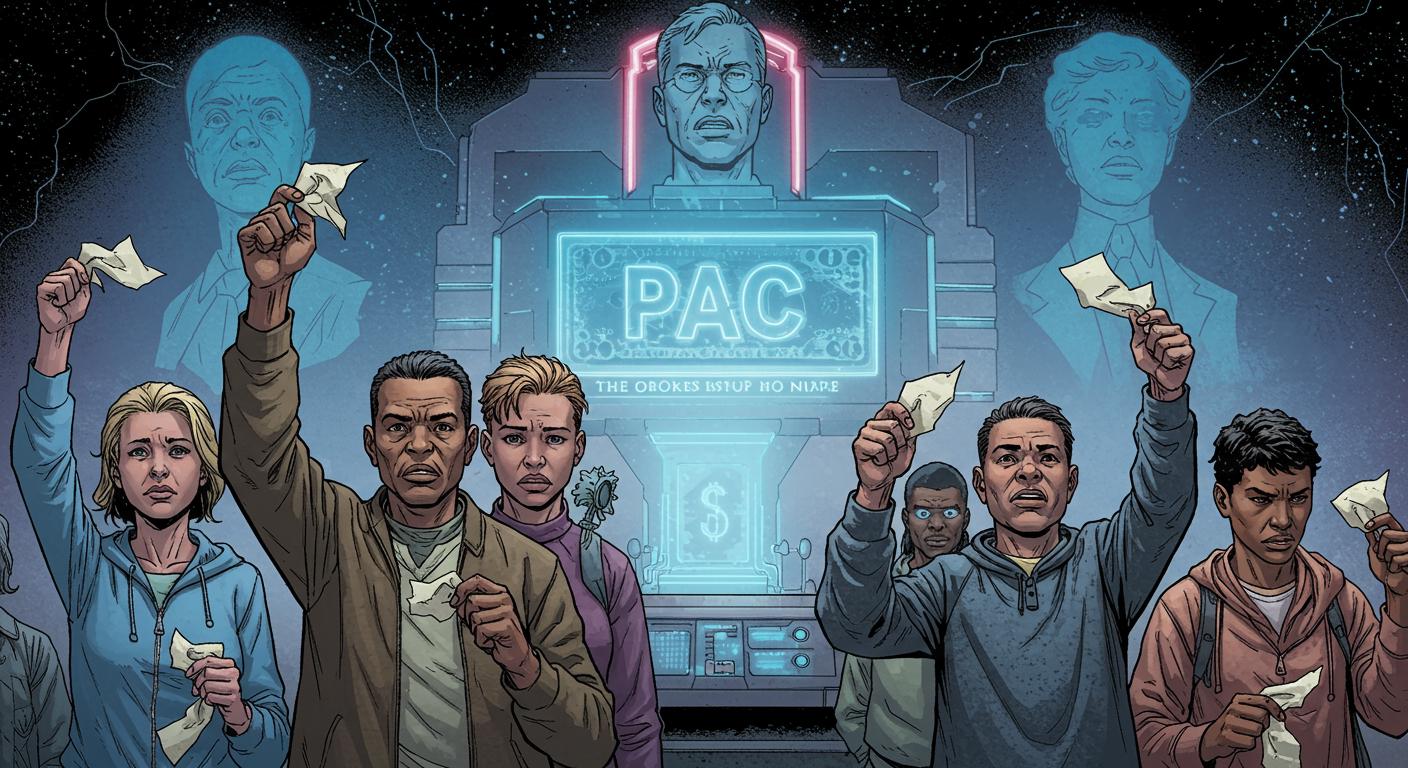
During the feverish sprint of the 2024 campaign, Musk’s America PAC promoted a payment scheme—first valued at $47, later bumped up to $100—for registered voters in swing states willing to sign a petition in support of the First and Second Amendments. Both outlets, The Hill and the New York Post, report that eligible states included Arizona, Georgia, Michigan, Nevada, North Carolina, Pennsylvania, and Wisconsin.
Three plaintiffs—Hailing from Georgia, Nevada, and Pennsylvania—recently filed a national class-action suit alleging they participated and referred others, only to find themselves unpaid. The complaint, as described in court filings cited by both outlets, spotlights Steven Reid, a self-identified canvasser for America PAC in Georgia and Michigan, who claims to have recruited “many voters” and now estimates he’s owed several thousand dollars after trying repeatedly to collect.
Other petitioners have voiced similar frustration, according to statements referenced in the complaint. A previous case, filed last month by a Pennsylvania man seeking $20,000, described unsuccessful attempts to contact the PAC and a feeling of being outright ignored.
Legal Footnotes and the Art of the Loophole
Federal election law explicitly prohibits cash payments to encourage voter registration. The America PAC, according to both The Hill and the New York Post, skirted this rule by requiring that petition signers already be registered—a maneuver that seemingly threads the needle between legal boundaries and promotional spectacle. Is this a clever compliance hack or just democracy’s equivalent of “some assembly required”? One wonders how often offers like this pass scrutiny by virtue of splitting hairs instead of actually splitting the prize money.
Alongside the direct cash incentives, the PAC launched a $1 million daily sweepstakes, promising randomly drawn petition signers a life-changing windfall—publicized through Musk’s social media and, as the Post details, oversized checks handed out at Trump rallies. However, the spectacle’s credibility has also come under legal challenge, with a separate lawsuit from November alleging the “winners” had been predetermined, straying a bit too close to the territory of a rigged carnival game.
Who Pays, Who Decides?
Despite a spokesperson’s public assurances—America PAC told CNN, in a remark recounted by the New York Post, that they remain “committed to paying for every legitimate petition signer” and have already “paid tens of millions of dollars to canvassers”—the string of cases tells a different story for some. Responding to this new lawsuit, the PAC offered no additional comment, The Hill notes, leaving would-be recipients still holding out hope for a resolution.
The report in the Post situates all this within the context of Musk’s outsized spending on the Trump campaign—over $300 million, with Musk subsequently playing a role as a government efficiency adviser. It’s all very grand, yet the payments disputed in the complaints are the sort of sums you might find squashed under a Tesla seat cushion.
Bizarre Incentives and the Perils of Paying Participation
At its core, the story pivots on a peculiarity that now feels almost routine: American political operators dangling increasingly odd incentives for engagement and then letting the fine print, or perhaps simple inattention, quietly undo the promise. The Hill reports an almost assembly-line approach to grievances—many people calling, emailing, and, when that fails, resorting to class-action lawsuits. For a super PAC purporting to champion the First and Second Amendments, it’s an oddly fitting outcome for supporters to exercise the right to petition—this time in federal court.
The sense of spectacle looms large: the PAC’s social media blitz, the high-visibility events, and rumored fortunes handed over to a select few. In reality, at least for now, some petition signers find themselves waiting in that familiar American limbo between “You’ve been chosen!” and “Please hold for the next available operator.”
A Shrug and a Raised Eyebrow
If American democracy is, as some have said, a contact sport, perhaps it’s fitting that even the cash incentives come with a few bruises. Lawsuits, unanswered emails, and corporate silence have replaced confetti drops and giant checks for at least some participants. It’s a tableau both peculiar and oddly mundane—a reminder that when spectacle meets logistics, the follow-through can be, let’s say, less than spectacular.
Will any of the unpaid petitioners finally receive their promised payout, or are they destined to become trivia in the evolving saga of campaign oddities? In the end, you have to ask: in the current era, is the spectacle of the promise itself now the main event, outshining whatever (if anything) is eventually delivered? Sometimes, it’s less about the money than the quietly surreal story left behind.