
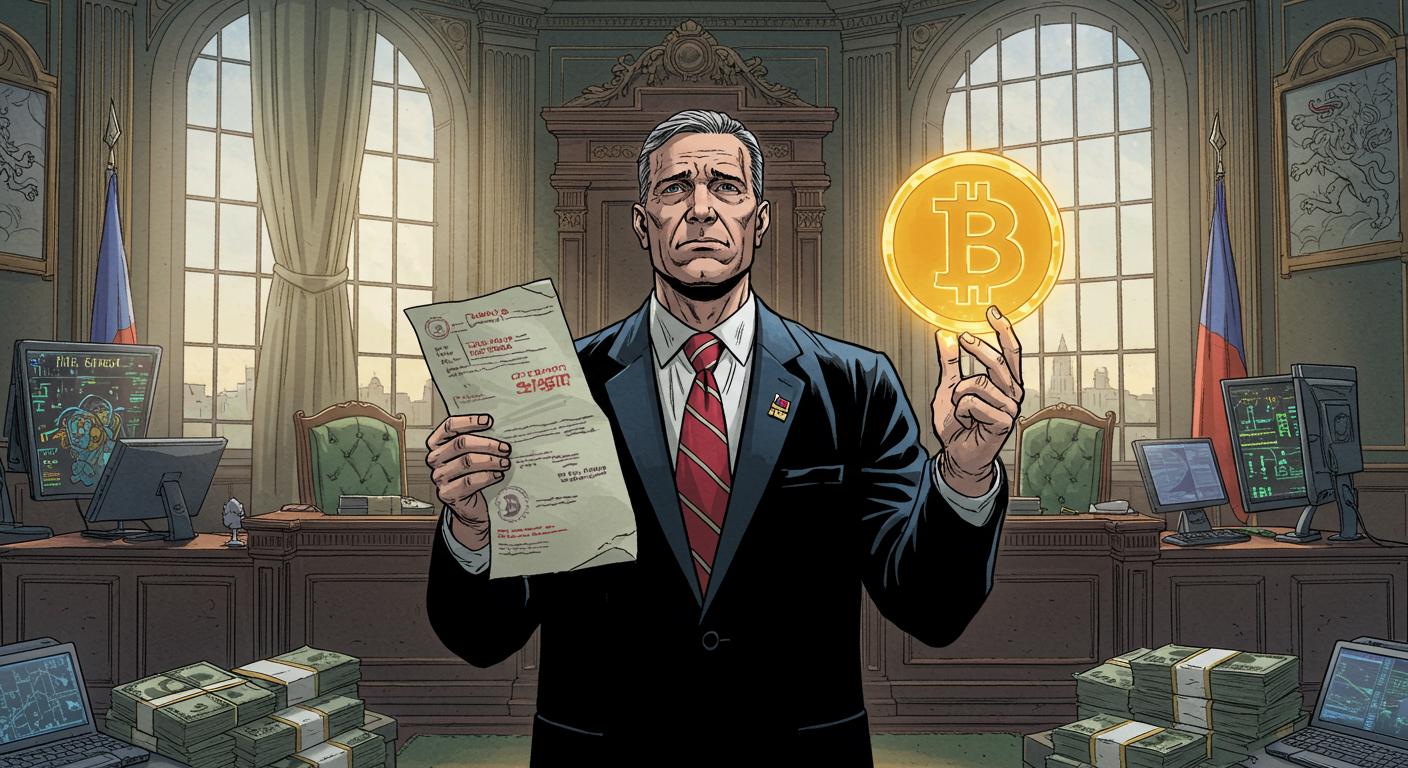
If modern governance sometimes feels stranger than fiction, the latest episode from the Czech Republic may have just raised the bar. Imagine being handed a $45 million Bitcoin windfall—by a convicted drug trafficker, no less—only to see it turn into a career-ending headache. That’s the real-world predicament that recently led Czech Justice Minister Pavel Blažek to resign with little more than a polite wave and a pointed, “It’s not what you think.”
As outlined in CryptoSlate’s reporting, the ministry found itself the surprise recipient of roughly 480 Bitcoin, courtesy of Tomáš Jiřikovský. Jiřikovský, known to law enforcement for operating an illegal online marketplace specializing in drugs and pharmaceuticals, served four years for both embezzlement and trafficking after his 2016 arrest. Local media indicate that the state’s digital wallet was filled with the donation, which officials hurried to liquidate—converting the crypto haul into nearly a billion Czech koruna, earmarked for everything from victim support funds to improved prison equipment.
A Gift with Strings?
This is the kind of “random act of generosity” that doesn’t quite fit into the usual charity ball narrative. As recounted by the outlet, opposition legislators quickly raised concerns about the appropriateness of accepting, and even profiting from, an offering straight from a former offender’s portfolio. Shortly after police began an inquiry into both the origins of the Bitcoin and the circumstances behind its acceptance, Blažek bowed out. His resignation, posted publicly after conversations with Prime Minister Petr Fiala, included an insistence on personal innocence and a desire not to stain the government’s reputation—a line that feels as old as government itself, even if the currency in question is cutting-edge.
Authorities confirmed to CryptoSlate that police are looking into the full transaction, while the prime minister’s office will appoint an interim minister and await investigative findings before making final decisions on allocation of the freshly converted funds. The justice ministry, meanwhile, pledged full cooperation—one hopes with just a touch more paperwork than usual.
Lawful, But Maybe Not Less Bizarre
So was any law broken? That depends on which patch of the Czech legal tapestry you consult. In comments made to reporters, Blažek pointed to existing statutes that permit the state to accept property after due legal forfeiture, and even suggested that a convict might consider such a donation a form of penance. Quoting the minister in CryptoSlate’s writeup: “Why should a convicted person not be allowed to give something to the state, for example, as a form of penance?” Prime Minister Fiala also publicly viewed the transaction as lawful, as noted by state broadcaster ČT24 and relayed by CryptoSlate. But as always, what’s legal and what’s advisable aren’t always the same—especially when the PR department is left holding the metaphorical (and literal) bag.
One wonders: How much scrutiny should surround windfalls whose origins are so colorful? If restitution comes gift-wrapped in a digital wallet, should it be embraced, or should the state politely decline and redirect the funds elsewhere? Is it restorative justice, a slippery slope, or just “business unusual”?
A New Era for Restitution, or an Old Question in Fresh Packaging?
Blažek’s defense, as outlined by the outlet, hints at a philosophical thread rarely tugged in the world of government bookkeeping. Why shouldn’t the proceeds of crime—especially once out of the hands of the convicted—become tools for bolstering the systems designed to prevent such crimes in the first place? Yet, as the opposition pointed out, the optics are odd enough to make even the world’s most daring compliance officer pause. The transaction may technically tick every legal box, but does it muddy the waters of public trust?
If nothing else, this episode seems to illustrate just how tangled things get when 21st-century currencies crash into centuries-old ideas about remorse and restitution. Should a government’s coffers ever sight Bitcoin flowing in from a source who previously tested those very same justice systems? Can restorative gestures truly live on the blockchain—or is “donor” one title that shouldn’t be added to a convict’s legacy so quickly?
With a police investigation ongoing and politicians scrambling for the right mix of transparency and spin, it’s clear the answers won’t be straightforward. For now, the ministry stands by, one generous gift richer and one minister lighter.
Somehow, you have to wonder: Given the rapid evolution of both crime and currency, will future governments be drafting thank-you notes—or firewall protocols—when the next convict with a conscience (and a crypto wallet) comes calling?