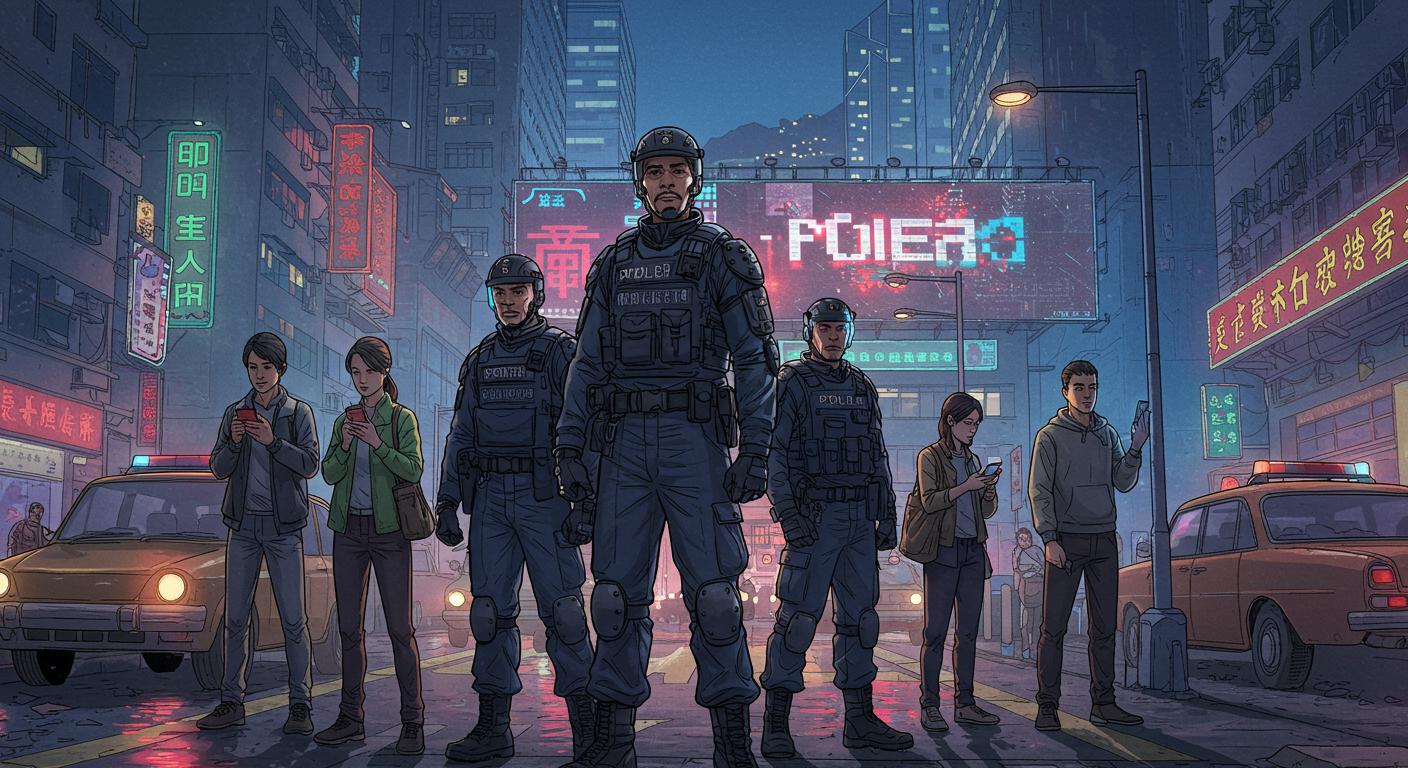
It’s not every day you see a video game spark an international quarrel, but then again, not every app lets you roleplay as someone toppling the status quo. This week, “Reversed Front: Bonfire”—a mobile game out of Taiwan—found itself front and center in a cross-border saga, drawing the look-you-in-the-eye disapproval of Hong Kong police and, by extension, Beijing. It’s a chain of events that stirs up questions about just how thin the line can get between digital playtime and alleged political misdeeds.
National Security Meets the App Store
The story kicked off in earnest with a public warning from Hong Kong’s National Security Department, which, as documented by Hong Kong Free Press, instructed anyone with “Reversed Front: Bonfire” installed to “uninstall it immediately.” Authorities allege it’s no innocent pastime; in their statement, the game was said to promote “secessionist agendas,” advocate “armed revolution,” and encourage efforts to overthrow China’s “fundamental system.”
Both HKFP and the South China Morning Post note that police warnings didn’t stop at simply playing—they extend to anyone sharing, recommending, or helping finance the app through in-app purchases. According to officials cited by the SCMP, even downloading the game could amount to possessing a seditious publication under the Safeguarding National Security Ordinance—Hong Kong’s domestically crafted sidekick to the Beijing-imposed national security law.
There’s a distinct air of thoroughness about the warning. Police, as relayed in both outlets’ reporting, flagged not only the act of playing but also the digital footprints surrounding the game: distributing content, providing funding, or even promoting the app online could expose an individual to potential prosecution for inciting secession or subversion. On the list of hypothetical ways to become an enemy of the state, downloading a mobile RPG now appears alongside “posting posters without permits.”
War, Rebellion, and App Store Removals
So what is it about Reversed Front: Bonfire that’s made authorities bristle? The game’s description on Steam, highlighted by HKFP, boasts mechanics that invite players into a digital uprising: “overthrow the communist regime” by stepping into the shoes of characters from Hong Kong, Tibet, Taiwan, the Uyghur community, and Mongolia. The developers, ESC Taiwan, don’t shy away from characterizing in-game antagonists as “heavy-handed” and corrupt—hardly ambiguous villainy.
Police, in statements reviewed by SCMP, emphasized that the app’s content “intends to provoke hatred” toward both the central government and Hong Kong’s administration. It’s less Call of Duty, more code red, at least in the eyes of local officials. The SCMP also points out that the game’s overt references to “armed revolution” and the explicit targeting of the PRC’s governing system were central motivators behind the crackdown.
As for the fate of the app itself, HKFP records that it was initially released on both Google’s Play Store and Apple’s App Store. After a post from the game’s social channels revealed the title had failed to bar players from making hate speech, Google removed it from its Play Store in May. When HKFP checked the digital shelves at around 8pm Tuesday, the app was nowhere to be found on Hong Kong’s Play Store, though it still lingered—perhaps awkwardly—on the App Store in the city. The game’s ability to slip past one gatekeeper but not another adds a bureaucratic “ghost in the machine” flavor to the whole affair.
Where Does Fiction End and Law Begin?
All of this prompts a few eyebrow-raising thoughts. On the one hand, games have long been more than mere time-fillers; on the other, it’s an unusual leap from “downloaded app” to “potential state enemy.” Is there an expectation that anyone piloting a pixelated insurgent actually harbors sedition, or is this another case where the medium becomes the message (and the message, well, becomes criminal evidence)?
The SCMP notes that police took swift action, requesting various platforms remove access to the game under national security provisions. This isn’t the first or only time games have triggered geopolitical headaches—Minecraft, SimCity, and a menagerie of less famous titles have spent time on various countries’ banned lists. Still, there’s a special oddity in seeing in-app purchases categorized as potential offenses: a hero with a premium sword could now face the same scrutiny as a publisher of subversive tracts, if authorities decide intent is in play.
Bonus Level: The Bureaucratic Boss Fight
For readers of the absurd and the archivally-inclined, there’s something wholly modern about this digital tug-of-war. Games once tucked away in obscure corners of app stores can become headline bait overnight—all it takes is a little law, a healthy dose of suspicion, and a few concerned press releases. The police instructions, parsed in both reports, now place would-be players in the position of furtive downloaders—“uninstall immediately” might be the least fun game mechanic ever invented.
Let’s be honest: the odds that “Reversed Front: Bonfire” itself topples anyone’s regime are, let’s say, slim. But as a case study in the peculiar power of pixels and policy, its rapid transformation from mobile pastime to digital persona non grata is tough to beat. Are the days of “it’s just a game” now over in certain jurisdictions, or does controversy like this simply ensure even more eyes (and downloads) find their way to banned bytes?
In the end, the app may get deleted, but the questions it raises about play, dissent, and digital boundaries linger: just how much revolution can you fit in your pocket—and is your pocket now a battleground?