
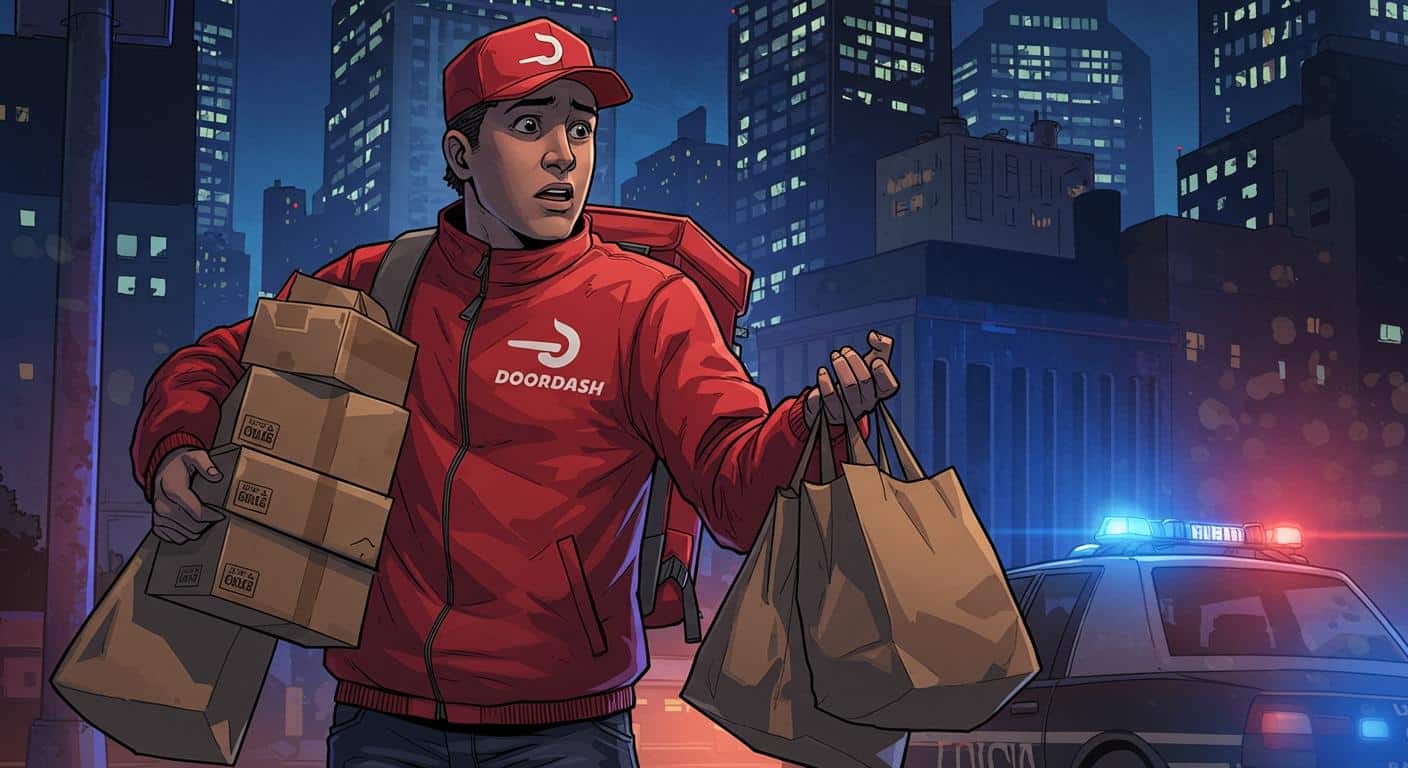
For anyone who’s ever wondered if their lunch order might one day turn into the plot of a tech crime novel, the DoorDash scam recently unspooled in California serves up a platter of digital intrigue well beyond a missing bag of fries. As reported by the Associated Press, Sayee Chaitanya Reddy Devagiri, a now-former delivery driver, pleaded guilty to orchestrating a $2.5 million scheme that gamed DoorDash’s software—one manual order at a time. Somewhere between algorithm and appetite, fraud took root, and it sprouted more than just an awkward customer service call.
The Anatomy of an Extra Saucy Scheme
According to federal prosecutors, whose statements are cited in the Associated Press report, Devagiri, 30, wasn’t a lone operator. He collaborated with three others and used a hybrid approach: manipulating legitimate customer accounts, controlling fraudulent driver profiles, and—crucially—exploiting insider access provided by a DoorDash employee. The AP describes how, between 2020 and 2021, this quartet placed high-value orders, manually reassigned those orders to driver accounts they themselves controlled using employee credentials, and marked them as “delivered,” despite not a single sandwich, sushi roll, or smoothie ever reaching a customer.
What’s particularly surreal, as detailed by the AP, is that the team made this process repeatable: Devagiri used DoorDash’s software to change order statuses from “delivered” back to “in process,” allowing the same orders to be rerouted and resubmitted for new payouts. Dozens or even hundreds of fake orders could circulate this way, with the fraudulent driver accounts quietly accumulating payouts for food that existed only in DoorDash’s database.
In the background, the AP shares, a DoorDash employee—since convicted—handed over the credentials that unlocked the scam’s endless permutations. By possessing internal access, Devagiri’s group could continuously move orders from account to account, as explained by federal prosecutors. It’s the kind of scenario that makes you wonder: Did anyone in fraud detection suspect something strange was up, or did the flurry of digital orders simply blend into DoorDash’s pandemic-era delivery surge?
Fast Food, Faster Fraud
The scale is almost comical—$2.5 million siphoned off, one “delivered” button at a time. The AP indicates that Devagiri is the third defendant to be convicted in connection with this plot, with the former employee pleading guilty to conspiracy to commit wire fraud in November 2023. The conspiracy itself unfolded in the midst of 2020 and 2021—the heyday of lockdown dining, when online orders were more routine than ever.
With Devagiri facing a potential 20-year prison sentence and a fine of $250,000, as outlined by prosecutors, there’s perhaps a broader lesson on display. The same turbocharged, frictionless gig economy that brings avocado toast to your door in fifteen minutes can, apparently, be manipulated into a money-making conveyor belt, so long as you’ve got the right credentials and very little conscience.
Was this elaborate theft a bug in the system, a reflection of weak internal safeguards, or simply a digital-age twist on a much older form of grift? The fine print of trust grows fuzzier every year—particularly at the intersection of anonymous gig work and ever-growing pools of sensitive data. And considering the scam’s scale, you have to ask: how many other “delivered” orders were only ever delivered to invisible balance sheets?
At the end of the day, there’s a strange fascination in the sheer methodical creativity involved here. Next time your order pings from “in process” to “delivered” and nothing shows up, you might wonder where, exactly, your lunch has gone—and whether it ever existed at all, outside a line item in someone else’s grand digital heist.