
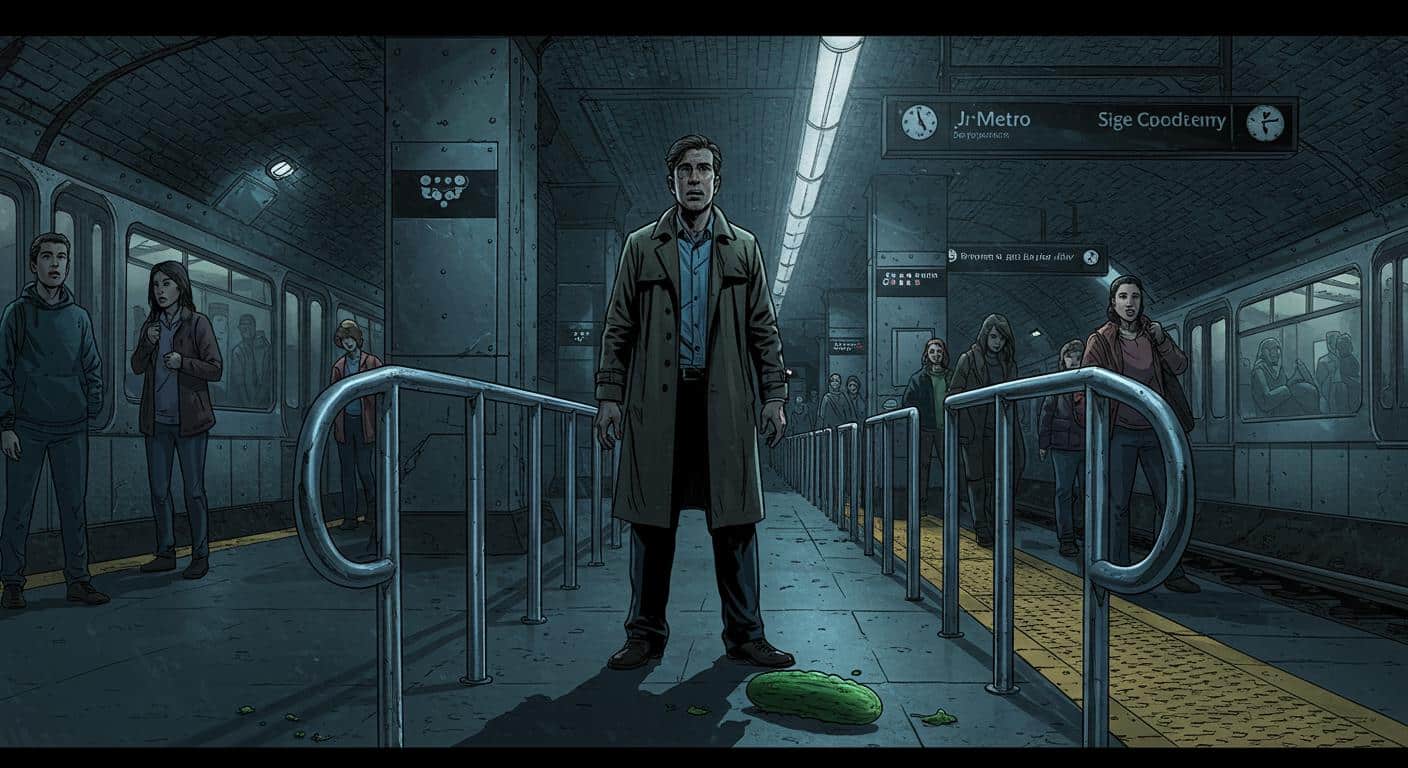
Juxtaposed with the annual return of cherry blossoms and tourists to D.C.’s stately boulevards, one imagines handrails across the Northwest quadrant recoiling just a bit tighter to the brick. This week, closure—if not catharsis—arrived in one of the city’s stranger public disturbances. DC News Now documents the saga of Anthony Roget Hines II, who has been sentenced after a string of lewd, indecent, or obscene acts and unlawful entry that, when unpacked, read like the misadventures of a particularly avant-garde urban goblin.
A Case of Intrusive Produce and Disgruntled Metalwork
As outlined by DC News Now, the episode began in broad daylight last September when a homeowner near Dunbar High School discovered her SUV had been targeted in a way that likely prompted a double-take on the security feed—a man was seen on footage engaging in a public sex act with a cucumber jammed into the vehicle’s grille. This was not, apparently, an isolated expression of creative mischief. The arrest affidavit, referenced by the outlet, ties the same individual to a string of equally inventive acts at or near private residences, with handrails serving as both set and prop. It seems at least one embattled railing, located in an alleyway on Q Street Northwest and reportedly targeted twice, now sports a sandpaper wrap—a homeowner’s attempt, perhaps, to repel future advances.
Grouped among these rather singular events, police documents cited in the report describe Hines opening the gate to a porch and “proceed[ing] to slide up and down on a metal railing shaped like a pinecone while performing sexual acts.” In a backyard, video evidence reportedly showed him “sodomizing himself” with a rake handle. Identification of the suspect came in the form of an anonymous tip, suggesting that neighborly vigilance in D.C. occasionally requires a greater imagination than advertised.
Resolution, Reluctant Relief, and Cautious Farmer’s Market-Goers
Following a guilty plea covering five counts of lewd acts and four of unlawful entry, court records detailed in the same outlet show Hines was sentenced in D.C. Superior Court to one year in jail—though only six months will be served—alongside two years of probation, as confirmed by the U.S. Attorney’s Office for the District of Columbia.
The reactions from those directly affected managed a balance of relief, humor, and perhaps a touch of exasperation. One homeowner, whose SUV had played an unwilling supporting role, told DC News Now she was “thankful to the community for helping crack the case of the vegetable voyeur and look[s] forward to enjoying farmer’s market season in peace.” One might imagine local produce vendors eyeing their displays with new wariness, calculating risks previously considered the stuff of satire.
Of course, the handrails themselves—steady fixtures in an unpredictable world—have yet to offer public comment. If hardware could organize or blush, Q Street’s battered railings might now demand hazard pay rather than a modest sandpaper wrap.
Handrails in the Spotlight: When Infrastructure Meets Invention
When considering the particulars laid out in court documents and surveillance footage, there’s an almost anthropological lesson at play. Public and private spaces—driveways, porches, backyard fences—carry stories we rarely anticipate. Security cameras, intended to deter porch pirating or raccoon activity, became silent witnesses to a set of behaviors few property owners would dare to imagine, let alone prepare for.
Cases like this raise subtle questions about the boundaries—literal and figurative—of urban infrastructure. Is it possible to design a handrail with “do not disturb” in mind, or must homeowners now add “vegetable-resistant” to their lists of features? What struck me most wasn’t just the headline weirdness, but the resilience and occasionally dry humor with which the affected community responded.
In a city accustomed to headline-grabbing scandals and the everyday absurdities of politics, incidents like these prove that the unexpected persists at every level, upending our assumptions about what’s possible on a Wednesday afternoon. After this, can D.C.’s architectural elements truly ever rest easy, or will new oddities simply take their turn in the security camera limelight? Sometimes, the best we can do is acknowledge—even appreciate—the peculiarities that make urban life anything but predictable.