If you pitched this as a made-for-TV thriller, you’d probably be told to tone it down. Still, reality occasionally outpaces even the wildest scripts. In suburban Salt Lake City, a family endured half a year as “hostages” not to a cartel, but to the elaborate fiction of one man—Dominic Garcia—who appointed himself both protector and jailer, according to the Associated Press.
Six Months Under Lock and ‘Protection’
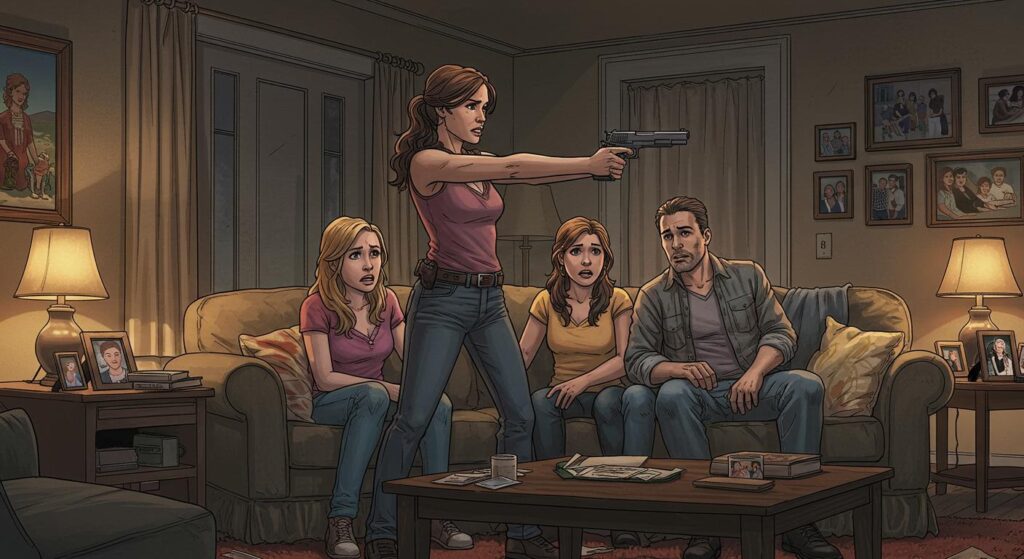
Garcia, 23, moved in with his girlfriend and her six relatives around December. Within a short span, he apparently unveiled a tale of danger worthy of daytime TV: his own family, he told them, had cartel ties, and now the household was at risk. Citing the police affidavit, the AP details how Garcia’s warnings were paired with the visible presence of a handgun—never a subtle instrument in the choreography of fear—and firm instructions that any deviation could mean death at the hands of these alleged criminals.
In a detail underscored by the AP, family members described being unable to leave home except for brief intervals, at risk (so they were led to believe) of dire consequences. Garcia’s grip on his fabricated story seems, at best, outsized; at worst, calculated. The distinction blurs quickly when stress and intimidation are in the mix.
It wasn’t until a breaking point arrived—six months later—that the family’s patience unraveled. The outlet notes that someone inside finally contacted authorities, explaining they simply “weren’t able to take it any longer” and, in a surprising twist, had turned the tables by holding Garcia at gunpoint until officers arrived.
“I Didn’t Know How to Stop the Lie”
When confronted by police, Garcia reportedly admitted he’d created the cartel narrative from thin air. The police affidavit cited in AP coverage states he continued spinning the falsehood “because he did not know how to stop it in fear that they would not like him.” It’s the sort of statement that invites more questions than answers. If you’ve ever scrambled to cover an awkward social fib, imagine extending it into an all-encompassing saga of crime, weapons, and forced house arrest—then multiplying that by 180 days.
Garcia now faces an impressive array of 28 charges, including multiple counts of kidnapping and assault. At last report, authorities confirmed he was being held in Salt Lake County jail. No attorney is listed to speak on his behalf, as the AP notes.
Fear, Folklore, and Group Delusion
It’s easy, from the comfortable distance of hindsight, to wonder how a modern family could fall under such an improbable spell. But as the report lays out, add relentless anxiety, a dash of charismatic manipulation, and a visible threat—and even the most outlandish stories can take root. It’s almost like a grim twist on classic urban legend: the monsters aren’t imaginary, but the danger comes from someone in your own living room performing both villain and savior.
There’s an undeniable fascination in how such collective delusions settle in. Did the family fall into quiet routines, each member quietly reassured by the others’ apparent acceptance? Was there a moment when someone nearly voiced a doubt, only to reconsider because a gun was in sight? It’s rarely a single, cinematic moment of realization—the unthinkable just seeps into the everyday, until one day it’s utterly intolerable.
The Thin Line Between Story and Reality
So the man who spent six months “protecting” a family from imaginary cartel assassins turned out to be their real adversary. Earlier in the AP coverage, it’s clear it took not just one, but a collective moment of desperation and courage for the family to break the spell and call for help.
Cases like this don’t only challenge intuition—they upend it. Where does ordinary skepticism collapse into compliance? How much myth-making are we all equipped to accept before reality checks back in? Sometimes the storytelling impulse—so fundamental to being human—can mutate, especially under pressure, into something stranger than fiction. In the wake of this saga, the boundaries between vigilance, credulity, and catastrophe seem unsettlingly fragile.
After all, can you really call it “protection” when the greatest threat is the person holding the keys?