
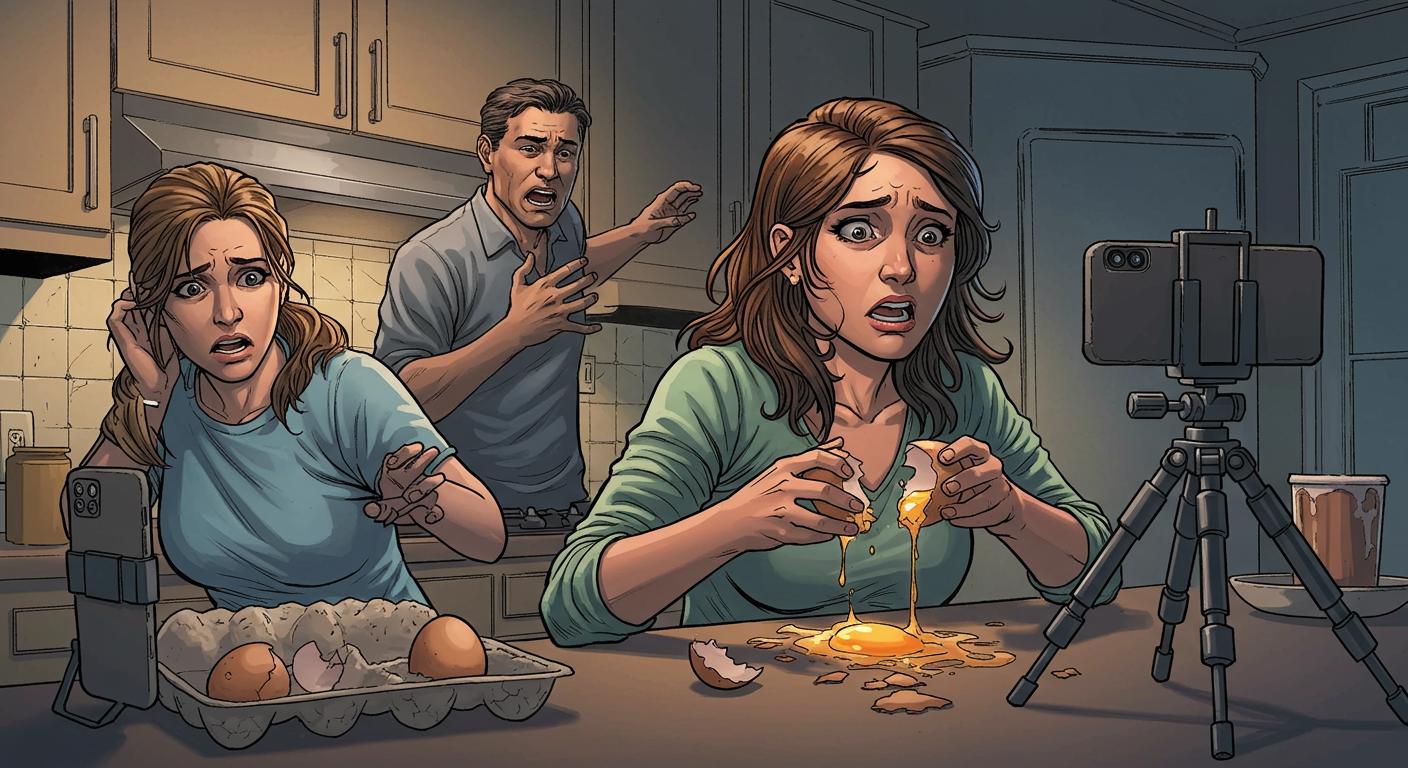
It’s not every day that something as mundane as an egg manages to spark both viral laughter and legal trouble. Yet, as reported by Oddity Central, a mother has been convicted after she cracked an egg on her daughter’s forehead for a TikTok video. One of those headlines that feels like it emerged fully formed from the stranger corners of the internet, but there it is: an ordinary kitchen antic, now transformed into a cautionary tale.
The Slippery Slope of Social Media Challenges
If you’ve spent any amount of time reluctantly scrolling through TikTok trends, you’ll recognize the familiar rhythm: someone does something unexpected (and usually messy), the reactions get filmed, and, with any luck, the resulting video racks up a flurry of likes. Cracking an egg on a loved one’s head falls squarely into that category—equal parts slapstick and social experiment. But, as the Oddity Central headline underscores, sometimes the humor doesn’t quite land where it was intended.
It does raise a curious question: when does a harmless-sounding prank cross over into something serious enough to end up in court? The headline suggests social media’s appetite for novelty now collides, sometimes quite literally, with legal boundaries we didn’t expect to encounter over breakfast ingredients.
Headline-Fueled Speculation (and the Limits of the Record)
With only Oddity Central’s report to go on, the specifics remain mysterious. Was the video’s intent playful? Did the reaction escalate? None of that is detailed—but the outcome is: a conviction. Social media participants may want to take note; the pursuit of internet notoriety occasionally comes with consequences beyond digital embarrassment. How many viral moments have we seen lose their luster once real-world implications enter the mix?
It’s an odd intersection of meme culture and legal reality—one that makes you wonder how future generations will explain these courtroom cases (and perhaps why so many kitchen items end up as evidence).
An Omelet of Irony
In the end, a mother’s TikTok moment now stands as a legal precedent, at least in the peculiar annals of internet-related convictions. The details might be scarce, but what’s clear is that the internet’s love of the absurd still manages, now and then, to surprise us—with consequences as real as they are unexpected. Do we chalk it up to folly, or is there something instructive here for the next wave of viral hopefuls?
Maybe next time, more egg salad, less eggshell drama.