Every so often, an intellectual property lawsuit perfectly captures America’s never-ending fascination with mascots, free enterprise, and the peculiar desire to put tactical gear on everything—including woodland creatures. The latest skirmish features Buc-ee’s, the Texas-based comfort-stop icon, training its legal sights on a South Carolina apparel company that outfitted its own beaver mascot for combat.
The Tactical Beaver Uprising
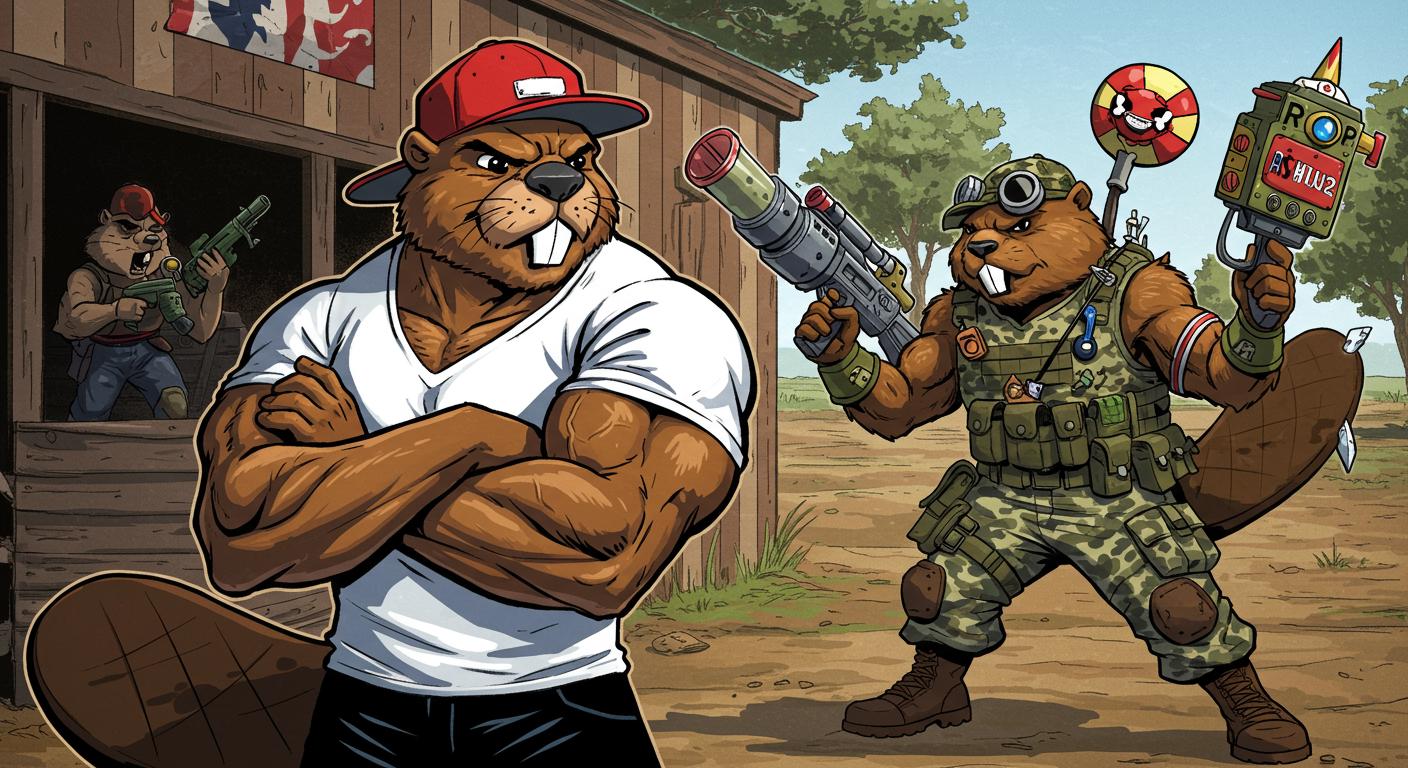
You may have seen Buc-ee’s smiling beaver staring down weary travelers along Texas highways—always with a red cap, never a flak jacket. Court documents cited in FOX Carolina’s report reveal that Born United, a Goose Creek-based retailer, has landed in legal hot water for what is described as “slavish copying” of Buc-ee’s famed mascot. The apparel in question doesn’t just echo Buc-ee’s perky beaver; it transforms him into “Tac-Bucc,” a wide-eyed rodent decked out in tactical gear, complete with helmet and firearm, appearing on men’s shorts, T-shirts, and PVC patches.
The same news report details how Born United, whose patriotic mission statement reads like a Fourth of July speechwriter’s fever dream, continued to sell the “Tac-Bucc” line even after receiving a cease-and-desist letter. Pictures filed in the lawsuit show the similarities are, to put it mildly, not subtle. On one patch, the armed beaver’s likeness sits above the hopeful rallying cry, “Live Free.”
Mascots, Patriotism, and the Line Between Homage and Hijack
Diving into the broader context, the Greenville News explores how Born United, with shops in North Charleston and Summerville, brands itself as a bastion of American pride, offering its own private-label goods alongside military-themed merchandise from companies like Palmetto State Armory and Nine Line Apparel. According to store founder Cameron Bechtold and the Born United team, the aim is to champion “a nationwide movement of absolute pride” in America and those who defend it.
As stated in the same report, the disputed products feature more than a tactical makeover. Shorts, T-shirts, and the “Tac-Bucc” patch all mirror hallmark features of Buc-ee’s branding: a beaver face ringed in yellow, instantly recognizable teeth, and eyes as wide as the Texas plains—though in this version, the mascot is mission-ready.
It’s almost poetic, in its own way. Buc-ee’s original mascot was a joint tribute to the founder’s childhood nickname and his beloved dog, according to the Greenville News—a far cry from the hard-charging paramilitary makeover now on display.
Battle of the Beavers: Legal Maneuvers and Mascot Makeovers
The San Antonio Express-News outlines Buc-ee’s legal grounds: federal and common law trademark infringement, unfair competition, and false advertising among them. The complaint alleges that Born United’s continued sales after formal warnings show “willful infringement and bad faith conduct designed to capitalize on Plaintiff’s established goodwill and reputation.”
Further, the same source highlights that this is hardly Buc-ee’s first IP rodeo. Their legal team seems seasoned in defending Texas’s most industrious rodent. The outlet also documents how other retailers, such as Florida’s Prometheus Esoterica (which offered a “rock ‘n’ roll” spin on the beaver), have found themselves fending off similar claims.
Meanwhile, Born United’s owner Cameron Bechtold maintains a remarkably cordial public stance. In a statement referenced in a WCSC/Gray News report, Bechtold declares, “We love and respect Buc-ee’s, and we are happy to discuss any concerns that they might have,” emphasizing the company’s support for veterans and first responders. This olive branch comes even as, by their own account, shirts featuring the disputed beaver lingered in shop window displays after their removal online.
Commerce, Copycats, and the Curious Case of the Militant Mascot
So, where does all this leave the consumer facing a lineup of dueling beavers, each with their own vision of roadside Americana? Trademark law is a labyrinth even seasoned attorneys can get turned around in, and the spectacle of a beloved, snack-dispensing mascot abruptly taking up arms is, perhaps, a tad surreal.
The Greenville News offers some additional local color, noting Buc-ee’s plans for an Upstate South Carolina location are ongoing—complete with the usual franchise quirks (Clemson memorabilia, beaver nuggets, gator jerky), but presumably without any camouflaged mascots. The timing is curious: just as the beaver’s popularity is poised to expand in the Palmetto State, the question of what “counts” as too-close-for-comfort imitation becomes surprisingly consequential.
Is giving the beaver tactical upgrades an act of creative transformation, or just brand misappropriation with extra pockets? And at what point does homage cross over into the legal equivalent of identity theft—albeit in polyester-blend?
Reflections From the Roadside
Ultimately, as Buc-ee’s sharpens its legal teeth and Born United mounts its defense—or perhaps offers a heartfelt handshake over beef jerky displays—the American tendency to remix, repackage, and (sometimes) militarize even the cutest of mascots remains undefeated. It does make you wonder: in a country that can’t resist turning a roadside beaver into both a snack-peddler and a symbol of tactical freedom, is this the final evolution or just the beginning of a truly wild mascot arms race?
Maybe next time you see a familiar cartoon face grinning at you from a billboard or a patch, you’ll pause and ask: is that the genuine article, or did someone just hand him a GoPro and an AR-15? In this landscape, apparently, anything is possible.