Every so often, a headline emerges that feels almost like an accidental rerun. The recent case of Stephanie McDonald, as reported by WOWT, lands squarely in this curious category: the news details how McDonald allegedly returned to passing counterfeit bills—while still on probation for doing exactly that the year before.
An Encore in Small Change
As described in court records referenced by WOWT, McDonald initially pleaded “no contest” to a first-degree forgery charge in 2024 after being accused of using fake $20 bills. Her sentence: a year’s probation. That, it seems, didn’t put a stop to the routine. This week, she appeared in court again, now facing two fresh counts of forgery for reportedly repeating the same offense, sometimes at the same types of establishments, while still under supervision.
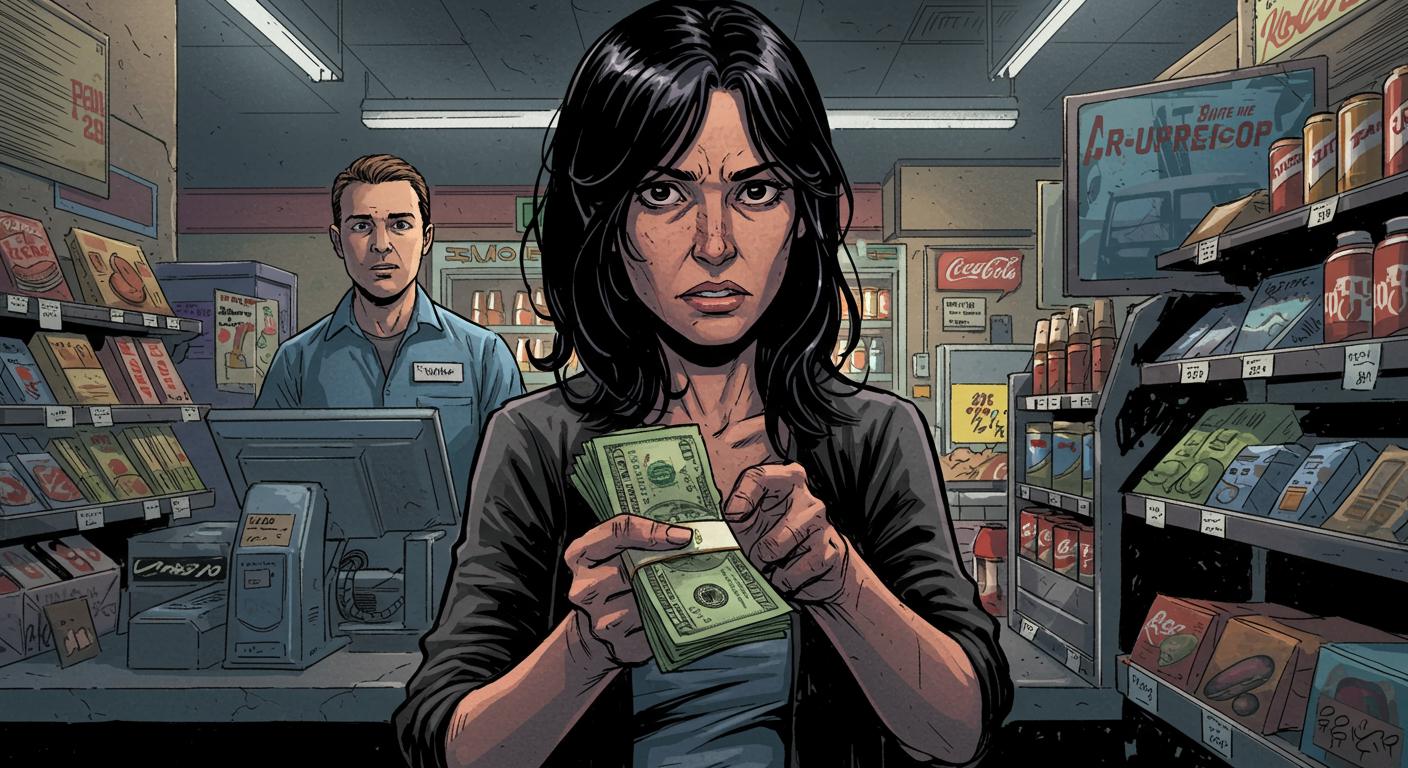
Officials told WOWT that McDonald made at least a dozen small purchases using counterfeit currency at Omaha restaurants, coffee shops, and a grocery store. The cases documented read like a somewhat bizarre loyalty program: four different Runza locations, a HyVee store for a pair of $1 shooters, and a lePeep breakfast spot, each alleged transaction involving a small, low-cost item and a fake $20. This isn’t the stuff of high-stakes heists—in fact, the almost methodical focus on tiny purchases feels, if anything, oddly quaint.
Patterns in the Paper Trail
In a detail described by the outlet, connections between incidents surfaced quickly. The detective handling the HyVee incident immediately associated it with the earlier Runza cases from August 2024, as both followed the identical approach of a cheap order and oversized bill. The pattern evidently stood out not just to police; restaurant staff seemed to catch on as well.
Staff at LePeep reported that McDonald had tried to use a counterfeit bill to buy a $3.84 coffee—months after her initial charges. According to the report, the manager saved the bill as evidence and remarked to police that the same individual had attempted similar actions on other occasions. Efforts to document her visits included a failed photo attempt, with McDonald reportedly dodging the camera and leaving the scene.
A more successful effort came at Scooter’s Coffee. WOWT notes that, in April, an employee snapped a photo of both the vehicle and the alleged customer after observing what the staffer believed was McDonald’s fifth attempt at paying with fake bills. This time, there was little ambiguity, at least from the employees’ perspective: the same person, a familiar pattern, and photographic evidence.
McDonald, as mentioned in court documents cited by the outlet, denied ever visiting that Scooter’s location. Yet the staff’s account of repeated interactions paints a different picture, one that suggests notable persistence—intentional or otherwise.
Counterfeiting: Less Artful, More Oddly Predictable
What emerges from these reports isn’t the image of a criminal mastermind but rather someone stuck in a singular groove. The counterfeit $20s weren’t just recycled; so, too, was the basic operation: approach counter, order something trivial, hand over the fake note, depart. As the outlet details, this repetitive approach made detection not a matter of intricate sting operations but simply of staff and investigators picking up on the routine—a kind of low-stakes déjà vu.
Even the legal consequences seem to reflect the matter-of-fact nature of the case. The judge assigned McDonald a $10,000 bond per count, with her preliminary hearing set for July 11. Given her latest charges arrived while she was still under probation, it’s difficult to see how a third chance might materialize in court.
A Cycle, Not a Plot Twist
The whole episode prompts some reflection. The recidivism on display feels almost too straightforward. As previously noted by WOWT, McDonald’s actions rarely strayed from the original script, and neither did her apparent insistence that this wasn’t her story—despite mounting documentation to the contrary.
Is it a failure of the system to stop minor crimes before they become habitual, or simply a testament to how persistent old habits can be? Counterfeit money, at least in this case, seems less a plot device and more a prop in a quietly looping cycle. One has to wonder: is it harder to break a counterfeit habit, or a five-dollar bill with a fake twenty? The answer, for now, appears lost somewhere at the intersection of routine and resolve.