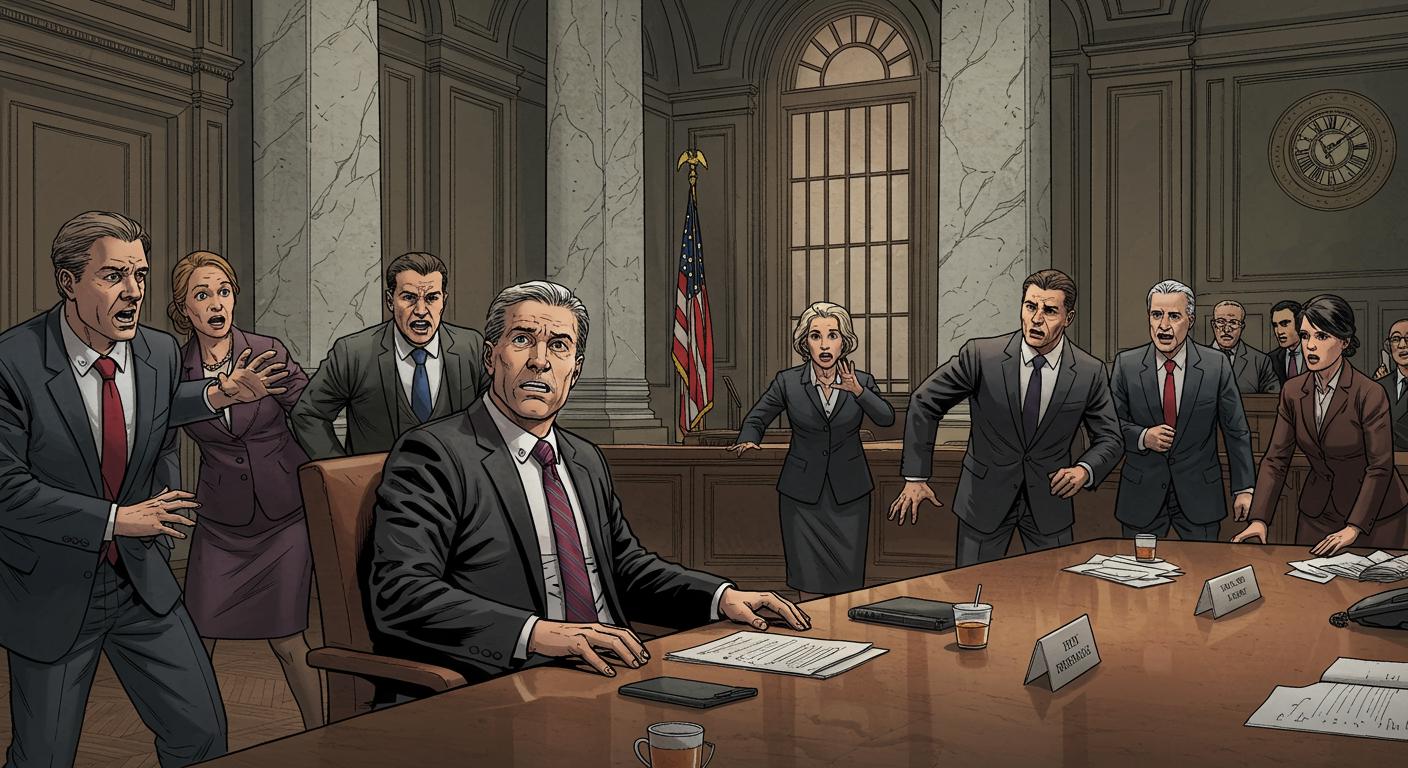
If city government drama usually evokes images of lost paperwork and contested parking ordinances, the story of Brian Williams, former deputy mayor for public safety in Los Angeles, might inspire a more suspenseful mental picture. According to the Los Angeles Times, Williams has admitted—via a plea agreement unveiled last week—to phoning in a bomb threat to City Hall. Not from a shadowy corner or an irate protest, but while he was actively participating in a virtual City Hall meeting, toggling between civic duty and… well, felony-level pranking.
This wasn’t your average city employee meltdown. Williams, a linchpin in law enforcement oversight with a thirty-year résumé, used Google Voice on his own phone to fake-receive a threat, then promptly alerted LA’s top police brass, the mayor, and other senior staff. The supposed caller, in the story Williams spun, was motivated by “support for Israel”—a quickly adopted explanation that fit the heated tenor of the times and immediately sent the LAPD on a building-wide search for explosives.
The hunt, naturally, turned up nothing suspicious. The only real detonation was the fallout once forensic digital sleuthing pointed right back to Williams himself.
For the record, AOL also referenced the plea deal but did not provide any substantive reporting beyond the existence of the case.
The Anatomy of an Implosion
Details described in the Los Angeles Times show that Williams orchestrated the whole affair during a meeting on October 3, 2024, by calling his city-issued phone from a personal Google Voice account, then alerting officials and the press about the imaginary threat. The mechanics verge on slapstick—an “unknown male” makes the fictitious call, Williams makes dramatic notifications, and the inevitable wave of law enforcement activity ensues. He even produced a call record (which federal authorities later determined came from himself), and texted colleagues regular updates about meeting with threat management officers.
All of this unfolded while he was the deputy mayor in charge of public safety. There’s a certain tragic symmetry to the city’s crisis-response leader inciting a false panic, don’t you think?
Beyond the bizarre mechanics of the incident, there’s the aftertaste of institutional embarrassment. The Times revealed that FBI agents raided Williams’ home in December, a move that sent shock and disbelief through City Hall and the Los Angeles Police Department. Williams, apparently respected and entrenched in high-level city operations, had until the scandal broken been a central figure in public safety policy—and, rather ironically, the architect of recent leadership searches for the LAPD.
Of Motives and Misfires
Court records cited in the Times, as well as statements from Williams’ attorney, frame the incident as “aberrational”—a lapse brought on by personal challenges, rather than any inherent malice. In the attorney’s words, Williams is “demonstrating full acceptance of responsibility,” with the note that personal issues contributed to the “aberrational incident.” On the prosecutorial side, U.S. Attorney Bill Essayli announced the deal with a pointed reminder that “we cannot allow public officials to make bomb threats” no matter the circumstances.
Earlier in the report, it’s mentioned that LAPD detectives, before the FBI stepped in, had already concluded Williams was responsible for the threat. The fact that he constructed his own forensic paper trail makes the episode look more like spontaneous self-sabotage than anything resembling a successful hoax. If it weren’t criminal, this might be recounted around break rooms as a cautionary campfire story for future bureaucrats.
The Fallout and the Aftermath
For Los Angeles, the implications stretch beyond mere embarrassment. Williams had authority over the city’s police, fire, airport, and emergency management agencies—a portfolio where public trust is paramount. His instant loss of credibility, underscored by statements from FBI assistant director Akil Davis calling his actions a “betrayal,” leaves a difficult gap. As the LA Times highlighted, Mayor Karen Bass replaced Williams with a veteran former FBI official, a move that telegraphs an intent to restore stability at the top.
Meanwhile, city leaders and spokespersons have spoken publicly of shock and sorrow. Given Williams’ decades as public servant—including stints in multiple mayoral administrations, at public ceremonies, and high-profile events—there’s a persistent sense of whiplash. How does an official known for bows ties and speeches dip, even briefly, into what amounts to a real-world thriller? Or perhaps, do political and administrative pressures at these high rungs occasionally drive people into the truly bizarre?
The Unwritten Manual of Odd Civic Disasters
There’s an understandable urge to draw sweeping lessons here about power, responsibility, and the fallibility of institutions. Still, the pure strangeness of this episode almost resists easy packaging.
Was there anyone in that City Hall Zoom room who saw Williams step out and suspected that the emergency being stage-managed was, in fact, a performance of his own making? After police combed the rotunda without finding even a suspicious paperweight, did anyone stop to ponder whether reality had become more surreal than rumor?
And maybe most curious of all: in a city known for outlandish headlines, how many of us simply scrolled by, assuming this was more of the usual civic weirdness—never quite pausing to appreciate the rarity of a public safety chief penning his own bomb scare? Municipal life is sometimes stranger than fiction, camouflaged by the everyday language of process and protocol.
Is it possible, right now, somewhere in the difficult-to-navigate recesses of your own city government, something equally odd is quietly unfolding—just waiting to land on page one?