
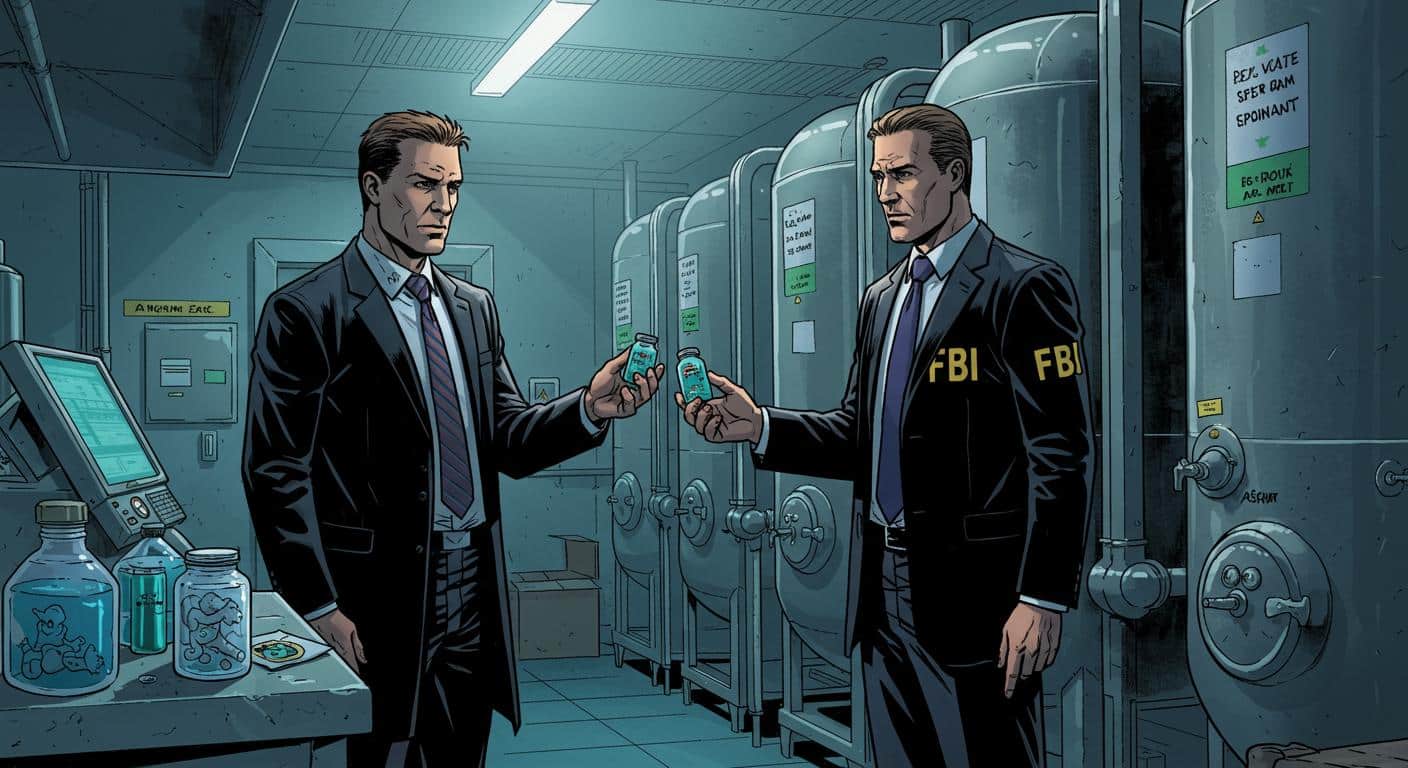
Sometimes, a story lands that’s so thoroughly strange it practically dares you to check if it’s the punchline to a very elaborate joke. Take, for instance, the recent revelation—reported by LGBTQ Nation—that Seattle Sperm Bank secretly provided unused sperm vials to the FBI, and donors were, shall we say, not included in that decision. It’s the kind of modern parable that leaves you wondering which question to ask first.
The Conference Room Where It Happened
This all came to light at an industry meetup back in October 2022, detailed by multiple sources who spoke to LGBTQ Nation. As described in the report, Seattle Sperm Bank’s General Supervisor—identified by sources as Angelo Allard—stated, seemingly offhand, that the bank gave unused sperm samples to the FBI. The purported reason? So the agency could “research splat patterns” for training purposes. The comment, according to anti-fertility fraud activist Eve Wiley and others present, was met with a collective gasp and the kind of awkward glances that usually follow a too-honest family secret.
Wiley recalled it as a “nails on a chalkboard moment,” with those in the room visibly uncomfortable and one person giving Allard the kind of subtle “please stop talking” body language you might reserve for a friend oversharing at a potluck. A fertility expert at the same meeting confirmed the story, telling LGBTQ Nation that it was “almost as if they didn’t see any privacy protections that needed to be discussed, any issues with that, any hesitation about turning information over to law enforcement in that manner, even for training purposes.”
Zoom chat transcripts from the meeting, obtained by LGBTQ Nation, showed virtual attendees calling the disclosure “shocking” and “incredibly concerning,” while questioning if DNA might be added to a criminal database.
The FBI, when contacted by LGBTQ Nation, responded through Seattle Field Office public affairs specialist Steven Bernd, stating there was no information to suggest the FBI had been purchasing sperm from a sperm bank. However, as the outlet notes, the quick turnaround of this response and its ambiguity—especially regarding whether it pertained to local or national operations—left some attendees unsatisfied.
A Fertility Industry Where “Consent” is Flexible
Stepping into the fine print, donor contracts from Seattle Sperm Bank, reviewed by LGBTQ Nation, state plainly: “I understand that once I agree to participate in the donor program and have been accepted into the program, I may not impose restrictions on the manner in which my donor sperm may be used.” This is the sort of language that, as highlighted in the same report, technically gives buyers free rein over vials—including uses far outside the boundaries donors might expect.
A fertility expert quoted by the outlet said, “Technically, people can buy sperm for any purpose… but sperm samples are not intended for that purpose… They’re intended for people to buy to family build. That is the assumption.” Without legal oversight, these sorts of contractual ambiguities mean donors’ genetic material could be used for scenarios well outside family-building, and as LGBTQ Nation notes, donors who spoke to the outlet confirmed they had never been informed their sperm could end up with law enforcement.
The ongoing controversy over shady practices in the sperm bank industry—one already criticized for ignoring family limits and glossing over medical histories—gets a particularly chilling twist when the possibility of government access to genetic material is mentioned, as LGBTQ Nation documents.
From “Forensics Practice” to Personal Risk
Wiley, after years fighting fertility fraud, told LGBTQ Nation she’s especially anxious about what happens next, raising the risks of mishandling or sperm being planted as evidence. As she put it, “What if someone steals that sperm and then sells it on the black market, and they plant that?” The all-too-real potential for DNA to be stored, databased, or simply lost in a system with spotty safeguards is anything but theoretical. The lack of regulation, she lamented, leaves the field wide open for unintended consequences.
For some, these aren’t abstract worries. LGBTQ Nation outlines specific anxiety for the trans community, which often relies on sperm banks before medical transition, and for donors of color, who already navigate compounded risks in dealings with police. Activist Laura High underscored for the outlet that “secretly handing over sperm from Black donors or any donor of color does not just affect that donor, but potentially their entire family.” The article points to the U.S.’s “long and terrible history” of marginalized groups being caught up in abuses of power—the kind of reminder that moving from hypothetical to historical reality is sometimes just a matter of paperwork going unsigned.
Additionally, there’s the question of what happens to children conceived from these donations. A recipient parent, Romy Razuri, became involved in donor advocacy after her own troubling experience with Seattle Sperm Bank. She told LGBTQ Nation the notion of the FBI having access to donor DNA is simply “creepy.” Asked whether these revelations made her worry more for her children, she replied, “Anything at this point related to donor conception makes me feel scared for my kids.”
An Absent Chorus
One of the oddest elements reported by LGBTQ Nation is the near-silence from advocacy groups that were reportedly in the room for the disclosure. Ron Poole-Dayan, executive director of Men Having Babies, told the outlet he had “no specific recollection” of the FBI admission, and neither Family Equality nor representatives from other LGBTQ+ advocacy groups could provide confirmation or additional comment. High, quoted in the article, wondered aloud if some organizations remain silent for fear of losing access or influence—a classic case of valuing your seat at the table, even if the dinner conversation gets especially unsettling.
The Line Between Legal and Ethical, and the Trouble in Between
LGBTQ Nation’s reporting leaves us with a compellingly awkward question: just because something is technically permissible, does that mean it’s even remotely acceptable? The donors (whose DNA winds up in places they never considered), the recipient parents (who now wonder what other surprises await), and particularly marginalized groups (who already carry plenty of history with institutional misuse), are left without real answers or practical recourse.
Even assuming the FBI’s intentions were strictly procedural—simply aiming for realism in their forensics training—the lack of transparency and forethought is breathtaking. As LGBTQ Nation notes, this episode fits neatly into a messy, unsettled world where informed consent is an afterthought and regulations lag behind the realities of genetic technology.
So, does anyone really know where the boundaries are anymore, or is the only limit in the fertility industry whoever thinks to ask the awkward question first? Given what’s surfaced, you have to wonder: If this is what gets shared so casually at a conference, what’s still behind the curtain?
The world just keeps serving up surprises—sometimes unsettling, sometimes absurd, and, in this case, a generous dose of both.