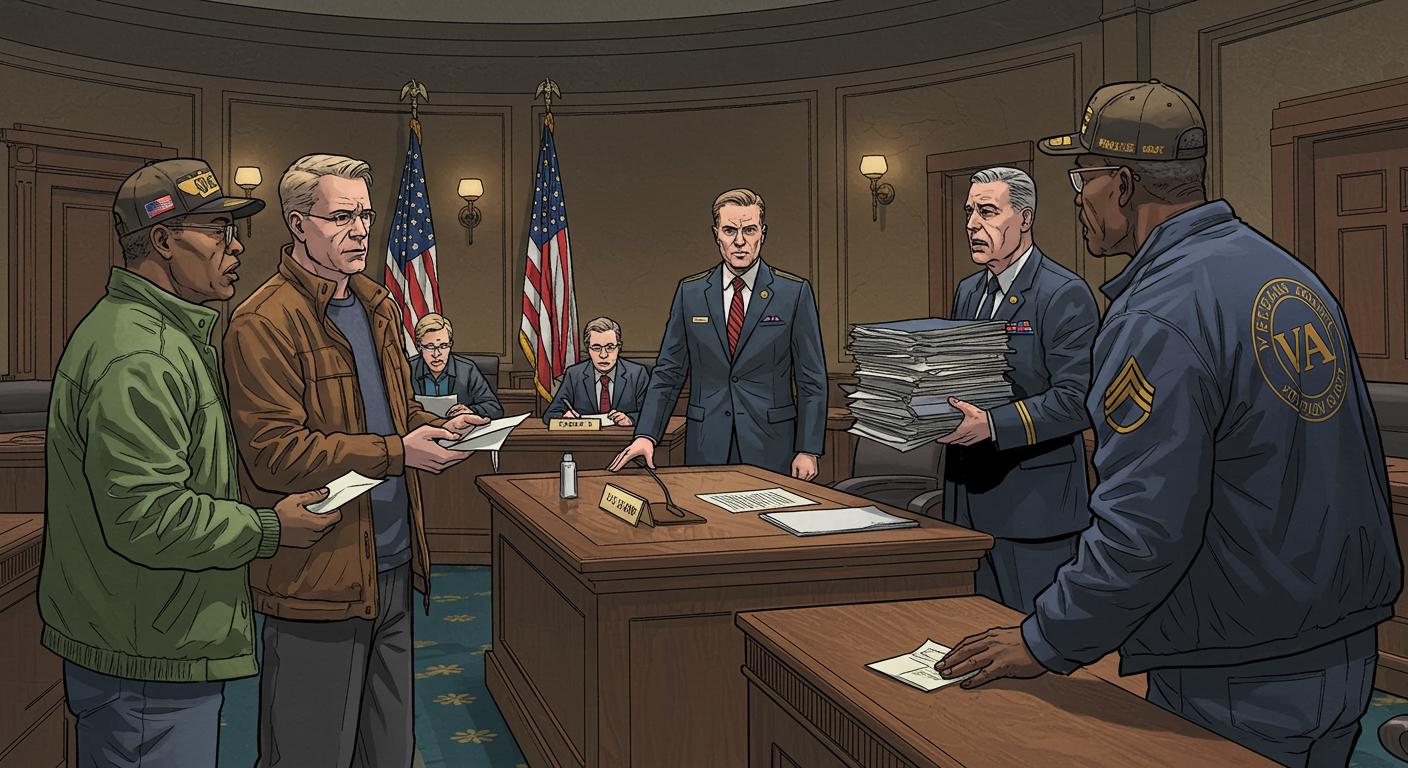
Sometimes the quirks of American bureaucracy show up even where you least expect them—like in the margins of news about a contaminated chicken wrap. In a sidebar note, as highlighted in NBC Boston’s coverage of a listeria alert, there’s a passing mention: “Congress pushes VA to explain why it regularly overpays veterans and then asks for the money back.”
Details are sparse—this fragment sits among headlines about mountain climbers and Boston power outages—but it’s enough to spark a certain bemused curiosity about how, exactly, we got here.
Blink-And-You’ll-Miss-It Bureaucracy
With only this teaser to work from, one can’t help but imagine the scenario: veterans routinely receiving more benefits than they’re owed, only to be chased down by the VA later, long after that extra sum may have already been folded into household budgets or used for things as vital as rent or groceries. The question apparently making its way to Congress is, why is this a “regular” occurrence? And, less officially—but perhaps more to the point—how does such an oddly generous error keep slipping through the cracks?
Compared with the intricate (some might say, excessively thorough) notification process of a food recall, where customers are flagged, told exactly what product to look for, and offered refunds, VA overpayment requests tend to lack the same sense of precision. For the record, the listeria warning in NBC Boston’s report details exact sell-by dates, lot codes, and even UPCs—plus instructions for returning the suspect items. Imagine that level of clarity in a government overpayment letter.
The Pattern Behind the Polite “Oops”
Of course, the infographic is missing: how often does this happen, and how much money moves back and forth? The NBC Boston article doesn’t elaborate, merely tacking the topic onto its news rundown like a stray sticky note, which in itself says something about the routine oddities of the system.
For veterans unknowingly caught on the receiving end, the administrative whiplash is real. First comes the check, then (possibly months or years later) a request for repayment—often with little explanation afforded in plain language. How often must families wonder if the notice is an error, a scam, or an entirely new government program nobody mentioned?
Endless Loops and Open Questions
Perhaps the most curious part is that stories about overpayments and retroactive clawbacks can slide so neatly into a roundup of oddly specific food safety recalls and feel right at home. Is this a sign of procedural complexity outpacing simple communication? Or just another chapter in the already storied saga of modern bureaucracy?
Either way, even with little more than a headline, the scenario raises big questions about systems built on endless documentation yet still prone to these bittersweet “take-backs.” Would the VA, realizing its error, ever send along a consolation coupon for a chicken wrap—presumably listeria-free? That might be too much to hope for, even in a world where the only notice you get is a single line on a news website’s sidebar.