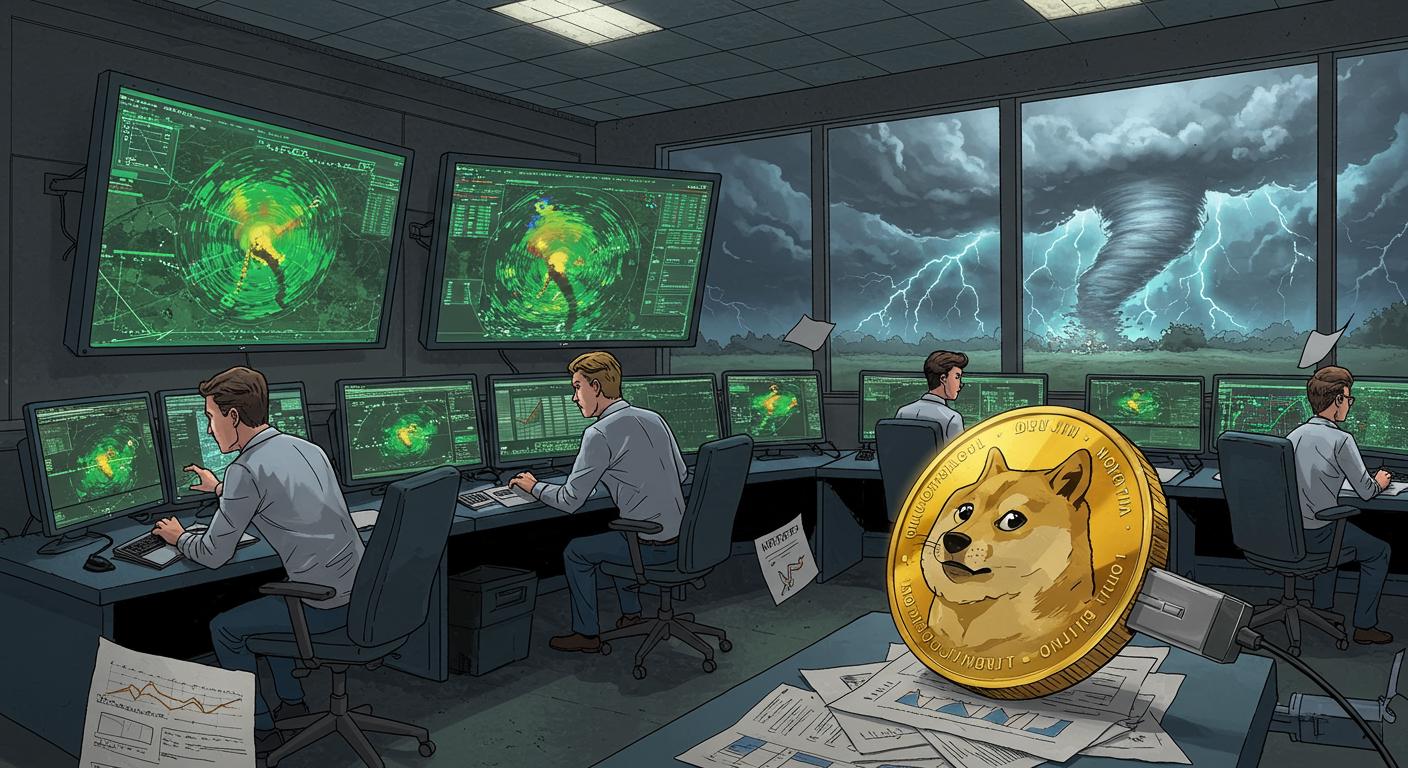
Some stories roll in like a thunderclap of absurdity you can practically hear from across the country. As highlighted by Mesoscale News, last week brought a lesson in what happens when you cut corners on disaster preparedness: tornado alerts in parts of Missouri and Kentucky were delayed, not by malfunctioning tech or bad luck, but by so-called “DOGE cuts” to National Weather Service staffing. It’s not meme investing gone rogue—just a case of budget management with uncanny timing.
Much like an ill-timed snooze button, some NWS outposts—including Jackson, Kentucky—now simply don’t have overnight forecasters on duty thanks to these federal cuts. Mesoscale News details that after these reductions took effect in April, the Jackson office found itself not only missing vital night-shift personnel, but currently displaying a “Meteorologist in Charge” vacancy, which feels faintly like taping a “be back later” note on the tornado siren itself.
The Delayed Warning: A Cautionary Tale
According to Mesoscale News, the consequences unfolded with grim precision: tornadoes swept through near midnight on May 17, resulting in at least 27 deaths and more missing across Missouri and Kentucky. Warnings that might have roused sleeping families arrived too late, as overnight staff had been trimmed down. Just one day prior, the outlet notes, the New York Times published an investigation—cited and summarized in Mesoscale News—flagging Jackson, Kentucky’s NWS office as a vivid example of how these cuts might hamstring severe weather response.
The risk wasn’t just theoretical. Mesoscale News underscores that experts, observers, and even their own past reporting had all warned about this staffing gap, suggesting it was “only a matter of time before these cuts lead to tragedy.” Despite this, those critical minutes of warning that can make the literal difference between life and death simply weren’t available to everyone who needed them.
Weather Readiness on a Skeleton Crew
The imagery in Mesoscale News is striking: while tornadoes are infamous for ignoring polite business hours, the warning systems built to catch them are now clocking out early. The outlet emphasizes that this isn’t the result of some unforeseen technical snag—but a direct outcome of DOGE-driven layoffs, with at least one of the nation’s most tornado-prone regions left without 24/7 human eyes. The article also describes how NOAA’s freshly rebranded PR operation (now staffed, Mesoscale News claims, by Trump loyalists) is scrambling to manage public fallout, while severe weather continues to loom.
It’s a ready-made case study in the law of unintended consequences: run government safety nets at minimum staff and hope disasters keep normal office hours. One gets the sense, reading through Mesoscale’s carefully detailed reporting, that the wrangling over dollars and policy in DC feels a long way from a family kitchen in Kentucky—right up until the moment their phones stay silent, and they don’t get a chance to move to safety.
Tornadoes Don’t Take the Night Off
With vivid, matter-of-fact understatement, Mesoscale News paints the picture of what happens when tornado warnings arrive on delay: communities lose trust, and some lose much more. They also frame the latest staffing fiasco within a wider trend—one where scientific infrastructure is trimmed or undermined in the name of efficiency, occasionally at spectacularly bad moments. There’s a certain irony to it all. Past generations invested in air raid warnings and public drills for disasters that (thankfully) never came. Now, the same country risks missing the siren while the real threat spins up just outside town.
All this as hurricane season tiptoes closer: Mesoscale News reminds us that, with above-normal activity forecast, decisions today about NWS funding could ripple outward far beyond tornado country. It leaves one to wonder—when the next late-night emergency hits, will warning systems still be on their coffee break? And if so, is anyone in charge, or are we all just hoping to wake up before disaster knocks?
In the end, the siren’s silence isn’t just a budgeting quirk—it’s a strange, uneasy sort of risk management. And it seems we’re all now participants in what might be the country’s least reassuring experiment in working after hours.