When it comes to medical professionals and their explanations for positive drug tests, few things prepare you for a plot twist that sounds suspiciously like an episode of “Seinfeld” crossed with a medical ethics seminar. Enter Dr. Tobias Pincock, once a high-flying plastic surgeon from Sydney, whose tribulations in front of Australia’s Health Care Complaints Commission (HCCC) have gone from eyebrow-raising to, frankly, curiosity-piquing. According to news.com.au, the latest episode in Dr. Pincock’s saga features an alibi that is, in a word, chewy: bagels.
A Scandal Sandwich With Extra Seeds
Tribunal documents cited by news.com.au reveal that Dr. Pincock has not exactly maintained a low profile with regulatory agencies. Findings presented by the HCCC—the body charged with upholding medical standards in New South Wales—show a pattern of failed drug tests, missed or diluted screenings, and explanations with a distinctly imaginative bent.
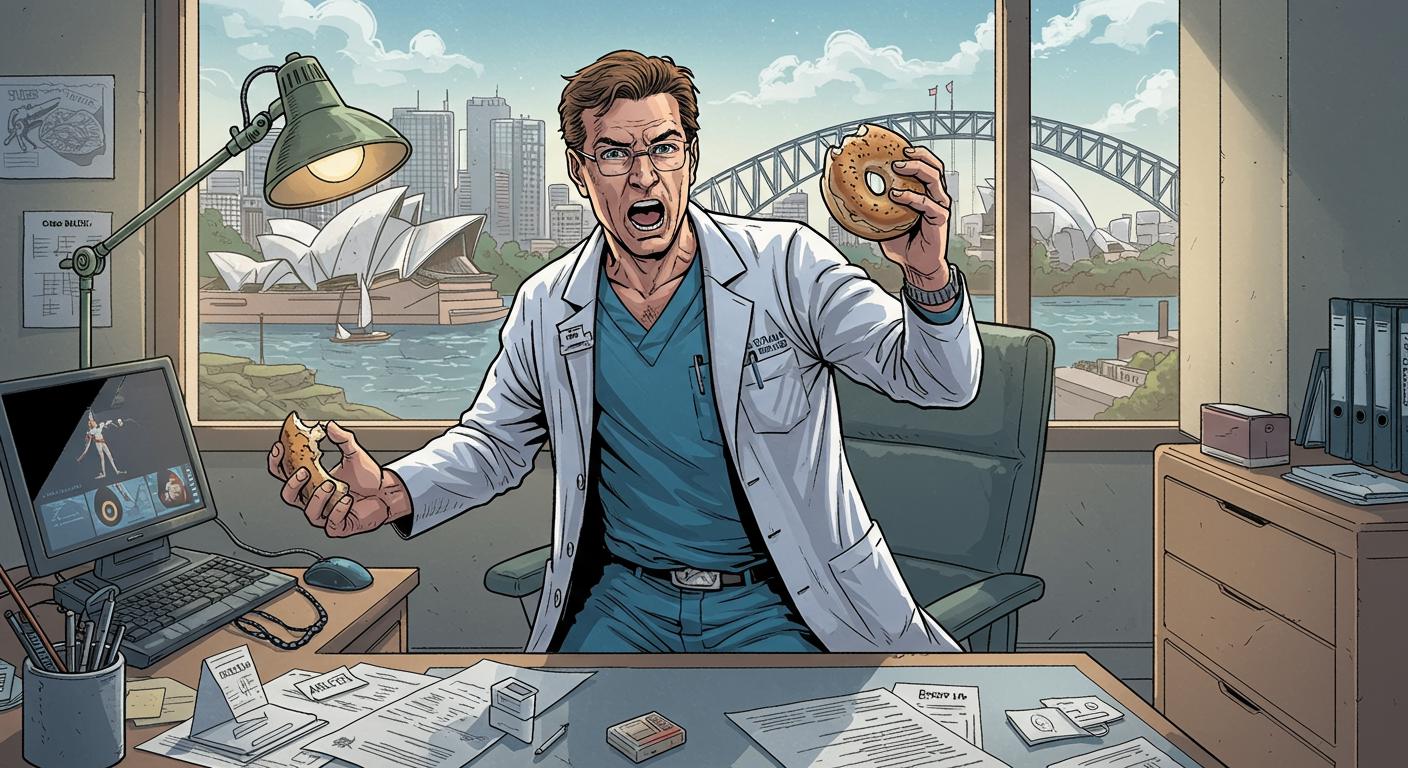
Amid his ongoing requirement to submit to both regular and random drug screenings, imposed as a result of previous infractions, Dr. Pincock reportedly tested positive for a veritable pharmacy of substances: cocaine, morphine, oxycodone, codeine, benzodiazepines, Temazepam, Endone, Endep, quetiapine, and even lignocaine. Accounts referenced by the outlet indicate that Dr. Pincock attributed some of these results to various factors, and one memorable explanation stood out—the consumption of multiple poppy seed bagels, which, he claimed, caused a false positive for opiates.
Bagels on the Evidence Table
In a detail highlighted by the HCCC’s tribunal findings and relayed by news.com.au, Dr. Pincock attempted to bolster this bagel-based rationale by sending the Medical Council a photo of a bagel packet, toaster, and knife—a tableau assembled only after the date in question. The tribunal, not missing a crumb, noted that this evidence was staged retroactively, amounting to a forensic reset worthy of a made-for-TV reenactment. Tribunal members dryly observed that the scene appeared carefully arranged, rather than being a snapshot of the events as they actually occurred.
This brings to mind an odd question: How often do regulatory hearings weigh the authenticity of food photography? Is it possible we’ve underestimated the exculpatory power of baked goods? Or will “the bagel made me do it” claim join the pantheon of timeworn excuses, right next to “my alarm didn’t go off”?
Layers of Questionable Conduct
Records referenced throughout the outlet’s report make clear that the bagel defense is but one layer in Dr. Pincock’s multi-tiered history with regulators. The outlet recounts how he once performed a nose job on a patient only 45 minutes after that person suffered a cardiac arrest—a move justified by Pincock, according to tribunal documents cited by news.com.au, out of concern the patient might “be disappointed” if the procedure were canceled.
Financial matters further complicated his professional standing. Earlier in its reporting, news.com.au outlines that Pincock solicited over half a million dollars in investments from patients into businesses he controlled, offering assurances one patient’s disabled children would be financially cared for and promising high returns—though, as tribunal records confirmed, he lacked even a basic estimate of the venture’s actual worth.
Dr. Pincock’s run-ins didn’t stop there. In its coverage, news.com.au references a 2016 assessment at which Dr. Pincock reportedly admitted to self-administering nitrous oxide (laughing gas) to manage a panic attack, marking a further breach of the trust expected of clinicians.
The accumulation of these incidents led, as outlined by the outlet, to Dr. Pincock’s bankruptcy in 2018 and his subsequent ban from practicing medicine until at least mid-2026, reinforced by a nine-month extension issued in his latest tribunal outcome. Tribunal records also noted, as previously reported, that no criminal charges have resulted from the issues raised in these proceedings.
The Absurdity of the Everyday
What is one to make of a regulatory panel tasked with differentiating between the side effects of bakery products and a steady stream of controlled substances? The HCCC’s apparent exasperation is perhaps inevitable as they attempt to untangle a narrative filled with resuscitation attempts, investment promises made without substance, prescription medication results, and carefully staged scenes featuring kitchenware. According to findings highlighted in the outlet, it sometimes seems professionalism, much like a factory bagel, can be left somewhat hollow in the middle.
And yet, the stakes here are hardly laughable. The outlet earlier notes the human consequences—patients convinced to risk major investments, families hoping for security, and individuals who ended up as unwitting participants in someone else’s drama. At what point does inventiveness tip from resourceful self-preservation into a recipe destined to erode trust?
Poppy seeds have indeed been documented to cause rare false positives for opiates. But, when that claim arrives alongside artfully composed bagel still lifes, a pharmacological sampler plate, and a well-established pattern of eyebrow-raising conduct, does the dough really rise? Or is this just another half-baked attempt at exoneration?
Would you trust your medical fate—or your investment plan—to a man with a bagel, a toaster, and a knack for narrative reinvention? Is there something oddly admirable in the creativity, even as the consequences spiral, or does the bagel defense merely prove that, sometimes, the truth is stranger (and starchier) than fiction?