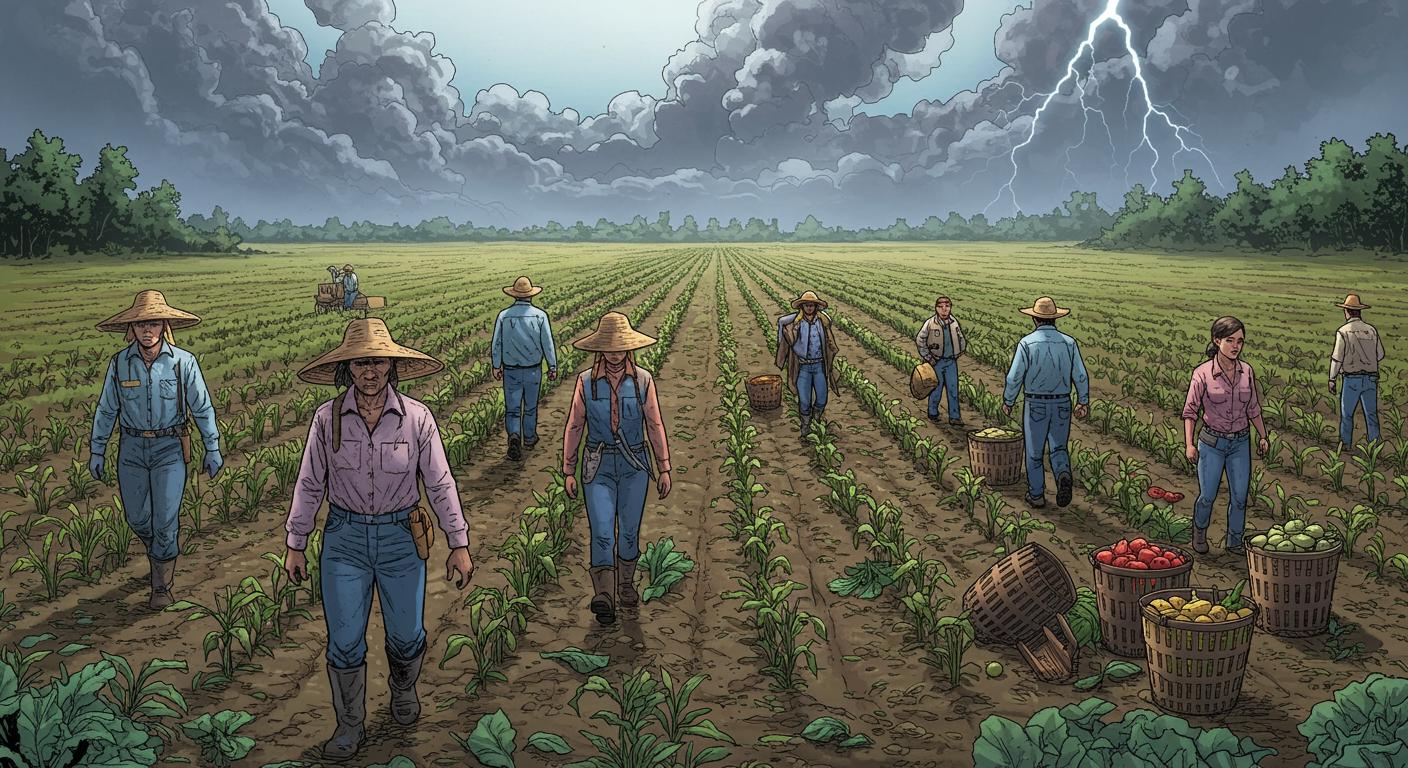
Well, Florida tried. And by “tried,” I mean its lawmakers briefly entertained the idea of filling the state’s agricultural labor gaps by letting teenagers—some as young as 14—work longer, later, and, frankly, a lot more like adults than most of us were at that age. In a uniquely 2025 update to the “back in my day” trope, the Florida legislature considered dialing back child labor restrictions in place since before ziplines were a birthday party staple. For anyone with a vested interest in the intersection of labor law, teen sleep habits, and the recurring adult fascination with “character building,” this one delivered.
The Plan: Out with Migrant Workers, In with the Kids?
So what had lawmakers cooking? As Newsweek describes, in the midst of ongoing deportations and a shrinking migrant workforce stemming from Trump-era policies, Governor Ron DeSantis and his team floated the notion that maybe Florida’s young people could pick up the slack—quite literally. Newsweek reports that the language for the bill came directly from staff within DeSantis’ office, as confirmed by records cited from Orlando Weekly.
Senate Bill 918 would have removed major limits on how much and how late minors could work: sixteen- and seventeen-year-olds could have worked unlimited hours during school weeks, and they would no longer be barred from overnight or pre-dawn shifts. Even 14- and 15-year-olds, specifically those enrolled in homeschool or virtual school, would have seen doors open to overnight shifts. The required 30-minute meal break for young workers? Also on the chopping block. Supporters, including organizations like Moms for Liberty and the National Federation of Independent Business, argued the change would help tackle labor shortages and expand “parental rights.” Meanwhile, Newsweek documents that opponents—including the Florida AFL-CIO, the ACLU, the NAACP, and student activist groups—cautioned it could set the stage for workplace exploitation.
Critics’ Corner: Irony, Internet, and That “Yearn for Ze Mines” Meme
The internet, as one might expect, wasted no time skewering the proposal. The Nerd Stash details how detractors ridiculed the bill online. One user, in particular, landed a punchline that captured the absurdity: “But ze children, ze yearn for ze mines!” The satire was swift and relentless, with commenters asking why, if labor shortages were so dire, politicians and their kids didn’t volunteer to pick up some fieldwork themselves. A particularly biting remark, highlighted in The Nerd Stash, came from a commenter who said, “Probably because then no work would get done. They’d just stand in the field crying and complaining all day.”
The Nerd Stash also notes the broader criticism: that the state could address labor gaps in more productive ways—like raising the minimum wage—rather than making it easier for young teens to fill physically demanding jobs. Some critics went so far as to argue, only half-sarcastically, that the powerful would rather revert to teen labor than adjust company profits.
Why the Rush to Roll Back Child Labor Laws… and What Now?
As Newsweek documents, DeSantis, drawing on his own memories, argued “teenagers used to work at these resorts, college students should be able to do this stuff,” and openly questioned “why do we say we need to import foreigners, even import them illegally,” when teens could step in. The bill’s sponsor, Republican state Senator Jay Collins, framed the measure as being about parental rights: “We should let them say what’s best for their kids,” Collins is quoted as saying. On the flip side, Republican state Senator Joe Gruters struck a different chord, declaring, “I think we need to let kids be kids.”
The bill sped through the Florida House (Newsweek notes party-line voting), but met staunch resistance in the Senate and never made it out before the legislative clock ran out. According to Newsweek, the coalition against it included major labor unions, civil rights groups, and a notable contingent of student activists, all warning that a rollback would expose teens to situations they weren’t prepared to handle.
Bringing It Home: The Law That Wasn’t
For now, the plan to repopulate Florida’s fields with sleep-deprived teenagers remains an idea whose time (thankfully) has not come; the legislation died as the session closed. Newsweek and The Nerd Stash agree it’s uncertain whether similar proposals will emerge in the future, although with the persistent cycle of labor shortages and legislative nostalgia, it wouldn’t be shocking.
One last thread: Is the answer to modern labor gaps ushering in graveyard shifts for 14-year-olds, or is the more straightforward solution just better wages and working conditions? If internet reactions and opposition groups are any indication, the consensus leans hard toward the latter. When proposals to loosen child labor laws show up, chances are the backlash will, too—sometimes with a meme, sometimes with a protest sign.
Because while “the children yearn for the mines” makes a good punchline, the reality—at least for now—remains pretty clear: not this year, Florida.