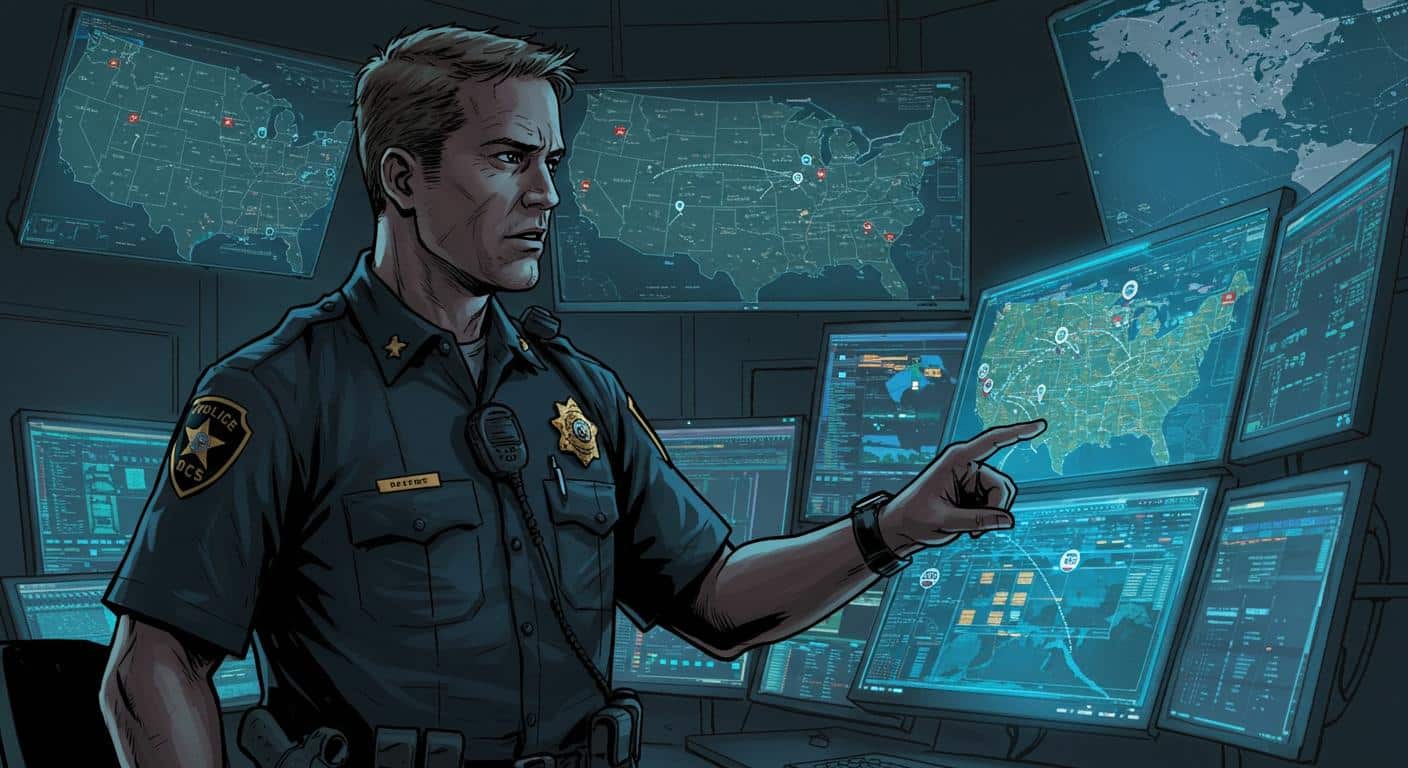
Turns out, in 2025, your license plate may get more cross-country attention than you ever will—at the unlikely intersection of digital surveillance, health policy, and Texas-sized controversy. Recent reporting from 404 Media and The Independent reveals that police in Johnson County, Texas, tapped into a nationwide network of more than 83,000 license plate reader cameras earlier this month—not to chase car thieves, but to locate a woman after she self-managed an abortion.
Flock Cameras and the Surprising Reach of Local Surveillance
Described by The Independent, the Flock system was originally sold to local communities as a crime-fighting tool for stolen vehicles or missing persons. What emerged in this instance, though, was something closer to a national dragnet. A Texas officer, using the platform, searched for the woman’s vehicle not just within state lines but across the continental U.S.—including states like Washington and Illinois, where abortion is not just legal but protected.
The sheriff’s office maintained, according to officials who spoke with both outlets, that the family feared the woman was in medical danger following a self-managed abortion. Sheriff Adam King explained to The Independent that “it was about her safety,” emphasizing they “weren’t trying to block her from leaving the state or whatever to get an abortion.” Whether one sees that as reassuring or faintly Orwellian likely depends on your caffeine intake and your sense of humor regarding surveillance dystopias.
Meanwhile, technology analyst Kate Bertash, sharing her perspective with 404 Media, points out that systems like Flock have enabled “extraterritorial reach into other states,” meaning an act that’s a crime in Texas can trigger investigative surveillance in regions where the same has been declared a human right. Somewhere, state sovereignty is filing a complaint with customer service.
Mission Creep: From Carjackings to Health Choices
Reality check: Flock networks now offer police the tools to reach beyond their legal backyard. This reach is especially striking given the highly restrictive nature of Texas abortion law, in effect since 2022. As The Independent notes, exceptions are exceedingly narrow; prosecutions and civil penalties loom not only over doctors, but anyone remotely involved. It’s an atmosphere persuasive enough to send OB-GYNs fleeing the state, even if they’ve never performed an abortion.
In practice, these technological solutions move far beyond their officially stated purpose. What starts as a crusade against carjackers can be swiftly repurposed for much more ambiguous, and potentially politicized, pursuits. The camera company, for its part, told reporters it’s happy to “support local jurisdictions’ laws regarding surveillance”—though the borderless technical infrastructure quietly renders regional distinctions all but moot.
With Texas legislators recently attempting (and narrowly failing) to pass a bill empowering private citizens to sue anyone facilitating remote telehealth abortions for six figures, one wonders: are license plate cameras the latest bridge from familiar policing to the front lines of the culture war?
Who Watches the Watchers—Or the Drivers?
There’s no shortage of slippery questions. The sheriff’s office, for instance, claims the nationwide search was purely a health-and-safety move. But the existence—and use—of such a network makes it easy to imagine much broader or more aggressive applications in the future. As Bertash highlighted for 404 Media, Flock’s technology “breaks through the barriers” of state law, letting police skirt not just geography but the spirit of local autonomy.
What’s to stop similar tools from being deployed for other legally grey (or outright legal) activities, depending on the home state’s position? Technology doesn’t concern itself with your ZIP code’s laws—it just knows where your car went. If you find that unsettling, well, you’re not alone; privacy and reproductive rights advocates have been sounding the alarm in both linked reports.
The Peculiarity of Modern Privacy
At the end of the day, the whole episode seems less like a one-off and more like a sign of things to come: any time a technology is introduced “for the public good,” it’s a good bet someone, somewhere, will find a way to point it elsewhere. There’s a peculiar irony here—those who talk loudest about local control have, in practice, engineered a surveillance net that ignores borders entirely.
Given all this, it’s almost quaint to imagine worrying about a parking ticket. Is your license plate reading this? These days, someone somewhere probably is, though whether they’re tracking your sandwich run or your interstate road trip for medical care is, apparently, down to chance—and policy decisions you may not even know exist. Someday soon, will asking “who’s watching?” be as routine as checking that your headlights are on? For now, the answer drives straight past comfort and into territory that’s equal parts remarkable and, depending on your perspective, a bit chilling.