It’s not every day that the intersection of livestock protection and legal loopholes delivers a story best summed up as “nobody puts donkey in a corner”—unless you’re the Swiss government, it seems. As reported by swissinfo.ch and, in a similar vein, by Gazeta Express, Switzerland has declared that farmers in the northern Jura region can no longer enlist donkeys as stalwart guardians against wolf attacks. If this sounds oddly specific (and a touch medieval), hold onto your alpine cheese: there’s bureaucratic and biological logic afoot.
Donkey Duty Denied
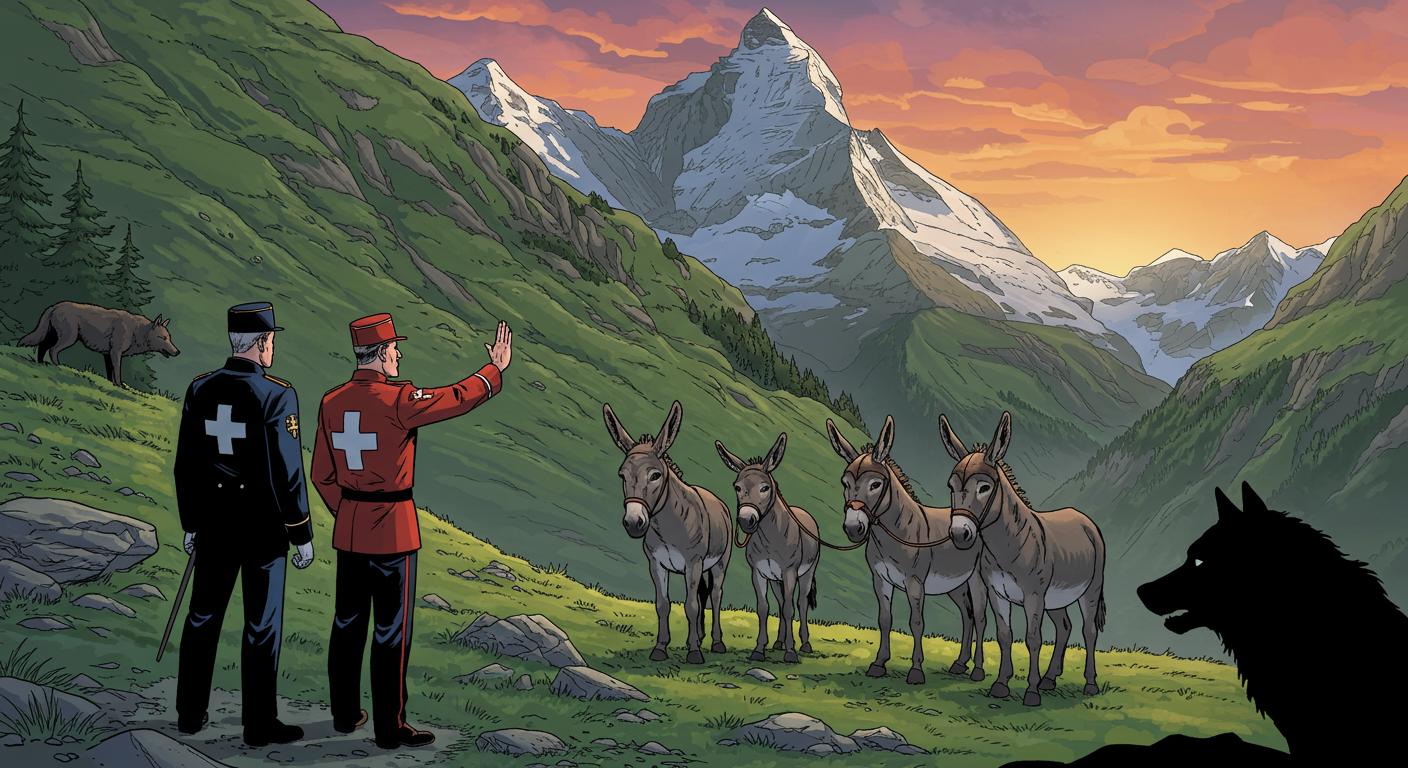
The donkey-as-wolf-bodyguard approach may sound whimsical, but it has actual precedent; farmers in the Jura have, in recent years, used donkeys to defend sheep and goats from wolves—a move given official leeway via five exemptions issued by the canton. As swissinfo.ch explains, hopes for a broader use were dashed when the Federal Ordinance on the Protection of Animals got involved. This law doesn’t have an issue with donkeys serving in a protective role per se; it’s the specific method—keeping donkeys alone among different species to make them territorial and more likely to ward off predators—that is legally problematic. According to the Ordinance, as both swissinfo.ch and Gazeta Express detail, horses, donkeys, and their ilk must always have the company—visual, auditory, or olfactory—of another member of their species. In other words, the law is less concerned about wolves than it is about donkey loneliness.
Earlier in the reports, it’s mentioned that the canton of Jura had tried to sidestep these obstacles, with the support of a postulate from the Swiss People’s Party, but the Federal Office for Food Safety and Veterinary Affairs (OSAV) was eventually brought in to set the record straight. Their legal opinion determined that no exemptions could override the higher law, meaning all previous lone-donkey guardianship approvals will be withdrawn. The Jura government, as cited in a recently published report referenced by both outlets, acknowledged that while the practice “worked” to some extent, it couldn’t legally continue.
Damp Hills and the Science of Braying
But Switzerland didn’t stop with legal arguments—practical hurdles also abound. The OSAV identified several reasons why local donkeys are not ideal wolf-busters, noting that they originate from arid areas and don’t cope well with the Jura’s persistent humidity. As covered by swissinfo.ch and summarized by Gazeta Express, donkeys require specific feed unsuitable for mountainous pastures and a steady daily supply of fresh water that can be challenging to provide at altitude. Whether you picture a would-be defender growing despondent and waterlogged on a misty hillside is, perhaps, beside the point—but the practicalities seem to make them less fearsome guardians and more accidental tourists stumbling through Swiss mud.
Crucially, the government and OSAV stress that there is no scientific consensus that donkeys actually thwart wolf attacks reliably. Both outlets note that, despite anecdotal positive reports from local herders, controlled studies on the effectiveness of donkey guardianship are lacking or inconclusive. The Jura government, in its decision to shelve the pro-donkey postulate, echoed this skepticism. Without robust evidence, animal wellness and regulatory compliance have prevailed.
A Sheep’s Best Friend… Still TBD
So here we are: the collision of rural improvisation and meticulous Swiss regulation has left sheep and goat farmers back at square one. As swissinfo.ch outlines, other livestock guardians—traditional dogs, perhaps, or more robust fencing—may need to step up where the donkeys cannot. For now, though, the short chapter on donkey defenders in Swiss law has ended, leaving the field open for new, perhaps equally eccentric, forms of herd protection.
One could ask: Is this a case where animal welfare policy stymies on-the-ground solutions, or is it a necessary safeguard for well-being and sensible, science-backed practice? Either way, you have to appreciate a rulebook thorough enough to save donkeys from loneliness—if not from the occasional drizzle.