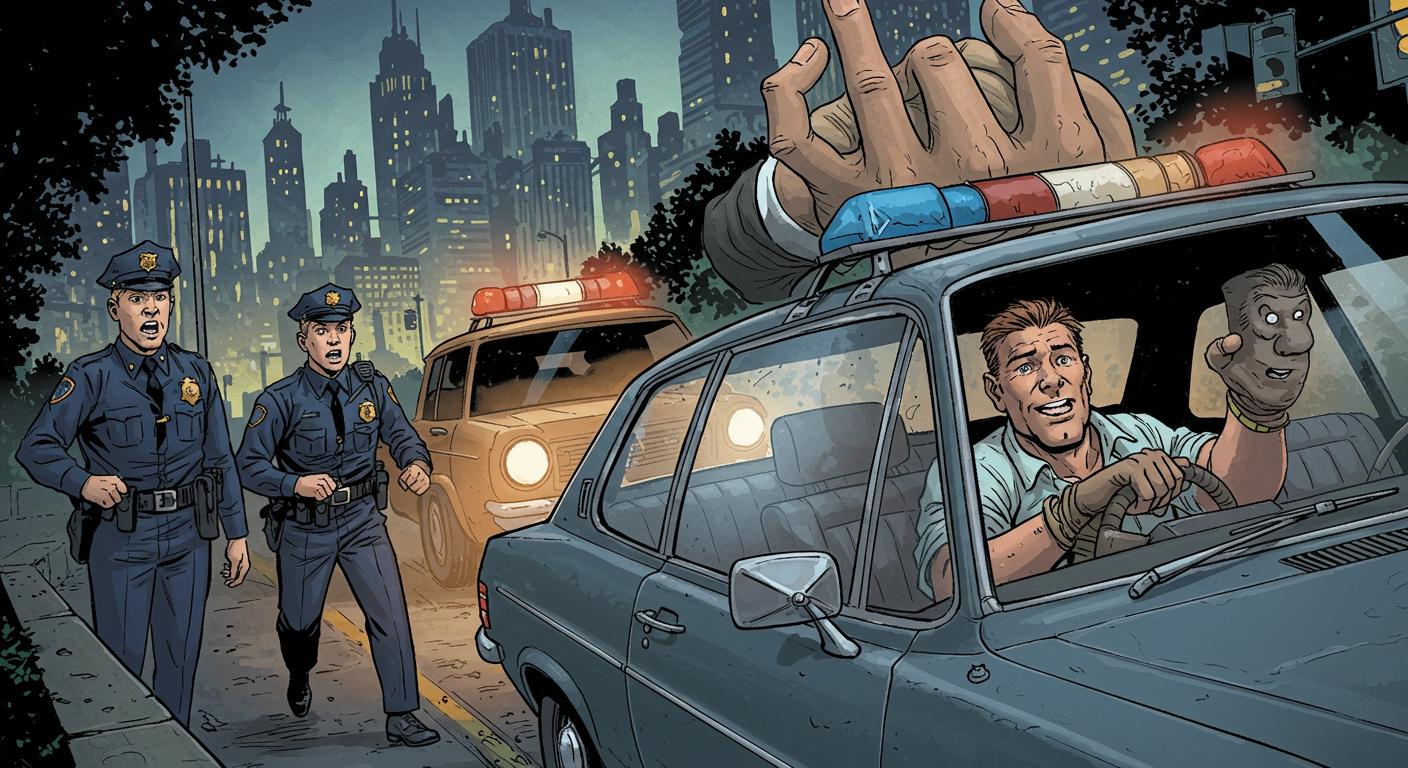
In a world where passive-aggressive bumper stickers and cryptic vanity plates reign supreme, one Wellington driver apparently decided subtlety was overrated. Captured by CCTV and reported by Need To Know, footage from Riddiford Street last month immortalizes what can only be described as a masterclass in audacious vehicular messaging: a giant, hand-drawn middle finger, crafted on white card and proudly affixed to the car’s roof, trundling brazenly down the bus lane.
Sign of the Times… or Just a Sign?
According to Need To Know, cameras watched as the car—with its unmistakable rooftop accessory—journeyed down a prohibited route before slipping out of frame. Whether the gesture was meant as a specific retort to speed cameras or a more general message for traffic enforcement is debatable, but the symbolism certainly wasn’t shrouded in subtlety.
The outlet documents how the moment quickly racked up over 22,000 likes and drew social media responses spanning the spectrum. Commenters chimed in with, “Phenomenal work,” while another quipped, “Identify as a bus.” The outlet also highlights reactions such as “Dispute!” and “What an absolute clown,” reflecting the internet’s ability to find amusement in even the most minor acts of rebellion.
Authorities, meanwhile, responded in a fashion less celebratory than the online crowd. The driver was issued a fine for his prohibited excursion—an outcome not exactly working in favor of the folk hero narrative.
When Protest Meets Performance Art
It’s tempting to search for larger meaning in a cardboard-laden drive through a bus lane. Is this the vanguard of bespoke protest, a touch of guerilla performance art, or just a grown adult indulging in some gleeful nose-thumbing (or finger-waving) at authority? There’s a distinctly homemade charm to the placard—cardboard and conviction, rather than sophisticated rigging or commercial printing. Does this analog statement carry unexpected power, or does its simplicity make it easy to dismiss as mere cheek?
Effectiveness is another question entirely. The incident certainly got the internet’s attention, but, as previously reported by the outlet, functioned equally well as evidence for issuing a fine. Perhaps it’s not about the result, but the spectacle: a fleeting moment engineered not for policy change, but for the ever-scrolling feeds of amused bystanders.
The Ritual of Public Disobedience
Public rebukes of authority have taken many creative forms, ranging from pamphleteers to pranksters throughout history. This case settles somewhere comfortably oddball: openly confrontational, analog in delivery, and almost immediately viral. There’s a kind of performative pathos at play—putting in all that effort for a moment of algorithmic glory, only to face the prosaic end of a traffic fine. Does this cycle of public spectacle and mundane consequence say more about our appetite for the absurd or our resignation to bureaucracy?
Conclusion: Making a Scene, Getting a Ticket
Ultimately, this episode is another entry in the annals of low-stakes, high-visibility public dissent—a reminder that not all messages are meant for nuanced debate. Sometimes, as this Wellington driver demonstrated with cardboard and blunt honesty, people just want to be seen (and maybe laughed at a little). Are we on the cusp of a new wave of folk protest, fueled more by memes than manifestos? Or will roadside oddities like this fade to the bottom of the feed, as quickly as they appeared? Either way, it’s clear—in this peculiar exchange with authority—the message wasn’t muddled by subtlety. Is there a line between protest and performance that even a giant cardboard finger can’t cross?