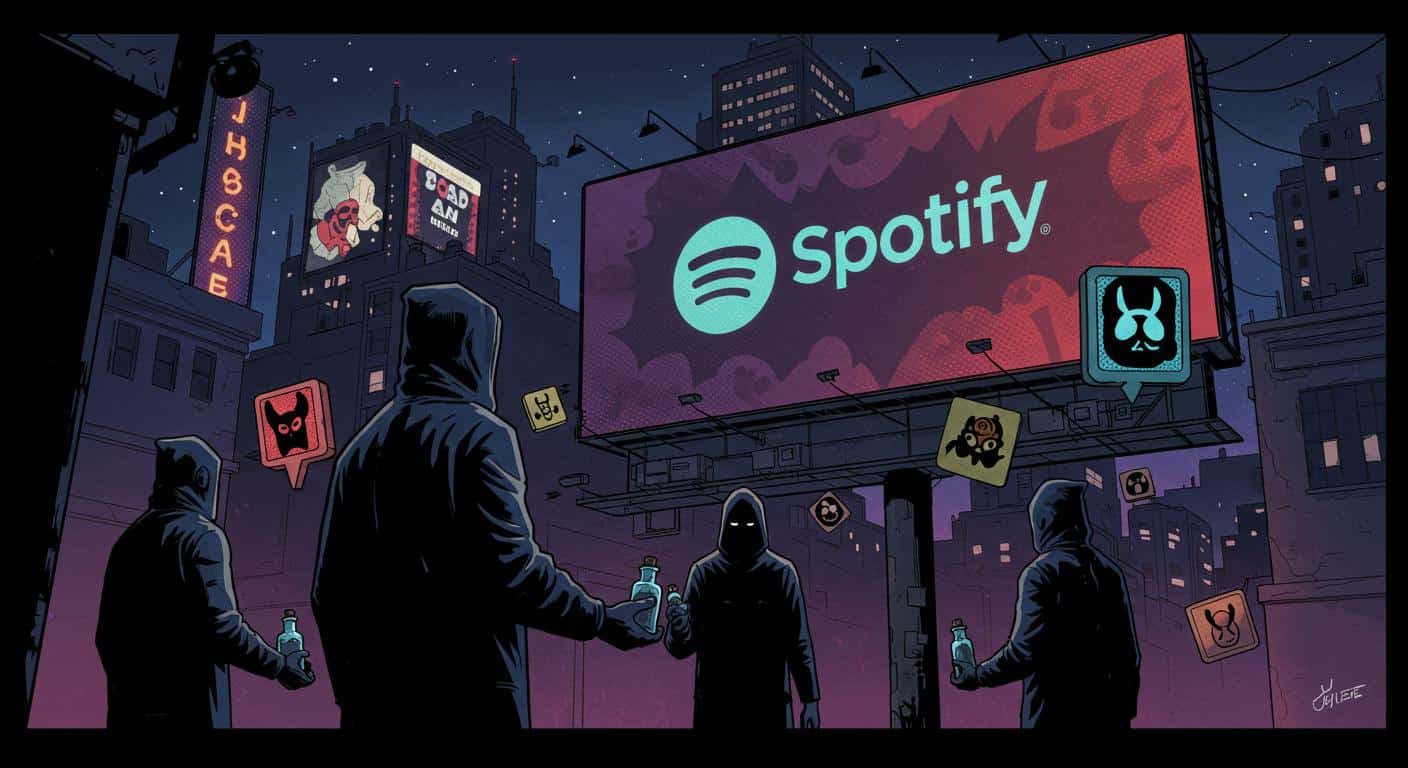
The digital world is no stranger to grifters, but Spotify’s recent surge of pharmaceutical-themed “podcasts” suggests we’ve finally arrived at a new genre—somewhere between true crime, lo-fi, and “the audio equivalent of a pop-up advert for Tramadol.” The streaming giant, famous for bringing unknown jazz trombonists and algorithm-approved acoustic covers to your doorstep, found itself the unwilling DJ of an altogether stranger compilation: as Ars Technica details, hundreds of obviously fake podcasts rife with illicit drug offers turned up on the platform, some hiding in plain sight for months.
Pharmacies in Your Earbuds?
Investigations from CNN, PCMag, Business Insider, and others uncovered a bizarro playlist: shows with titles like “My Adderall Store” and “Xtrapharma.com” and episodes such as “Order Xanax 2 mg Online Big Deal On Christmas Season.” Instead of lengthy expositions, most of these “podcasts” were 10-second automated voice snippets or, at their most efficient, simply blank silence. Links and information more helpful to a black market entrepreneur than anyone seeking actual advice were stashed in show bios, making the podcasts less performances and more pill-shaped breadcrumbs to external drug sites.
The sheer accessibility of these podcasts—some prominently placed in Spotify’s Top 50 drug search results, as Insider found—offers a peculiar take on frictionless user experience. Is there a podcast out there titled “How Not to Get Sued Dot FM,” or is that just implied?
Several episodes reportedly lacked audio altogether, with all the heavy lifting left to clickbait-like bios. The old phrase “let the music do the talking” finally finds its digital punchline.
Moderation: Ghost in the Machine
Spotify maintains that every flagged phony podcast has been purged, stating it is “constantly working to detect and remove violating content across our service,” a refrain echoed to multiple news outlets. As Ars Technica and PCMag document, however, it’s clear that while Spotify’s moderation occasionally functions, its automated systems mostly ambled past titles like “Order Codeine Online Safe Pharmacy Louisiana” without flinching. There’s something almost impressive about a platform that can generate the perfect playlist for your mood, but can’t distinguish between a wellness podcast and a pharmaceutical spammer.
The director of the Tech Transparency Project, Katie Paul, noted to CNN (as referenced in Ars Technica) that moderation stumbles further when audio morphs into AI-generated, voice-synthesized snippets. With Section 230 shielding platforms from direct liability for user content, and podcasting’s “bigger blind spot” for voice-based and generative content, it’s not exactly a fair fight between detection bots and inventive scammers.
And as Mathrubhumi outlines, public outcry quickly followed, especially from users who wondered aloud how a search for prescription help could so easily return a digital pill-pushing operation.
Beyond Embarrassment: The Real-World Fallout
The implications go beyond embarrassment and clickbait. According to PCMag, citing Centers for Disease Control and Prevention data, deaths from counterfeit prescription pills more than doubled between mid-2019 and late 2021, with the Western United States especially affected by this emerging epidemic. The scariest part? Spotify’s search results, as Business Insider and CNN identified, sometimes delivered scam podcasts right next to legitimate addiction recovery resources.
Further compounding the weirdness, platforms like Spotify appear increasingly vulnerable to what might be called “mechanical mischief:” AI-powered, money-chasing content. PCMag points to a recent case where an individual created hundreds of thousands of AI-generated tracks, siphoning an estimated $10 million in royalties from major services like Spotify and Apple Music. At this stage, stumbling onto authentic content on a streaming platform starts to feel almost quaint.
Artifice, Ghost Artists, and Algorithmic Irony
As Mathrubhumi also notes, Spotify has drawn criticism before over the use of so-called “ghost artists”—in-house or pseudonymous composers whose tracks quietly populate mood playlists, lightening royalty payments along the way. The result is a kind of musical uncanny valley, simultaneously stuffed and hollow. Perhaps, in retrospect, radio silence selling Xanax was only a matter of time.
Recent tweaks, including new podcast listen count displays (again, as PCMag covers), show Spotify’s nod toward transparency, but with most listening stats now walled off unless an episode crosses 50,000 plays, real accountability remains partially hidden behind another data dashboard. If the algorithms are only as smart as their training, what happens when they’re taught by the hustlers rather than the helpers?
Epilogue: Echoes from the Algorithm
Those of us who once specialized in unearthing cassette tapes from forgotten library boxes might feel a flicker of déjà vu. Only now, the strange and obscure corners aren’t in physical archives but layered beneath a sheen of auto-generated playlists and podcasts. The scam of the week is delivered not by grungy URLs or dimly lit IRC channels, but sitting serenely beside your weekly favorites.
With platforms playing whack-a-mole against content that often outpaces their detection, it’s worth asking: what else floats by under the streaming surface, unflagged and unheard, yet absolutely present? Maybe the strangest part of digital life isn’t how much weirdness there is, but how much of it arrives on tiptoe, dressed in the most ordinary algorithms.
Would a 10-second AI podcast have made the ‘Staff Picks’ shelf in a world of Dewey decimals? Hard to say. But as the playlists continue to swell, sometimes what’s lurking between the tracks is stranger—and more telling—than any recommended song.