Art museum mishaps are almost their own subgenre of news at this point, but rarely do they arrive with quite this much shimmer. As LBC documents, a tourist at Verona’s Palazzo Maffei proved how quickly a desire for the perfect photo op can turn a sparkling tribute to Van Gogh into the subject of a restoration campaign, all thanks to a single seat.
The Anatomy of a Glittery Disaster
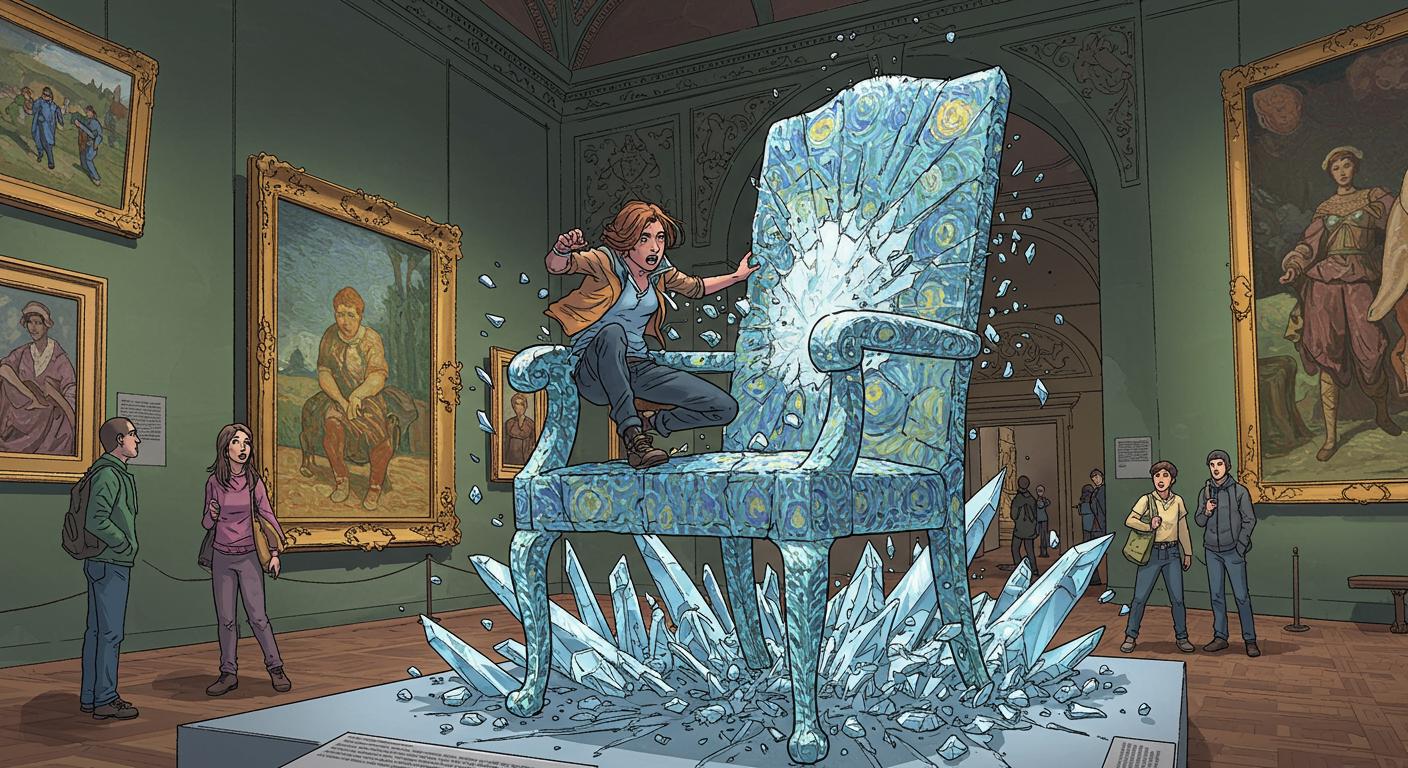
According to footage reviewed by LBC, the brittle peace of the museum was upended when a man decided to do more than just admire Nicola Bolla’s ‘Van Gogh’ chair—a one-of-a-kind piece bedecked in hundreds of Swarovski crystals. Italian media, as highlighted in the report, had already characterized the chair as “extremely fragile and delicate,” which in museum code generally translates to: please, just look, don’t touch.
But the warning, so often implicit in velvet ropes and whispered signs, was no match for selfie enthusiasm. Described by LBC, the incident began innocently enough: one visitor posed beside the chair, artfully creating an illusion that she was seated, while a friend snapped the picture. Then comes the domino moment—her male companion, apparently emboldened by a lack of visible security, decided to make the illusion literal. The moment he sat down, as captured by museum CCTV, the chair immediately “bent back into the wall,” Swarovski crystals and all. The pair then exited promptly, leaving behind a scene not unlike the aftermath of an ill-fated trust fall at a costume ball.
This instinct to get personally acquainted with delicate objects—was it driven by FOMO, oversight, bravado, or a misplaced faith in modern furniture? The answer seems eternally elusive.
“Every Museum’s Nightmare” and the Art of Recovery
In the wake of the incident, the museum’s social media channeled curatorly dismay into a surprisingly gracious statement. As detailed in the LBC summary, staff described the occurrence as “every museum’s nightmare… even in Palazzo Maffei.” The institution noted that, during the brief absence of surveillance officers, “some visitors took an ‘in effect’ photo,” culminating in “an irresponsible gesture [that] caused serious damage to Nicola Bolla’s ‘Van Gogh’ chair.”
There’s a familiar tone here, somewhere between concern and gentle chastisement—one imagines a particularly patient librarian explaining, for the hundredth time, that manuscripts do not make good coasters. The museum admitted initial uncertainty about whether the dazzling chair could be saved, but ultimately restorers, with assistance from Italian police, managed to revive the work so it is “shining once again.”
Their statement continued, turning a moment of frustration into advocacy: “We are sharing this episode not only for the sake of reporting, but to start a real campaign to raise awareness about the value of art and the respect it deserves.” A tribute followed for both the repair crews and the daily influx of careful, attentive visitors. The final reminder? “Art is not just for seeing. It is to be loved. It is to be protected.” A sentiment easy to agree with—so long as one’s definition of “loving art” doesn’t involve parkour.
The Perils—And Peculiarities—of Our Camera Habits
Looking at the circumstances, as the outlet also notes, it’s hard not to wonder whether some museum objects are simply too tempting for their own good. Why do some visitors find themselves magnetically drawn toward exhibits, blissfully ignoring subtle (and not-so-subtle) signage? Is it the lure of standing out, racking up likes, or the fleeting conviction that no moment is truly meaningful unless it’s captured—and, perhaps, sat upon?
Patterns like these aren’t exactly new to those who keep one eye on the oddity of human behavior. As anyone who spends time browsing museum incident logs or scouring archives of public blunders can attest, art-related accidents almost reliably spike wherever photo-ready installations appear. Bolla’s glimmering homage to Van Gogh is just the latest casualty of a culture where “do it for the ‘gram” sometimes becomes “do it despite the warning placard.”
Restorers can work wonders with crystals and glue, but restoring universal art etiquette may be a tougher task. After all, has any “look, don’t touch” sign ever bested the siren call of a seat that sparkles? Or are we fated, as visitors, to occasionally swap admiration for aspiration—one ill-advised photo at a time?
Somewhere in between the cracked crystals and earnest museum statements lies a challenge not just for curators, but for all of us: can appreciating the peculiar and the precious ever really coexist, in the age of the omnipresent camera? Or will we forever be inching just a little bit closer, irrepressibly tempted by the next sparkly seat?