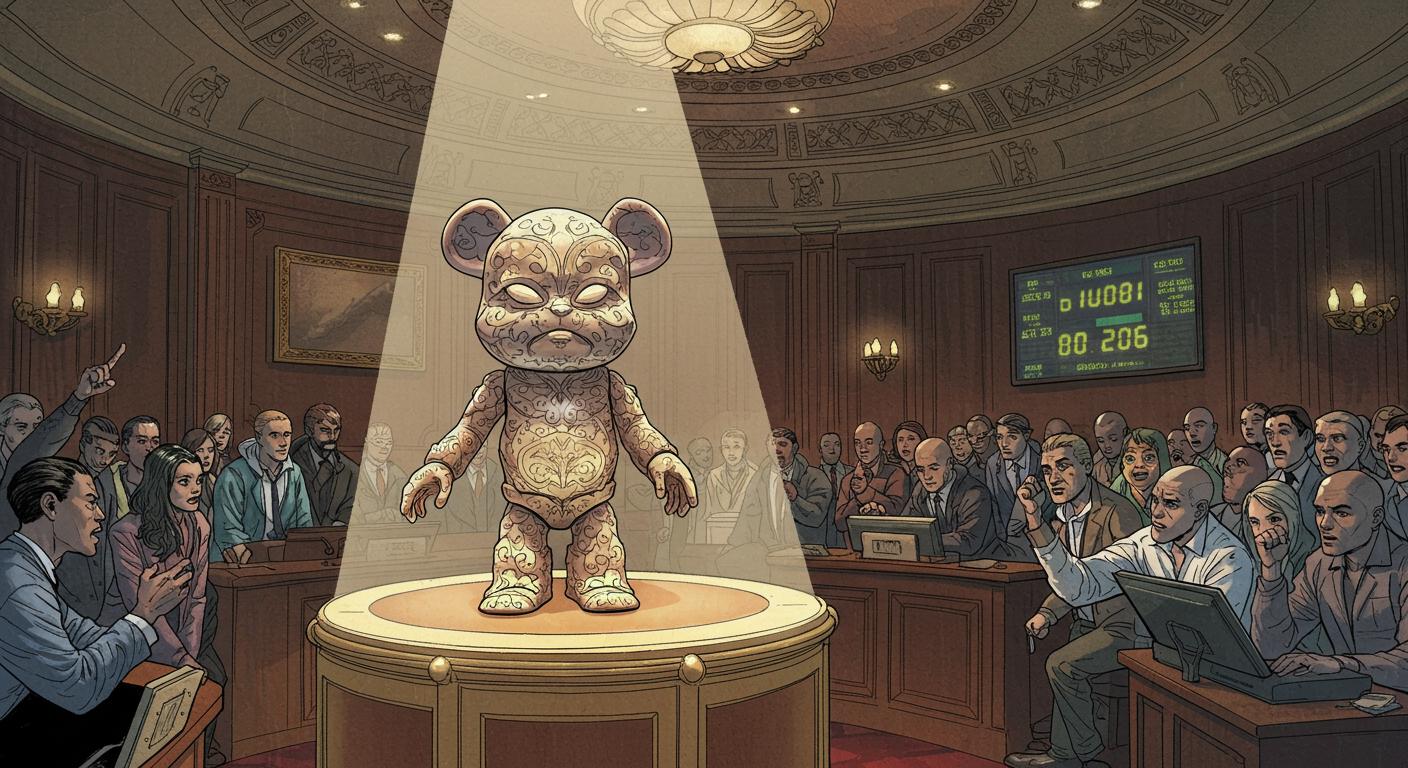
Let’s start with the facts: a single Labubu figurine was just purchased for more than $150,000 at an auction in Beijing, all before factoring in an additional 15% brokerage fee. As detailed in a recent report, this imposing 131-centimeter mint-green figure—equal parts gremlin, bunny, and mischievous sprite—was snapped up at Yongle International Auction house, an institution more accustomed to diamonds than designer toys. Upon the gavel’s fall, the auctioneer congratulated the online buyer for acquiring the only one of its kind, setting a new bar in the world of high-stakes toy collecting. The question of how one transports such a sizable, toothsome collectible safely home is, perhaps, an adventure of its own.
Labubu: Plush Toy, Art Object, or Social Phenomenon?
For anyone not already fluent in the language of vinyl collectibles, Labubu is a creation of Hong Kong-born illustrator Kasing Lung and brought to the masses by Pop Mart, the Chinese company at the heart of today’s designer toy boom. The outlet describes how the plush, elf-faced, rabbit-bodied creatures have become the “trendiest plush toys on the planet,” generating both buying frenzies and, on occasion, scuffles among eager fans outside stores. Evidently, scarcity—especially in an age where everything can be livestreamed—only heightens the allure.
The same auction, which organizers dubbed the “World’s First” event focused on first-generation collectible Labubus, saw prices for other figures soar as well. A 160-centimeter brown Labubu, for example, was hammered down at over $114,000, with only fifteen believed to exist globally. Pairs modeled after well-known animated characters fetched upwards of $1,400, while even less rare models easily broke the four-figure barrier. It appears the lines separating plush-toy retail, contemporary art, and speculative investment are blending in real time.
The New Economics of Vinyl (and Plush) Fandom
Price tags like these rarely emerge from thin air. According to the coverage, intense demand and deliberately limited production have helped drive up secondhand values—one instance mentioned involved Labubu blind boxes initially marketed at $81, now routinely changing hands for north of $270. It’s a pattern many will recognize from the worlds of limited-edition sneakers or even the infamous Beanie Baby bubble of yore, though the numbers here are notably more vertiginous.
Adding another layer, Zhao Xu, founder of Yongle Auction, told The Beijing News the Labubu has transcended “trendy toy” status to become, in their view, “a global artwork.” The report notes that regular, even monthly, auctions dedicated to this kind of pop-culture ephemera are planned, signaling yet another evolution in how collectibles are valued, bought, and sold. Meanwhile, Pop Mart’s most recent annual results, as referenced in the article, show global gross profit more than doubling in a year and domestic revenues in China alone surpassing a billion dollars—a clear sign this is no passing fad.
Is This Art, Commerce, or the Endgame of Nostalgia?
When plush creatures are fetching prices normally reserved for oil paintings, it’s fair to wonder what exactly is being exchanged. Is the six-figure Labubu the culmination of nostalgia-fueled commerce, or have we reached some new frontier in the psychology of collecting? The phenomenon seems to be about more than just owning a rare object; it’s about belonging, chasing, perhaps even storytelling—fuelled by the calculated drip-feed of rarity and open-mouthed anticipation.
It’s telling that, as cited in the outlet’s coverage, even in China—Pop Mart’s home territory—fans struggle to get their hands on new releases. The concept of “the world’s only one” takes on a strangely mythic quality when it turns ordinarily mild-mannered collectors into both scavenger and storyteller.
Stepping back, one might be tempted to find it absurd that a puckish, sharp-toothed toy could outshine luxury stones at auction. And yet, in the strange market logic of 2025, perhaps this shouldn’t surprise us. If nothing else, the soaring price of Labubu offers fresh fodder for anyone pondering the mysteries of value, art, and the persistent magic of objects we (almost) can’t have.
To the anonymous collector who now possesses an elf-bunny of legend: may your monumental Labubu bring wonder—or at the very least, a conversation starter vastly superior to most. For the rest of us, perhaps it’s just further evidence that the definition of “collectible” continues to evolve, one surreal headline at a time.