
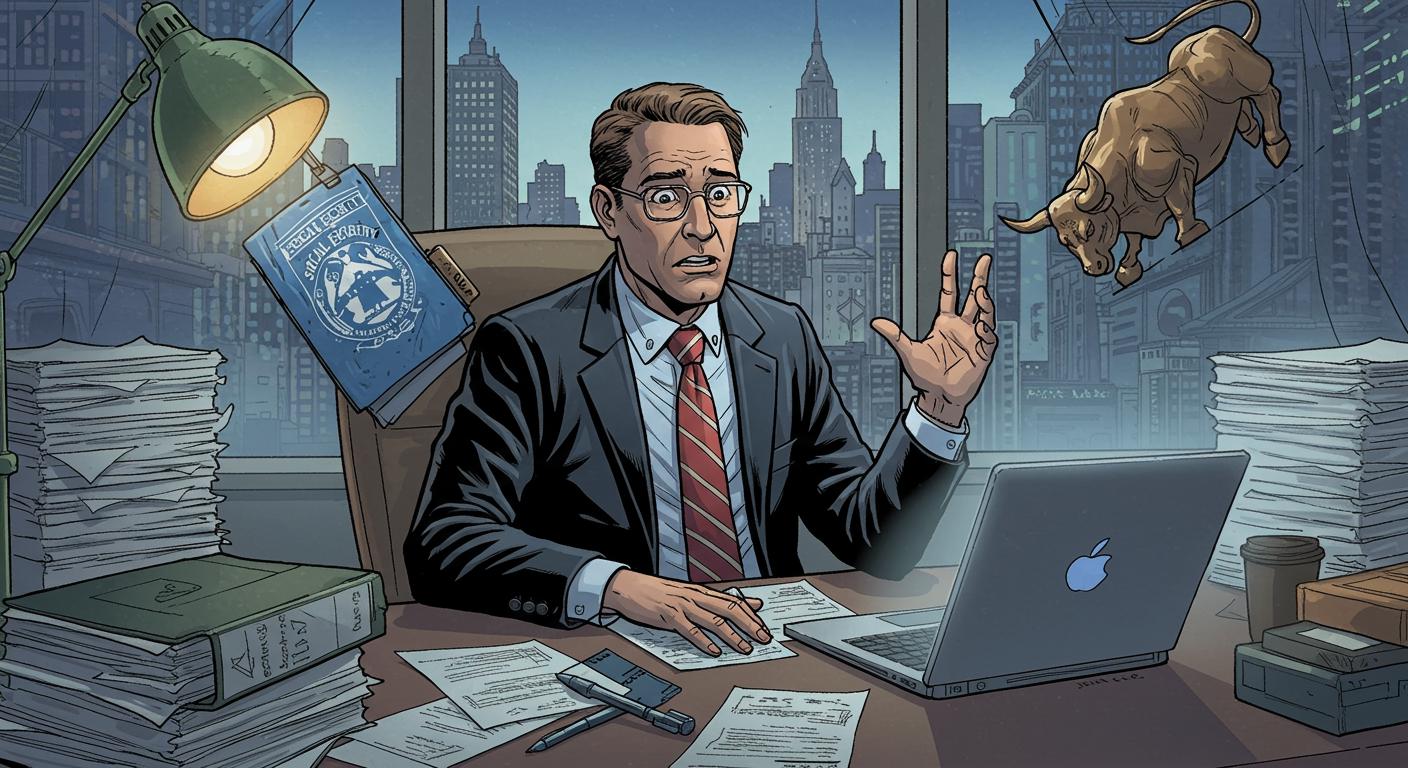
There’s something oddly relatable and yet undeniably surreal about hearing that one of the government’s most critical posts was accepted only after a quick Internet search. Yet, as described in ABC News, that’s how Frank Bisignano, longtime Wall Street executive and now chief of the Social Security Administration (SSA), began his unexpectedly public crash course in federal benefits.
“One of the Great Googlers on the East Coast”
Audio of a staff meeting reviewed by ABC News reveals Bisignano’s almost endearing candor about his introduction to federal service. “I’m really not, I swear I’m not looking for a job,” he confessed to agency management, recounting the unexpected call that led to his nomination. “So I’m Googling Social Security. You know, one of my great skills, I’m one of the great Googlers on the East Coast.” Moments later, he freely admitted, “‘What the heck’s the commissioner of Social Security?'” and then—apparently aware of how this might read—offered up a cheeky soundbite, “Great Googler in Chief. Chief in Googler or whatever.”
It’s tempting to imagine a presidential appointee squinting at Wikipedia’s “duties and responsibilities” section before responding to the White House, but it’s not something officials typically say with this kind of offhand comfort. You rarely see a public admission along the lines of, “I literally had to look up what this job is,” especially not from the person now overseeing benefits for more than 70 million Americans—a figure noted by ABC News. Is it refreshing transparency, an eccentric icebreaker, or simply another sign of how the modern political job market works?
From Wall Street’s Boardrooms to Bureaucracy’s Back Rooms
According to ABC News, Bisignano steps into the SSA job with an impressive managerial background—from chairing financial technology giant Fiserv to overseeing intricate payment system architecture—but sports no previous experience inside government or with the Social Security program specifically. As the outlet also notes, Bisignano is the fifth commissioner since last November, with the agency’s top seat transformed into a revolving door amid a period of high-profile leadership churn.
All this turbulence has roots, in part, in the dogged interventions of Elon Musk’s Department of Government Efficiency (DOGE), ABC News reports, with sweeping changes including everything from staff reassignments to overhauls of digital infrastructure and even the controversial outsourcing of admin functions. During his remarks, Bisignano didn’t gloss over the chaos, instead greeting the institutional whiplash with a quip: “Are we having fun yet? Are we OK?”
ABC News highlights that Bisignano, far from being cowed by public protests at his appointment, almost seemed to delight in the spectacle, saying, “I like that protest—I want to prove them so wrong, man, this is going to be most fun I ever had.” It’s an attitude that lands somewhere between scrappy Brooklyn upstart and Wall Street maverick, perhaps closest to the archetype of an executive who’s just stumbled into a reality more bizarre than any boardroom drama.
DOGE, Amazon, and the AI Push
On that same town hall call, the new chief offered assurances to frazzled agency managers, insisting that, as ABC News relates, “Social Security [is] not going away,” a position he attributed to President Trump as well. But for those keeping score at home, the future seems to hinge on an ambitious digital transformation—one in which the SSA is set to compete, at least in customer experience, with the likes of Amazon. “You’re competing with experiences that people have with Amazon, right? So if I could get something done at Amazon, why can’t I get something done the same way with Social Security? That’s how people think.”
Bisignano pointed out that DOGE will take a leading role in this facelift, revamping the Social Security website and introducing AI to the agency’s phone support services. As detailed in the ABC News report, his stance is that “your bias has to be, because mine is, DOGE is helping make things better. It may not feel that way, but don’t believe everything you read.” In a sign that the specter of job cuts is not wholly absent, Bisignano did clarify, “I have no intent to RIF people, OK? Because that’s the big question”—an assurance likely greeted with cautious relief by employees still adapting to rapidly shifting sands.
The outlet earlier documented the wave of external criticism and wariness from Democratic lawmakers, labor leaders, and advocacy activists, many of whom protested Bisignano’s nomination over concerns about Social Security’s future stability. Through it all, Bisignano’s approach has veered toward the jocular—even the dramatic—remarking on the protest lines with a promise to “make it great.” One almost suspects he’s auditioning for the title of Most Unlikely Federal Bureaucrat.
A Detective’s Instinct, a Googler’s Mindset
Those waiting for the Wall Street boss to become fully Washington-ized may find themselves waiting a while. As ABC News further reports, Bisignano circled back several times to his roots—and his knack for ferreting things out, jesting about tracking down internal leaks to the press: “My father was a DA and I’m a detective at heart, so I can figure stuff out.”
It’s hard not to find some odd comfort, or maybe at least bemusement, in imagining a federal commissioner who views each day at the helm of Social Security as a kind of unfolding puzzle—one that, if necessary, can always start with a keyword search.
For those of us who spend our days in libraries or online archives, the admission that “even the boss had to Google what this agency is” almost feels too on-the-nose—a collision of wiki-level openness and trillion-dollar responsibility.
Is this new chapter of SSA leadership a bold digital reboot, a slightly absurd piece of bureaucratic performance art, or just how things work in the age of resume-based improvisation? Perhaps it’s all of the above. You have to wonder—what will historians make of a moment when the keeper of America’s safety net started by consulting the same search engine as everyone looking for a lost password? In an era where the strange blends seamlessly with the everyday, it’s the kind of footnote that’ll be irresistible in the archives.