There’s an old joke about electric cars: “It’s all fun and games until your garage catches fire.” For many early adopters of EVs, the punchline had a disconcerting way of igniting, thanks to those notoriously temperamental lithium-ion batteries. Now, with a level of optimism befitting a product launch at a tech expo, China is making a bold new claim: the first electric vehicle battery certified not to explode or burst into flames under “extreme conditions,” as reported by PeakD.
Certified Non-Combustible: The Official Word
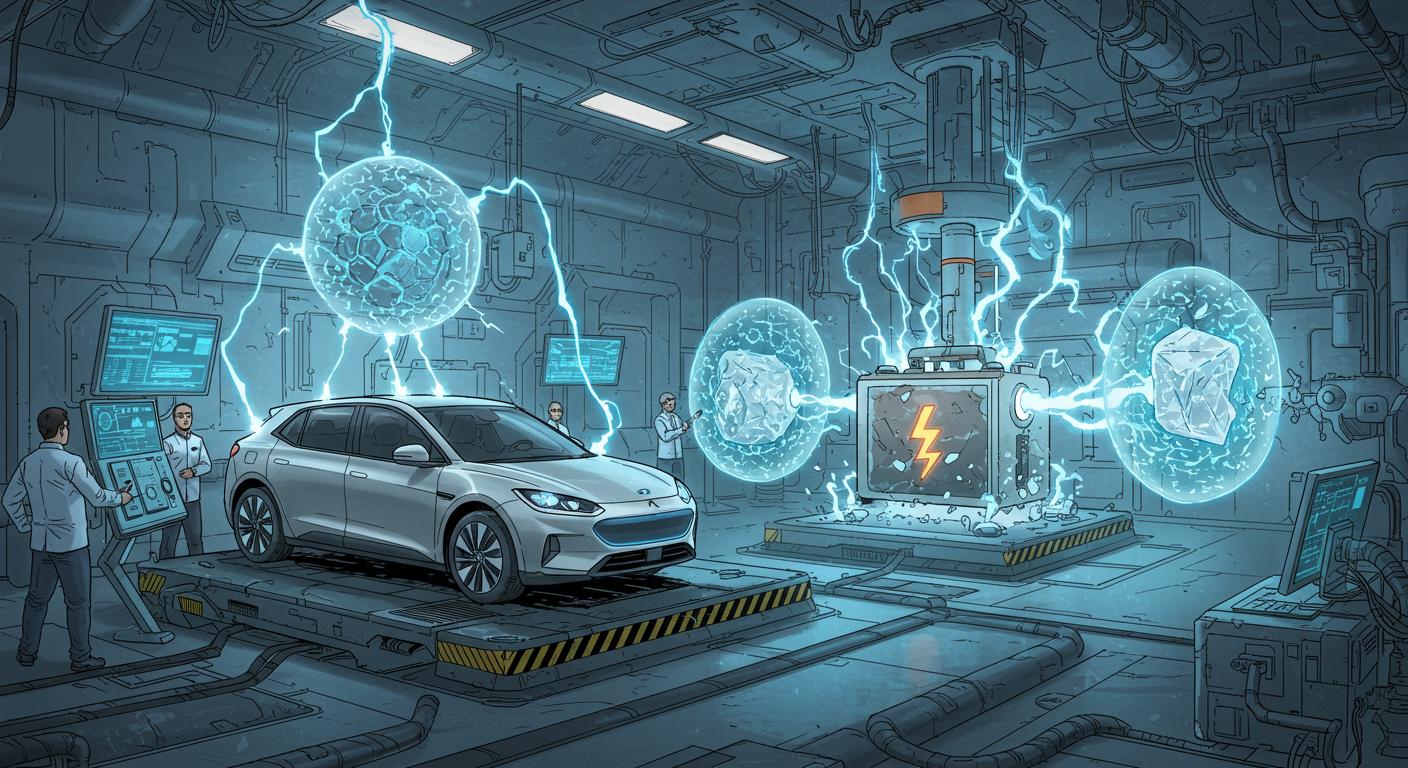
According to PeakD, Chinese authorities have granted certification to a new EV battery, stating that it will not catch fire or explode, even when subjected to what are described as “extreme conditions.” While “extreme” remains undefined—as does the precise regimen of testing involved—the outlet emphasizes this is more than mere marketing language. It’s described as a regulatory milestone, granting the battery a level of official approval not previously attained for electric vehicle power sources.
PeakD’s article notes the battery’s “world’s first” status in terms of fire and explosion resistance, positioning China ahead in a field that has long focused primarily on range and charging speed. Within the scope of this announcement, the safety angle receives unusual prominence, perhaps signaling a pivot: instead of a race for more miles or faster charges, we’re finally seeing a race for batteries that won’t turn your vehicle into an accidental bonfire.
Fireproof—But What Does That Mean Outside the Lab?
If the certification holds true beyond the controlled confines of laboratory testing, the claim is significant. Historically, batteries have been susceptible to temperature variations, physical impacts, and, for the more adventurous, “poke it with something sharp and see what happens” approaches—not that PeakD advocates for such use cases. The distinction between fireproof in official trials versus, say, an average city commute full of potholes and spilled coffee remains important.
While specifics on the actual testing are sparse, PeakD frames the innovation as not only a domestic achievement but a potentially pivotal moment for China’s global EV credibility. Past headlines about EV fires have made some would-be buyers leery, and a certified safe battery could bolster international confidence in Chinese EVs, where risk aversion tends to be strong.
Are We Ready to Park the Fire Extinguisher?
Assuming the new battery performs as promised, it could represent a milestone in the evolution of electric transport. The allure of a car you don’t worry about combusting after a day of errands is pretty strong. That said, the saga of so-called “unbreakable” tech tells us that stress tests don’t always account for the creative capacity of the real world. There’s no shortage of stories—industry-wide—about products deemed indestructible, meeting their match in the hands of bored teenagers, inattentive drivers, or anyone tasked with “just moving it to the other side of the garage.”
So, with PeakD presenting a notably optimistic picture, it’s worth pausing to wonder: what did “extreme conditions” mean in this context? Have engineers factored in the chaos of daily life—curb-hopping, hasty snack spills, or children fascinated by the mysterious inner workings of the family vehicle? Will this start a broader move towards EV batteries genuinely robust enough for the real world, or is this just an impressive but isolated technical win?
At minimum, the development breaks up the monotony of the recurring “EV unexpectedly combusts” news cycle. Even if the full reality has yet to burn away all skepticism, it looks like—on the scoreboard of progress versus pyrotechnics—human ingenuity may have taken the lead, at least for now.