
There are few experiences as reliably stressful as parallel parking on a city street, that particular flavor of public spectacle complete with honking horns, questionable steering angles, and the faint hope that you’ll never see any of these witnesses again. For those of us who would rather not wager their dignity on curbside geometry, a recent headline from Oddity Central hints at a future where the ordeal of parking might—finally—be handed over to machines built for the job.
A Flat Solution to a Familiar Problem
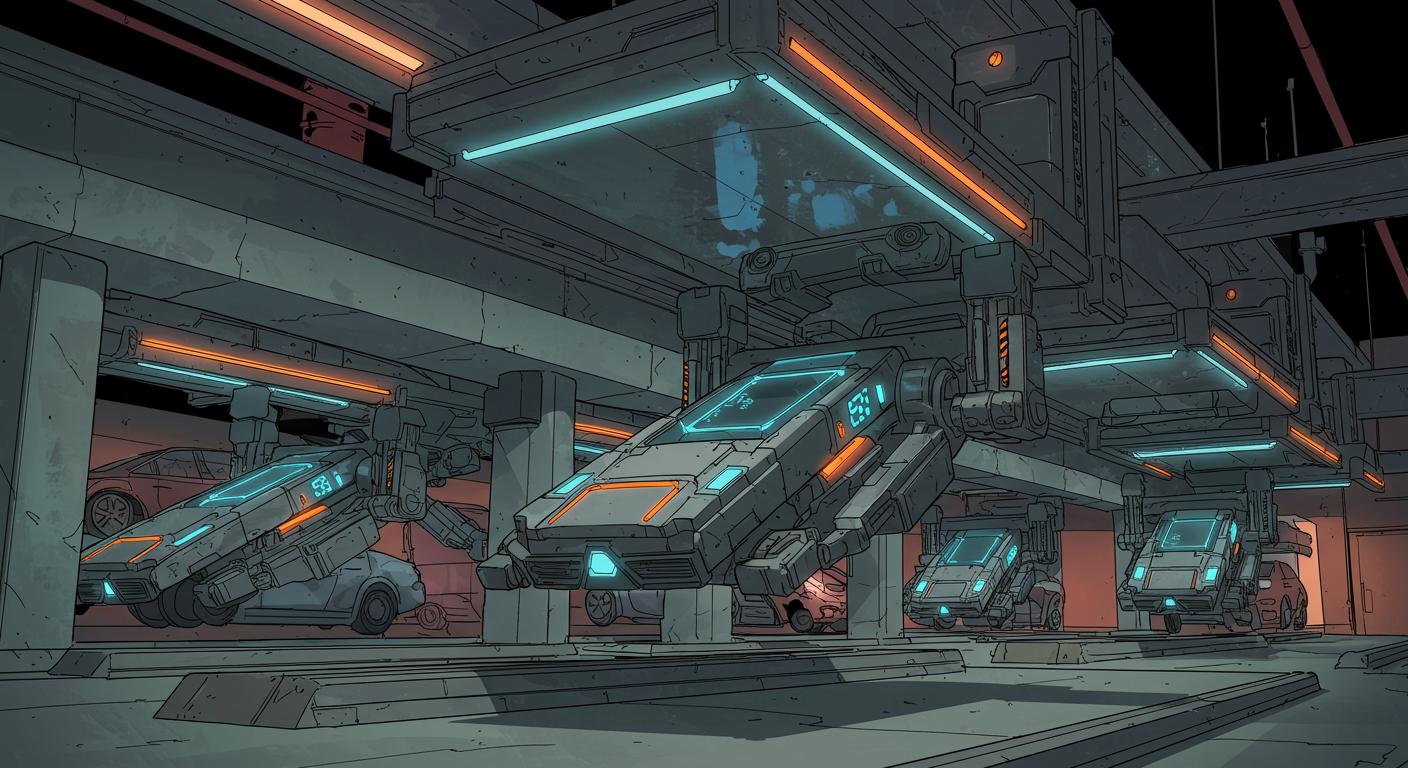
With what can only be described as understated intrigue, Oddity Central shines a light on “metal slab robots” now stepping into the automated parking arena. While the article’s full technical details remain behind the headline, it’s not a leap to imagine how such robots could operate: compact, sturdy platforms sliding beneath a vehicle to move and store it with the indifference and exactitude only a machine can muster. No need for elaborate multi-point turns or artistic interpretations of parallel lines—the robot presumably just does what it was programmed to do, and doesn’t hold a grudge about it.
If the phrase “metal slab robot” conjures mental images of a sci-fi Roomba armed with a parking agenda, you’re not far off. While Oddity Central’s piece leaves some of the specifics to the imagination, the concept isn’t entirely unheard of. Automated parking systems, often employing rail-guided lifts or rotating platforms, have been tested in urban centers from Tokyo to New Jersey. The allure is obvious: more cars packed into tighter spaces, fewer dings in paintwork, and perhaps, one day, a proud absence of dented bumpers caused by human hubris.
The Perils and Pleasures of Letting Go
Speculation aside, it’s tough not to see the low-key poetry in the promise of letting a robot valet erase one of life’s recurring urban headaches. Would it be odd to miss the failure and triumph of old-fashioned parallel parking? Maybe. Or perhaps it’s just a relief to think of a metal slab calmly handling the job, sparing everyone the spectacle.
Still, the details—installation, cost, what happens during a blackout—are missing from the Oddity Central report, so questions remain. Will these machines quietly become the unsung heroes of our city infrastructure, or halt the evening commute at the first sign of Wi-Fi woes? Only time, and presumably more headlines, will tell.
For now, the mere thought that relief may one day glide beneath our cars on a metal slab is enough to bring a quiet smile—and maybe, for chronic parallel parkers, a sigh of hope laced with irony.