The phrase “humanitarian crisis” almost always brings to mind people forced to flee violence—families abandoned to uncertainty, entire neighborhoods emptied overnight. But leave it to Sinaloa, a region already legendarily steeped in narco theatrics, to expand the cast of refugees to include tigers, elephants, jaguars, and lions. According to an Associated Press report, these animals have been jostled from their sanctuary, not by natural disaster, but by a very human storm: an escalating cartel war that’s turned even exotic wildlife into casualties—albeit ones with roadies and veterinary passports.
Welcome to the Jungle, Now Featuring Machine Gun Fire
Culiacan, Sinaloa’s capital, has worn the crown for narco spectacle for years. The Ostok Sanctuary, perched on the city’s edge, housed a menagerie of animals with colorful backgrounds—rescued circus escapees and, with something between irony and inevitability, “narco pets” abandoned by cartel lords after their moment in the sun. The AP outlines how the refuge became an offbeat bulwark against chaos, sheltering creatures that had wandered in from local fables and cartel eccentricities alike.
That uneasy calm shattered eight months ago. Outlined in the AP’s coverage, everything escalated after a high-profile kidnapping—engineered by a son of Joaquín “El Chapo” Guzmán—ignited an ugly turf war between Sinaloa Cartel factions. What had once been a city with an unspoken, if brutal, order suddenly unraveled: parents monitored shootout reports like weather alerts, bullet holes pocked family homes, and nightlife vanished under a citywide hush. The “new normal,” as described by security analyst David Saucedo, involves civilians caught between carjackings, extortion, and abductions as warring criminals fund their escalating conflict.
For those at the Ostok Sanctuary, the realities of cartel warfare quickly and almost absurdly intruded. With the refuge located near Jesús María, a hub for the Los Chapitos cartel faction, its staff soon found themselves fielding death threats, enduring supply cutoffs, and listening to the accompaniment of nearby gunfire while tending to more than 700 creatures—some already traumatized by former handlers and new chaos alike. Ernesto Zazueta, the sanctuary’s president, summed up the new reality: “We’ve never seen violence this extreme.” It’s a rather bleak milestone when even the tigers and elephants are packing up for somewhere safer.
An Exodus on Eighteen Wheels
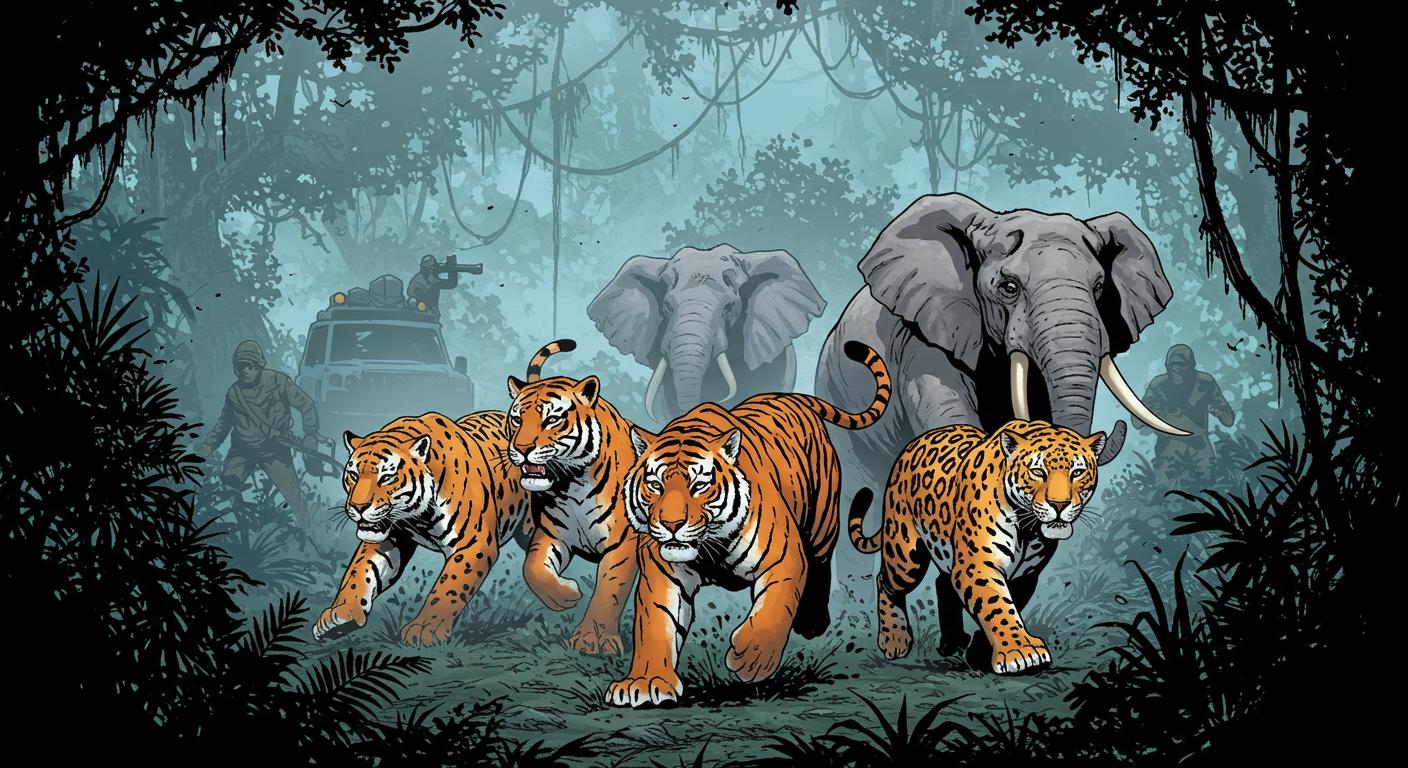
If the image of veterinarians, tranquilizers at the ready, shepherding a convoy of elephants and roaring big cats down a Sinaloan freeway with the National Guard as outriders feels surreal—that’s because it is. The Associated Press describes how refuge staff undertook months of quiet planning, retraining animals for transport, and then, with little public warning, loaded their unlikely charges into metal crates bound for Mazatlan’s coastal wildlife reserve.
The journey was hardly a caper in high spirits. Zazueta, grappling with dwindling supplies and veterinary care, faced wrenching choices. In one quietly desperate moment, the AP highlights how the search for a specialist to treat Bireki, one of their elephants, ended when no doctor could be persuaded to risk the journey into Culiacan. “If we don’t leave, who will treat them?” Zazueta reflected—a line that lands somewhere between resignation and reluctant pragmatism.
Refuge workers have become accustomed to the bizarre byproducts of Sinaloa’s criminally charged ecosystem. Diego García, one staff member, told the AP of anonymous threats targeting those who rescue cartel pets—reminders that, in this region, even animal welfare has a sideline in extortion. During one rescue, García was forced from his refuge vehicle at gunpoint, losing a truck and vital medical tools to an armed thief—the kind of loss that might not make headlines in a place where, as the AP notes, bullet-riddled homes and bodies hanging from bridges are just part of the scenery.
When the Menagerie Becomes the Barometer
Some details stand out as almost folkloric, yet well-documented. Urban legends swirl in Sinaloa about traffickers feeding enemies to their lions, but fact edges into fable in the most unsettling ways: the AP describes how Bengal tigers and other big cats have been found chained in public plazas, stranded after gun battles or simply abandoned as their “owners” run afoul of the law. Shelter staff have responded to death threats against themselves and the animals if extortion payments are not met—an encapsulation of just how broadly cartel violence has blurred the boundaries of safety, even for creatures not otherwise implicated in organized crime.
The Ostok Sanctuary’s move was orchestrated with little fanfare, the staff wary of provoking either criminal groups or unhelpful officials. The hope is that, in Mazatlan’s relative calm, their charges might recover from stress-induced illness and regain something like a normal life. Yet García, who’s seen cartel violence “spread like a cancer,” remains unconvinced that anywhere in the region offers true security. Mazatlan, though currently more stable than Culiacan, lives under its own shadow of potential upheaval.
When Sanctuary Evaporates, Who Runs Next?
Looking at Sinaloa’s latest exodus, there’s a certain irony difficult to ignore. For years, criminal power provided its own perverse sort of order—violent, yes, but at least reliable. Now, fracturing loyalties and public battles have scattered that order to the wind, leaving residents, animals, and caretakers alike searching for pockets of stability. There’s a comic undertone, if you squint: elephants and jaguars, fleeing gunfire in armored trucks, as the city’s wildest creatures become its most conspicuous refugees.
Is this the world’s strangest bellwether—a menagerie measuring the depth of civic breakdown? Or just further proof that, when things truly go off the rails, nobody is immune—not even the lioness asleep in a crate, the monkeys huddled in their transport, or the humans left behind counting empty cages? It’s a story that’s unsettling and emblematic, as if Sinaloa itself is asking: when tigers and elephants are rushing for the border, how much stranger can strange news get? And what, or who, will be forced to run next? Sometimes, you have to wonder if even the region’s old ghost stories can keep up with reality.