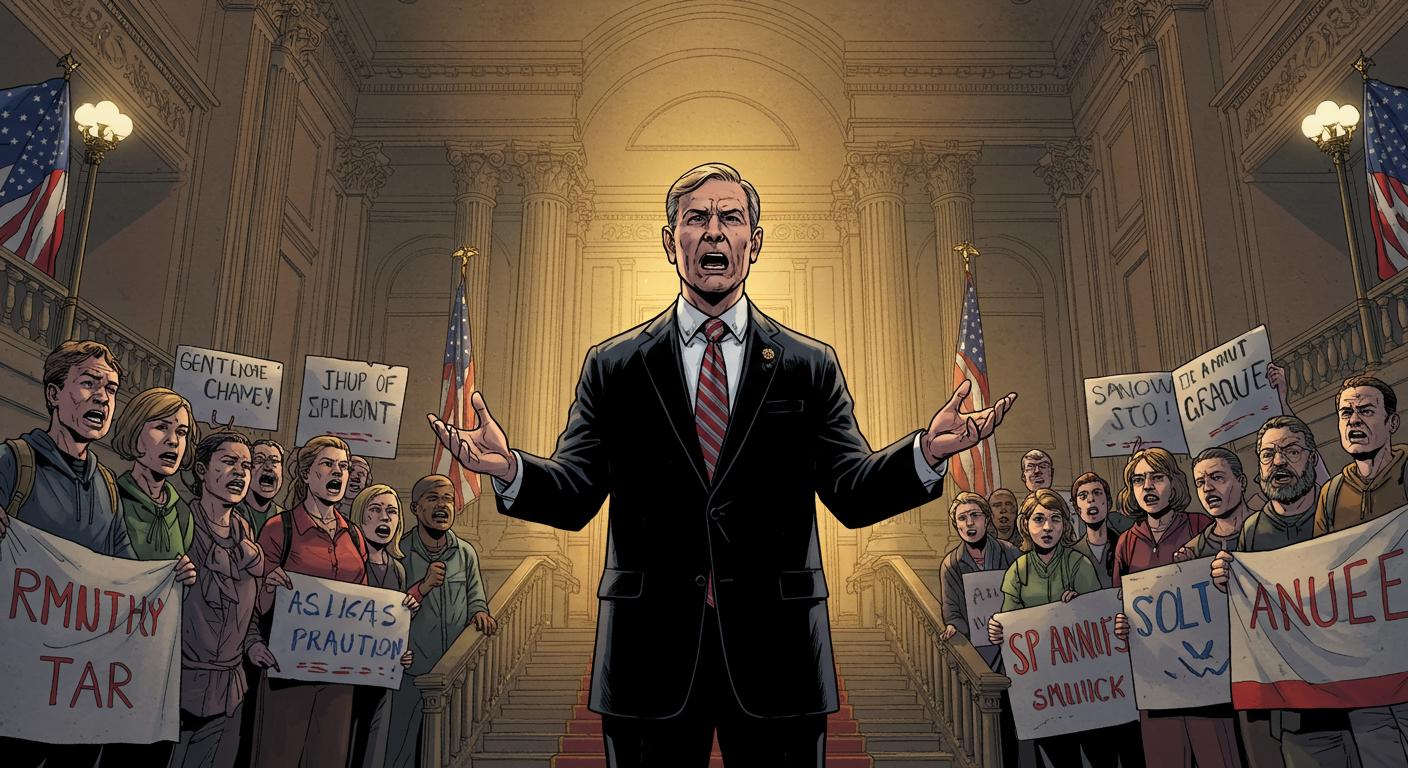
If nothing else, American politics remains a treasure trove for those who study the art of the accidental existential crisis. Case in point: During a recent town hall in Butler County, Iowa, Senator Joni Ernst—otherwise known for her robust stances on agricultural policy and combative committee hearings—delivered what might be the first truly unifying message in recent Senate memory. When pressed by constituents over whether Medicaid and SNAP cuts would cost lives, she reportedly responded, “Well, we’re all going to die.”
As Newsweek reports, the line didn’t exactly land as a comfort. Facing a crowd openly worried about the very real, potentially fatal, consequences of losing health coverage, Ernst pivoted into philosophical territory, offering up what Newsweek describes as an “existential” rejoinder rather than a policy-driven explanation. The Hill, reviewing video footage from the event, further documents that this answer provoked immediate and raucous jeering from the attendees.
Existentialism, Now With Policy Riders
Ernst’s press team, no strangers to post-gaffe triage, later clarified to multiple news outlets that the senator was only making a “broader philosophical point about mortality,” and not intending to be dismissive of lives at stake in the Medicaid debate, a detail highlighted by Newsweek. The Hill elaborates that Ernst attempted to steer the conversation back to policy specifics, reiterating that those who are “most vulnerable” and who meet Medicaid eligibility requirements would “feel protected.” Yet, these assurances were delivered after the abrupt reminder that, coverage or no, existence itself has an expiration date.
As The Hill recounts, the spark for this comment came when a constituent interjected that people would “die” if the proposed reforms went through. This wasn’t just rhetorical. Newsweek, citing a nonpartisan Congressional Budget Office estimate, notes that as many as 10 million people could lose Medicaid coverage under such requirements—giving the crowd’s fears real statistical weight. In the face of this, Ernst reminded all assembled of life’s ultimate certainty.
Officials, as reported by Newsweek, say that the reforms would tie Medicaid eligibility for some recipients to new work requirements, alongside efforts to remove ineligible recipients, particularly focusing on those who crossed into the country without legal status. Ernst emphasized, according to The Hill, that “Medicaid is extremely important here in the state of Iowa,” but also highlighted that “those that are not eligible” would lose coverage, suggesting funds should be reserved only for officially eligible recipients.
Social media reactions, as catalogued in the Newsweek article, were swift and mainly incredulous. The X account “Republicans Against Trump” summarized the prevailing sentiment, saying, “Callous doesn’t even begin to cover it,” while Protect Our Care declared, “This is the Republican health care agenda: indifference to the lives of working families.” Newsweek also notes that the Democratic Senatorial Campaign Committee called Ernst’s response “stunningly callous.” These reactions, presented by both outlets, underscore how the debate has shifted from policy minutiae to tone and intent.
Ernst’s communications team, responding to the uproar, accused Democrats of “fearmongering” and insisted that the senator remains focused on “improving the lives of all Iowans,” The Hill reports. They even offered a new take on historical fatalism, with one spokesperson stating, “There’s only two certainties in life: death and taxes, and [Senator Ernst is] working to ease the burden of both…”
The Unsurprising Surprise
What stands out, aside from the existential sidestep, is how a discussion about immediate threats to public health coverage can so quickly spiral into cosmic generality. While the inevitability of death is undisputed, its invocation here—right as constituents seek practical assurances about access to basic medical care—seems less like comfort and more like a rhetorical shoulder shrug. Will reminders of mortality ever land as intended in a political context, or do they just amplify a sense of unease in those wondering about their health and future?
According to Newsweek, the changes proposed in the budget reconciliation bill are being debated in the Senate, with House Speaker Mike Johnson and former President Donald Trump pressing for minimal modifications. The plans have already drawn sharp criticism from House Democrats, who released a joint statement contending the bill would “rip healthcare and food assistance away from millions of people in order to provide tax cuts to the wealthy…” The Hill also notes that the reforms include the cessation of “SNAP overpayments” and stricter enforcement to remove non-eligible beneficiaries, with crowd members pushing back over the risk of coverage loss for those who depend on such aid.
Moderate Republicans have reportedly raised their own concerns regarding the risk to constituents, while advocates and advocacy campaigns like Protect Our Care continue to frame the GOP plan as indifference in the face of hardship, a framing repeatedly detailed in Newsweek’s roundup of reactions. For those losing benefits, the debate isn’t about philosophy or waste, fraud, and abuse—it’s about what happens when coverage runs out.
Reflections from the Absurd
After enough time poring over the archived corners of government record rooms, one learns that policymakers have long dabbled in cosmic generalities as a kind of rhetorical exit ramp. Still, rarely has the jump from policy specifics to the universality of death felt quite so abrupt. In a room full of worried people, the message “we’re all going to die” sounds less like reassurance and more like a punchline in a joke nobody wanted to hear.
So, is this episode a fluke, or are we seeing the next step in the evolution of “let them eat cake” politics—“let them eat philosophy”? Newsweek describes the current budget process as poised for further Senate debate, while millions of Americans’ futures hang in the balance. In this context, the senator’s remark reads as both more and less profound than intended: policy is local, but as Ernst points out, mortality is inescapably bipartisan.
When officials answer health care worries with reminders of our shared final destination, does it spark comfort, or quiet despair? If your own doctor offered a similar perspective, would it feel like wisdom—or like it’s time to look for a second opinion?
The business of governing may be uniquely complicated, but the accidental profundity of “we’re all going to die” stands out as a reminder that, in politics as in life, the most universal truths are sometimes the least useful in the moment they’re offered. Can we expect more cosmic musings from Capitol Hill as policy stakes grow ever more concrete? The wait, as always, continues.