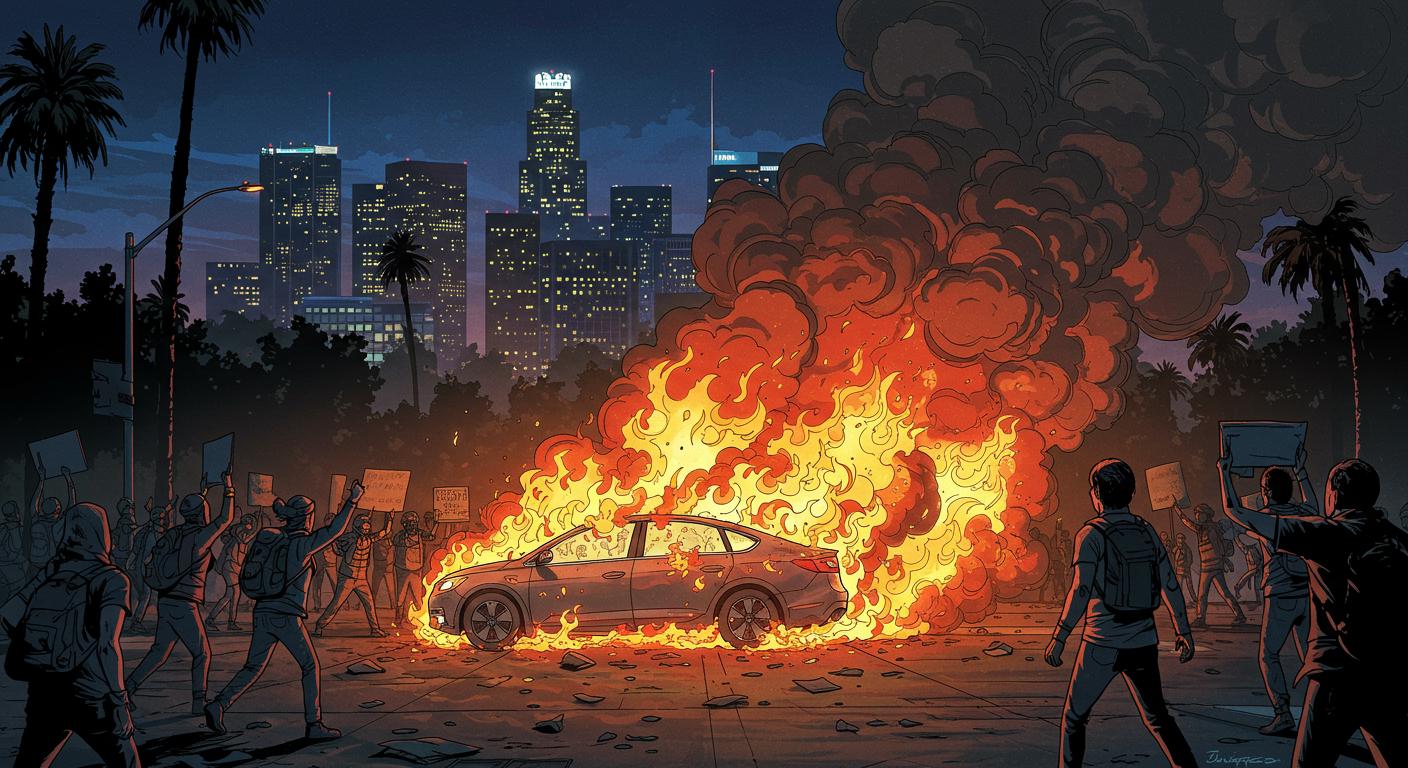
Occasionally, the future arrives on flame-spitting wheels—sometimes quite literally. The latest chapter in downtown Los Angeles played out more like a fever dream from a Philip K. Dick novella than a tech company’s pitch deck, as at least five Waymo robotaxis—those rolling ambassadors of autonomous ambition—met their fiery end during anti-ICE protests this past weekend. As reported by The Verge, images of burning Waymos, defaced with anti-ICE slogans, have become emblematic of the city’s current unrest.
Robotaxis as Collateral Damage
If you haven’t been keeping score, Waymo’s self-driving vehicles have appeared in more headline-grabbing conflicts than most second-term mayors. These vehicles, described by The Verge as passive participants rather than active targets, found themselves transformed into very combustible bystanders. Their design—in essence, a rolling “do not engage”—makes them more “sitting duck” than escape artist when things heat up. The outlet points out that, while a human driver might gun it out of harm’s way, robotaxis are strictly programmed: no hitting the gas at the first sign of unrest, and certainly no running over protesters.
Another feature—and sticking point—is the cars’ high-tech suite of cameras. As The Verge notes, these cameras don’t just spot traffic cones or stunned raccoons, but can record the bustling human theater all around. Protesters, worried about being identified on footage potentially shared with law enforcement, have ample motivation to find these machines less than welcome at demonstrations. The Verge highlights that Waymo has on occasion provided footage to agencies such as the LAPD when legally compelled.
Adding another layer, the article references Alphabet’s influence, Google’s history (including CEO Sundar Pichai’s attendance at Donald Trump’s inauguration), and the broader anxiety about automation replacing blue-collar jobs. These factors all swirl together, setting the stage for technology to become an easy symbol—or scapegoat—when larger grievances flare up.
A Symbol in the Flames
There’s something of a Rorschach quality to the picture of a smoldering robotaxi. For those concerned about public order, it’s a sign of “lawless cities” and destruction-as-message. Meanwhile, skeptics of Big Tech or surveillance view the burned-out Waymos as icons of protest against automation creeping unchecked across daily life. In findings summarized by The Verge, many Los Angeles residents are at least passably content with having driverless cars in their midst. Yet, these contentments can go up in smoke—sometimes literally—when civil tensions boil over.
The article also relates how, compared to San Francisco’s contentious rollout, LA’s relationship with Waymo has mostly trundled along without widespread uproar. But festering doubts about who benefits, why communities weren’t exactly consulted, and the occasional traffic mishap all add to a growing sense that “progress” is happening at the public’s expense. In a detail highlighted by The Verge, residents question whether their participation in this urban experiment is truly voluntary.
The Sideshow That Isn’t Just a Sideshow
A certain irony emerges here—these robotic vehicles are built to fade seamlessly into the city’s background, yet, in times of unrest, they become center stage. As observed by The Verge, Waymo’s cooperation with law enforcement divides opinion: it can be invaluable in things like hit-and-run investigations, but simultaneously fuels fears about surveillance and privacy for everyday residents and especially for protesters. Notably, the article references worries among even liberal supporters of protest, for whom the burning cars create imagery that may serve the narrative of lawlessness peddled by critics.
Directly quoting the company, a Waymo spokesperson told The Verge, “Safety is our highest priority. We removed vehicles from Downtown Los Angeles and will not be serving that specific area for the time being, out of an abundance of caution and with guidance from LAPD.” Earlier in the report, it’s mentioned that Waymo’s larger mission is to become the world’s “most trusted driver”—a vision momentarily upstaged by the sight of their burned-out vehicles waiting to be towed from city streets.
When Progress Is Parked
For now, Waymo service has been paused in areas of downtown LA, a practical decision according to the company and local law enforcement, as described in The Verge’s coverage. The underlying dilemma remains: Is public discomfort with robotaxis just a speed bump on the road to progress, or a manifestation of deeper societal unease with technology rolling out ahead of consensus? Do these bonfires signal a fleeting glitch or a more permanent uneasiness about where innovation and oversight diverge?
If nothing else, the weekend’s events reinforce how these vehicles—designed to operate invisibly—have instead become modern mascots for age-old tensions. The robotaxi, it seems, can’t always escape the public eye—or the flames when discontent decides to make itself known.