Sometimes international politics feels like a playground argument—now, Russia seems determined to make that literal.
The Sandpit: Geopolitical Sandbox, Ages 3 and Up?
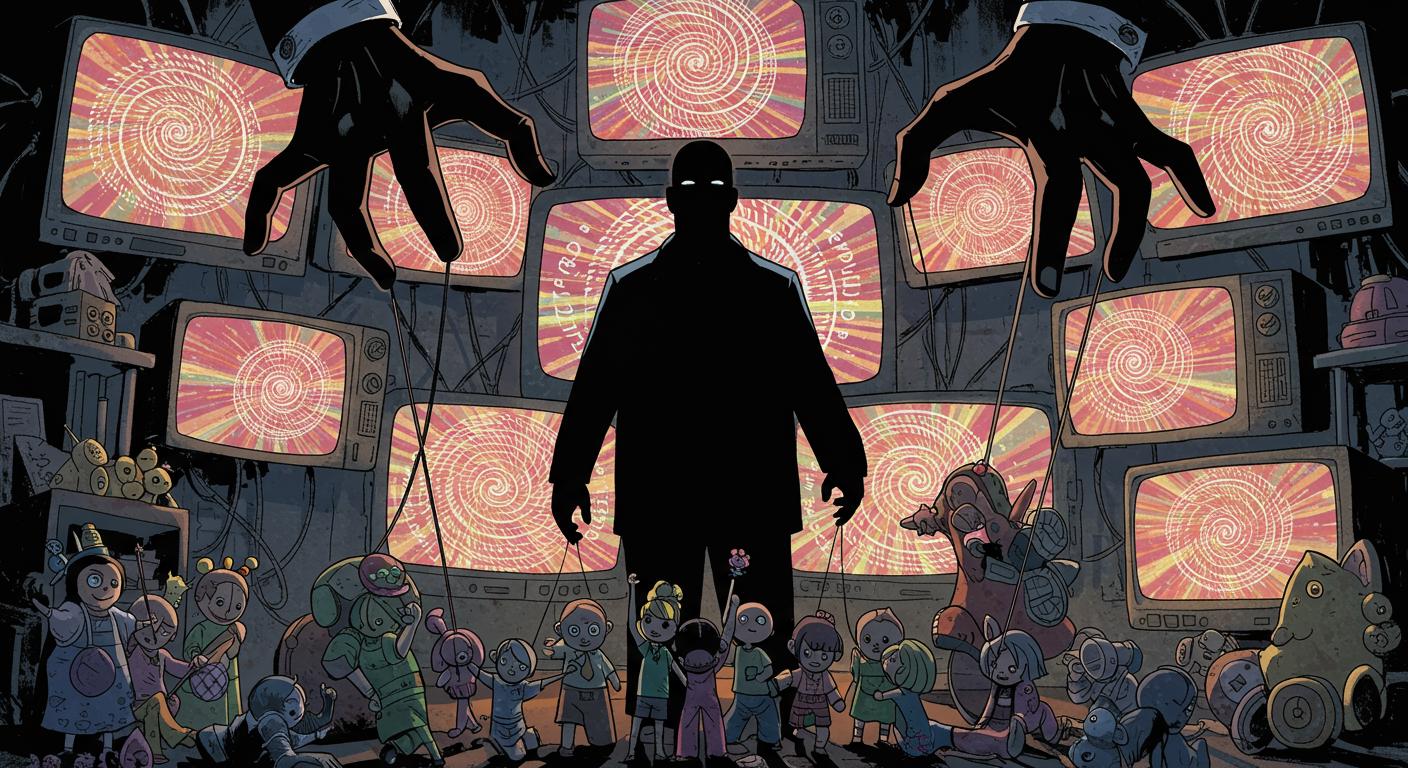
According to The Times, Vladimir Solovyov—longstanding Kremlin media figure and repeat recipient of Western sanctions for spreading disinformation—has masterminded a new children’s show called “Sandpit,” targeting pre-schoolers. Solovyov, in his own words, pitches the program as a way to “instil patriotism from an early age” and help Russian infants “discuss geopolitics.” The show’s trailer showcases animated versions of Putin, Trump, Macron, Kim Jong-un, Erdogan, and even Elon Musk, all recast as children on a video call.
In the preview, Solovyov’s production sees “Kim” suggesting “Macron” shouldn’t join a meeting because “you are always with your granny”—a not-so-subtle jab at the French president’s marriage, as detailed in The Times. Trump, meanwhile, asks about the curious choice of chat platform, only to be told by Putin: “Because your Skype is dead, that’s why”—a tongue-in-cheek nod to Skype’s actual closure earlier this month. The avatars themselves are unmissable: Putin as a bear in a furry red-star hat, Kim as a literal mushroom cloud, Trump doling out pope-like blessings. Not exactly the cast of your average Saturday morning cartoon.
Solovyov has described the show as an “ambitious step into a future where political awareness begins in infancy,” The Times notes—a framing that leaves little doubt as to its intent. One might imagine Russian parent-teacher conferences soon featuring notes like: “Ivan refuses to stop referring to international sanctions as ‘fake news’ and keeps blessing everyone before snack time.”
Propaganda’s Newest Recruits: Toddlers
As The Times also documents, this is just the tip of a broader Kremlin drive to shape young minds. Newly released Russian textbooks for teenagers now describe Ukraine as a “Nazi state,” justify Russia’s invasion of Ukraine as being necessary for the nation’s survival, and offer up the claim that Trump lost the 2020 US presidential election due to “obvious electoral fraud by the Democratic Party.” These assertions, all noted in The Times’ reporting, underscore how the target age for these narratives keeps drifting downward.
Solovyov, for his part, hasn’t limited his dramatic explanations to cartoons. Earlier in the report, it’s mentioned that he has labeled Ukraine’s leaders “fascists,” accused Ukrainians of “serving Satan,” and suggested that the Bucha massacre was actually staged by British intelligence—prompted, he claimed, by the town’s butcher-sounding name. Not exactly the stuff of preschool lullabies, but it does make one wonder whether even the most imaginative animators could dream up storylines as outlandish as these.
Despite the persistent efforts, the outlet also notes that the audience for Solovyov’s main TV talk show is dwindling; “An Evening with Solovyov” now rarely cracks Russia’s top 50 programs. It’s a telling sign, further reinforced by figures from OVD-Info (a Russian human rights group) that more than 500 teenagers have been detained at anti-war rallies in the past three years. The Times details the case of Arseny Turbin, who was just 15 when Russian authorities sentenced him to five years in a penal colony for allegedly joining an anti-Kremlin group and distributing leaflets criticizing the war in Ukraine.
Reading Between the (Crayon) Lines
But does all this indicate a new era of bedtime stories with a Kremlin-approved twist—or a sign that the propaganda machine is running out of receptive ears? Even with increasingly early interventions, some Russian youth are clearly not taking the state’s story at face value. The absurdity of “Sandpit” may signal more than just a lowering of the target age for official messaging. Is this a last-ditch attempt at shaping minds, or the media equivalent of shouting louder when the audience isn’t listening?
Perhaps the true irony lies here: by turning geopolitics into literal playground antics, “Sandpit” blurs the line between parody and policy. When the stars of political storytelling are still learning their colors, it begs the question—how young is too young for a crash course in propaganda? Or maybe, in the future, Russian history tests really will ask toddlers what kind of hat the bear was wearing.