
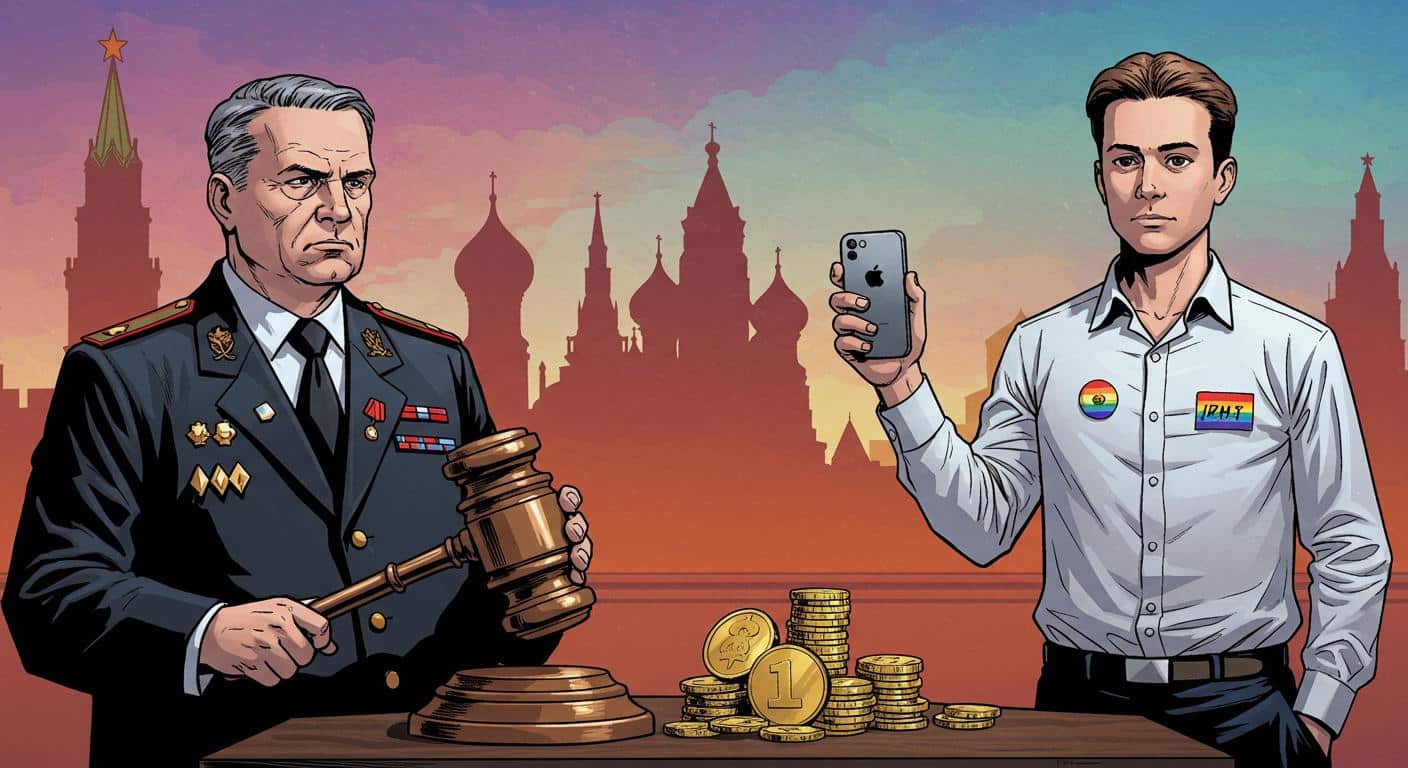
Every so often, a news story emerges that so succinctly captures the odd choreography of global politics and economics that you’re left unsure whether it’s a bureaucratic farce or performance art. This week, Russia’s legal system has served up precisely that scenario with its latest penalty against Apple: a $131,000 fine, described with a straight face as “about two seconds’ profit” for the Cupertino giant. If Kafka wrote headlines, you’d expect them to look a bit like this.
Courtroom Sprints and Secret Proceedings
As detailed in AppleInsider’s coverage, the Moscow Tagansky District Court levied this penalty after concluding Apple had—according to the court—breached Russia’s laws prohibiting “LGBT propaganda.” The independent Russian outlet VOI echoes that the total fine included $93,500 for three distinct violations, with a further $37,400 swiftly added for failing to remove content when requested by Russian authorities.
The trial itself was something of a procedural magic trick. Apple’s attorney, Elena Chetverikova, reportedly requested proceedings be closed to protect trade secrets, a move both sources document the judge approved. This led to almost zero public details on the specific “LGBT propaganda” charges or any allegedly non-removed content. According to AppleInsider, journalists who were finally let back in for the verdict found it delivered so quickly that even seasoned reporters couldn’t jot down the particulars before being ushered out again. When VOI describes their own efforts at follow-up, they note the court’s spokesman shut down requests for records with a simple reminder: the trial was closed.
Two Seconds: The Universal Unit of Corporate Shame?
What’s most arresting here—apart from the judicial speed-reading finals—is the focus on measuring these penalties in slices of Apple’s earning power rather than familiar units of national currency. AppleInsider reports Russian authorities have become fond of framing their big-tech fines in milliseconds of lost corporate revenue: Apple faced a nearly identical “two seconds of profit” penalty for reporting on the Ukraine war back in 2023. The specifics of that case, as outlined by VOI, involved the company being punished simply for Apple News aggregating mainstream reports that there was such a conflict—deemed a violation of pro-Kremlin information laws.
So what exactly is accomplished with fines so comparatively small? Is this Russia flexing regulatory muscle, or more of an ideological flag-planting exercise at the lowest cost? The spectacle invites curiosity: are two seconds expensive enough to teach a lesson, or is the lesson that the real battle is about narrative, not numbers?
Russia, Apple, and the Long, Strange History
Peeling back the context, Russia’s anti-LGBTQ+ stance is hardly breaking news. As VOI highlights, the Russian Supreme Court formally outlawed the “international movement of LGBT” in 2023, tucking it away with other banned and terrorist organizations. The precedent for targeting Apple goes back at least to 2018, when, as AppleInsider notes, Russian authorities forced the company to block the Apple Watch Pride face. Then comes the 2019 moment that has already passed into internet lore: per both AppleInsider and VOI, a Russian man sued Apple for $15,000 after claiming a crypto app from the App Store “turned him gay.” No one, it appears, knows what happened to that particular lawsuit—leaving it suspended somewhere between urban legend and the world’s strangest Terms of Service footnote.
More Windmill-Tilting Than Wrecking Ball
With penalties so minute they barely register on the Apple financial seismograph, it’s hard to imagine either side losing sleep over outcomes—except perhaps PR teams searching for new synonyms for “symbolic.” AppleInsider observes that the details of Apple’s alleged violations remain as shrouded as ever: nothing in public documents points to which features or news stories triggered the charges, and the tally of infractions even changed mid-hearing. VOI, reflecting on the wider pattern, points out that one more proceeding adds only to the “long list of legal and political pressures” Western tech companies face when operating in Russia.
So who really wins in these curious collisions between global tech firms and national courts? Is there value in slapping a multi-billion-dollar company on the wrist for an amount they make before your iPhone’s alarm rings a second time? Or is the actual story how such actions signal control and resistance in ways that columns of dollar signs never could?
The Absurdity and the Aftermath
In the end, if you blinked, you probably missed Apple’s latest “punishment.” And if you grinned at the notion of a $131,000 fine being compared to two seconds in the bustling heart of Big Tech, you’re in good company. One commenter cited by AppleInsider wondered whether “shirtless Putin on a horse” counted as LGBTQ+ propaganda, which nods to the swirling absurdities of this entire drama.
What’s next—a closed-door hearing doling out a penalty equal to the pause between “Hey Siri” and a response? Or will Russia keep measuring digital disobedience in the time it takes to scroll past an app notification? It seems, for now, that the contest is about spectacle more than substance, a contest measured in seconds that most of us wouldn’t even notice—unless someone told us to count.