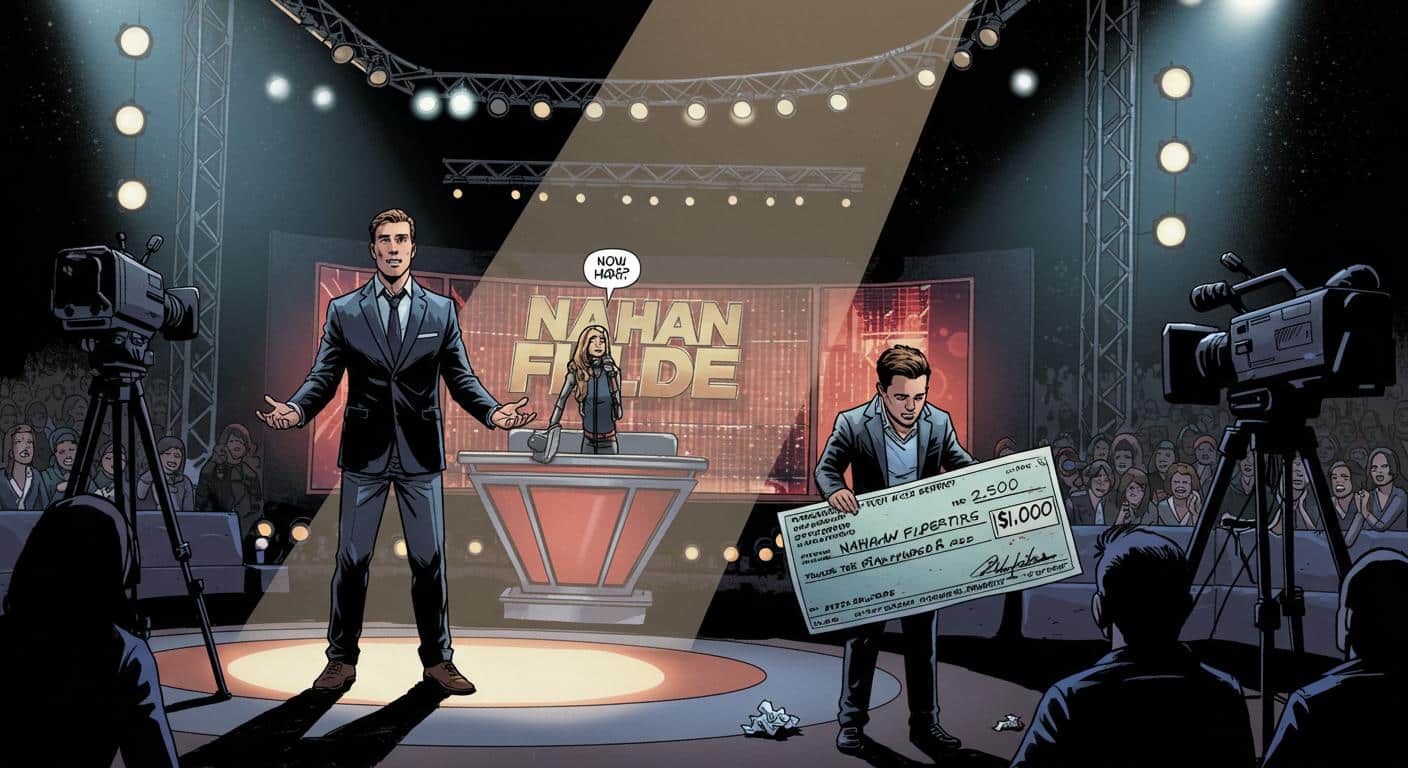
The boundary between reality and television has always been porous, but rarely does it dissolve as completely as it did for Lana Love, a New York musician who spent the better part of last year chasing what looked like a familiar dream: making it big on a televised singing contest. The twist? The show in question, “Wings of Voice,” wasn’t real—it was an elaborate ruse orchestrated by Nathan Fielder for HBO’s “The Rehearsal,” as thoroughly detailed in Variety’s extensive report. IMDb also cites Variety’s coverage in noting the widespread reaction to Love’s plight, but it’s the source reporting that captures both the absurdity and the fallout.
Art Imitates Life Imitates Art (and Loses Money in the Process)
The trappings were all in place: official-looking casting emails, the hope of performing with a Grammy-winning artist, and the tantalizing glow of that HBO logo. According to information uncovered by Variety, Love—an experienced performer with an album ready for release and past exposure on “The Voice”—felt she’d found her opportunity for national attention. She wasn’t alone: production gathered more than 1,000 hopefuls in Hollywood, each drawn in by some version of the same invitation.
Variety reports that Love, believing “Wings of Voice” to be her big break, personally financed three separate trips from New York to Los Angeles. The costs added up fast: $5,500 on travel, lodging, and essentials like hair and makeup, alongside roughly $4,000 in lost income from canceled lessons. What’s more, the mechanics of the “competition” quickly drifted from odd to faintly surreal. Love told Variety that her audition involved performing for a uniformed airline pilot judge and singing public domain children’s songs such as “Old MacDonald Had a Farm”—explained in the show to sidestep music licensing fees. No visible cameras, no chance to review contracts at leisure, and the persistent feeling that something was just a little off.
Deception as Entertainment (or Just an Entertainment Expense?)
As outlined in the Variety piece, the purpose behind all this was as convoluted as it was calculated: Fielder was not producing a singing competition but a layer-cake social experiment. In Season 2 of “The Rehearsal,” the ostensible goal is to prevent aviation disasters, with the series positing that poor cockpit communication is a root cause. Enter the unsettling twist: real pilots, posing as talent show judges to practice giving honest feedback—while genuine, unwitting contestants perform their hearts out, convinced that stardom is within reach.
Love’s experience, as she described in detail, was peppered with hurdles that seem ludicrous in hindsight—non-union contracts pressed on the spot, an ambiguous relationship to the rights for original music, and a cycle of being summoned and dismissed with little explanation. At one point, after being asked to sign a contract that threatened to transfer ownership of her music to the producers, Love insisted on an addendum protecting all songwriters involved. Variety reports that she succeeded, an unusual victory in an otherwise stacked deck.
It wasn’t until just before her final taping that Love put the pieces together. By tracing crew members’ credits (a maneuver any determined librarian might appreciate), she discovered their connection to Fielder’s past projects. Crew whispers about Fielder and web searches led Love to realize she’d become an unwitting participant in a meticulously constructed satire.
When the Simulation Bites Back
Variety highlights the aftermath among contestants—a flurry of group chat messages blending disappointment and a search for meaning. One lamented, “We were just an experiment,” while another tried to reframe it: “You did earn that ticket. You did a good job. It’s just as real as it was for ‘The Voice’ [or] any of those shows.” The line between reality and scripted entertainment blurs further, as many contestants chose to continue, some thinking even a staged opportunity could launch a career.
Even within the deception, Love found herself advocating not just for herself but for others—an act she recalls with pride, telling Variety, “I advocated for the rights of the artists, and we won.” But the emotional cost was real: Love says the experience left her “at square one again, after 15 years professionally in this business,” and she voiced concern for the teenage hopefuls and families who, unlike her, might not have had the funds to absorb the blow.
After the episode aired, Love released a one-minute song titled “Nathan Fielder,” constructed from out-of-context YouTube comments—her own wry commentary on the entire ordeal. The episode also prompted her to write a new single, “Antidote,” inspired by her experience.
How often do reality TV contestants get to realize, mid-taping, that they may in fact be lab rats in someone else’s odd experiment? And what do you do once you know?
The Real Cost of Being the Subject (and Not the Star)
To Fielder’s fans, Variety observes, the show is a kind of anthropological performance art, layering provocation and self-reflection. Critics, however, see a level of cold detachment—using unwitting participants as content fodder. As recounted in the outlet, Love summarized the ethical dilemma succinctly: “People are not variables. People are people. Treat them as such.”
Despite losing nearly $10,000 and receiving an education in the mechanics of modern television trickery, Love, as documented in the Variety account, holds no resentment—calling her experience with Fielder “shocking” and “disappointing,” but ultimately seeing the value in standing up for creative rights. “We still have to go for our dream with our full heart, even if the game is rigged,” she said.
So we circle back to the sticky boundaries between show, simulation, and self. When the dust settles, are experiences like “Wings of Voice” evidence of TV’s endless innovation, or do they merely highlight the cost (emotional, financial, and otherwise) of treating earnest hope as a prop in the age of “reality” entertainment? In Love’s case, at least, she exits with her creative work intact, a songbook freshly updated, and the odd distinction of having starred in a show she didn’t know existed. Maybe, in the strangest way, that’s the most honest “reality” TV of all.