Some stories practically file themselves under “unintentional theatre.” And here, delivered on a bulletproof (or perhaps not so bulletproof) platter, is a tale from Ireland that neatly inverts the usual script: a Garda officer, shot by his own service weapon while on the job, now standing opposite the state in court.
When “It Was an Accident” Just Isn’t Enough
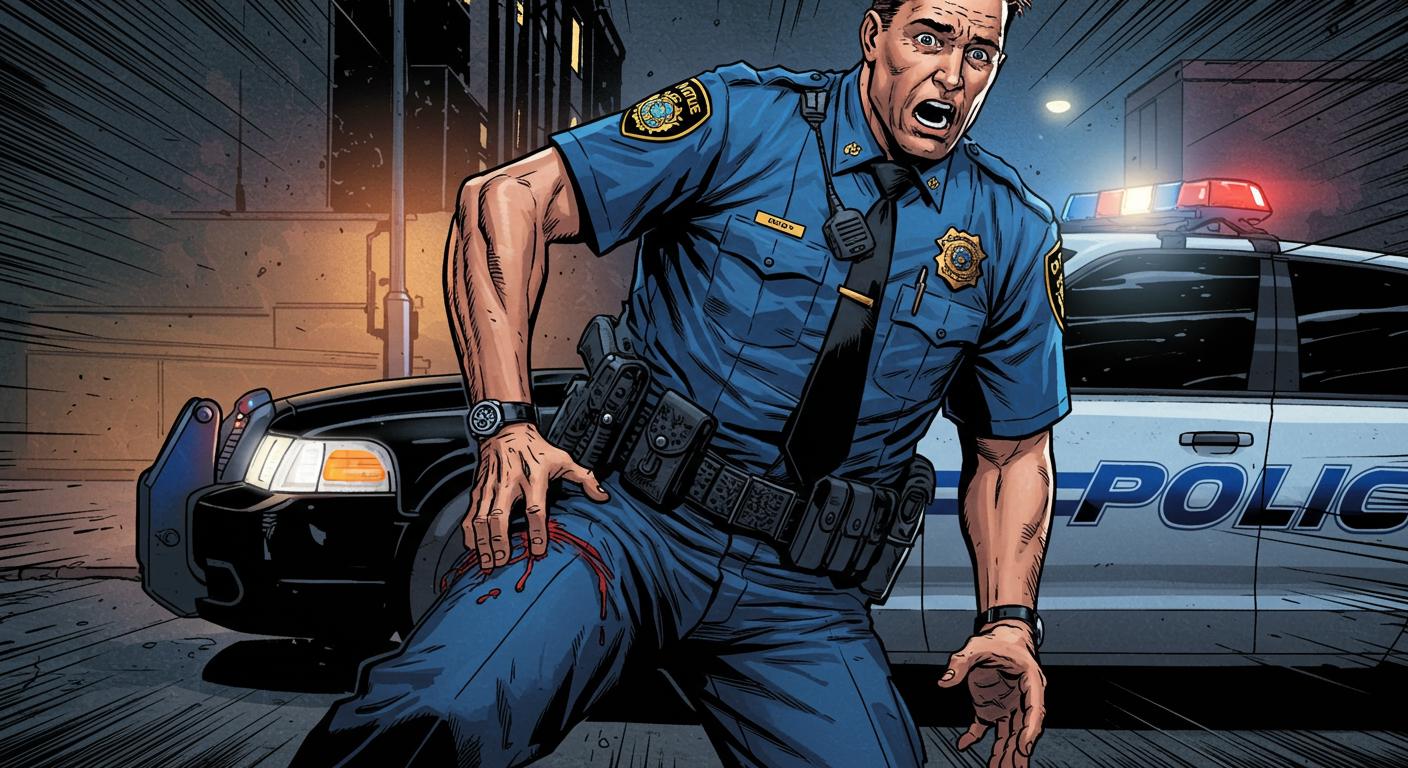
According to a report from the Irish Examiner, the incident unfolded in July 2019 while the experienced garda—whose identity is concealed by court order—was on patrol in a region recently beset by serious violence, including shootings. He recounted in court that he was driving a patrol jeep, wearing his bulletproof vest, a holstered pistol, and a submachine gun slung around his neck. While maneuvering to check the back seat, the submachine gun’s safety selector switch and trigger apparently snagged on his vest, discharging a round.
In stark detail, the officer described feeling immediate, excruciating pain, seeing smoke from the weapon, and blood spurting onto the seat. He needed hospital treatment for what doctors initially described as a leg “turned to mush”—the bullet had gone through the back of his left leg and ankle joint, shattering his ankle. After months of recovery, surgery, and physiotherapy, plus a recent operation in January, much of the pain remains; he noted a significant loss of muscle mass and faces the challenge of rebuilding his leg’s strength. Despite rigorous adherence to firearm protocols—something he said he prided himself on—the consequences were severe and enduring.
The garda’s legal action isn’t small potatoes. As outlined by the Irish Examiner, the suit names the Garda Commissioner, the Minister for Justice, and the Attorney General, arguing the state failed to provide a safe workplace and required the officer to carry his weapon in a way that was unsafe—namely, in a cramped vehicle with a bulletproof vest that proved, well, less than vest-like. The claim centers on whether the protective equipment and patrol protocols created the conditions for the accident.
Blame, Bureaucracy, and Bureaucratic Blame
What’s especially curious, as detailed in court records cited by the Irish Examiner, is the legal and emotional aftermath. Initially, the State fully denied liability and, twisting the knife a bit, alleged “contributory negligence” on the part of the officer—suggesting he was “the author of his own misfortune.” For a veteran officer with a clean safety record, this accusation proved a tough pill to swallow. The officer expressed genuine devastation at being blamed, by his own employer no less, for circumstances he insists were out of his hands and dictated by policy and equipment choices.
Liability has now been admitted by the State, but the sting of that early accusation clearly lingers. As the officer put it, he did everything “in accordance with procedures in relation to the handling of his firearm,” driving home the irony of following rules to the letter, only to end up on the wrong end of a safety protocol.
The legal questions here have a certain symmetry: When equipment designed to protect goes rogue, who shoulders responsibility? Does blame reside with the individual performing an awkward, possibly unavoidable movement, or with the institution requiring tightly-packed vehicles, surplus gear, and gear layouts as standard operating practice?
A Pattern—Accidents (and Lawsuits) Within Authority
For perspective, this Irish case isn’t a total outlier in the recent annals of law enforcement “own goals.” Take, for contrast, a report from Action News Jax on an incident in Jacksonville, Florida, where a police officer accidentally shot a man with his own legally-owned gun during a traffic stop. In that incident, the officer was fired and the man—who now walks with a cane due to his injuries—is negotiating a settlement with the city. That case, although it involves a different set of facts and parties, also spotlights the fraught intersection of training, equipment, and personal injury within law enforcement. While the specifics differ, both incidents highlight how unintended consequences of policing protocols can land everyone in legal quicksand—and sometimes, the one holding the weapon is left holding the lawsuit too.
Reflections from the Perpetual Oddities Drawer
Returning to the Irish courtroom: amid surgery scars and legal denials, the most bizarre aspect remains this looping liability—an officer claiming injury due to state-mandated procedures, and the State, initially at least, arguing it was the officer’s own fault for complying with them. The kind of bureaucratic ouroboros that would make Kafka quietly applaud from the gallery.
It also raises a broader question noted in the Irish Examiner’s analysis: are modern law enforcement roles simply asking too much of both their officers and their equipment, especially when fitted into environments—like patrol vehicles—never designed for the armored and heavily armed? Is the risk of “self-inflicted paperwork” higher than anyone cares to admit?
As this case continues before Ms Justice Denise Brett, one suspects it will prompt some soul-searching not just over liability and safety, but over how institutions can twist events into paradoxical knots—and what happens when the tools designed to shield end up pointing inward.
If a bulletproof vest, a submachine gun sling, and a cramped jeep are all part of the day-to-day, isn’t someone, somewhere, rethinking the design specifications? Or does history just repeat itself—perpetually odd, occasionally painful, and, if we’re honest, weirdly inevitable?