
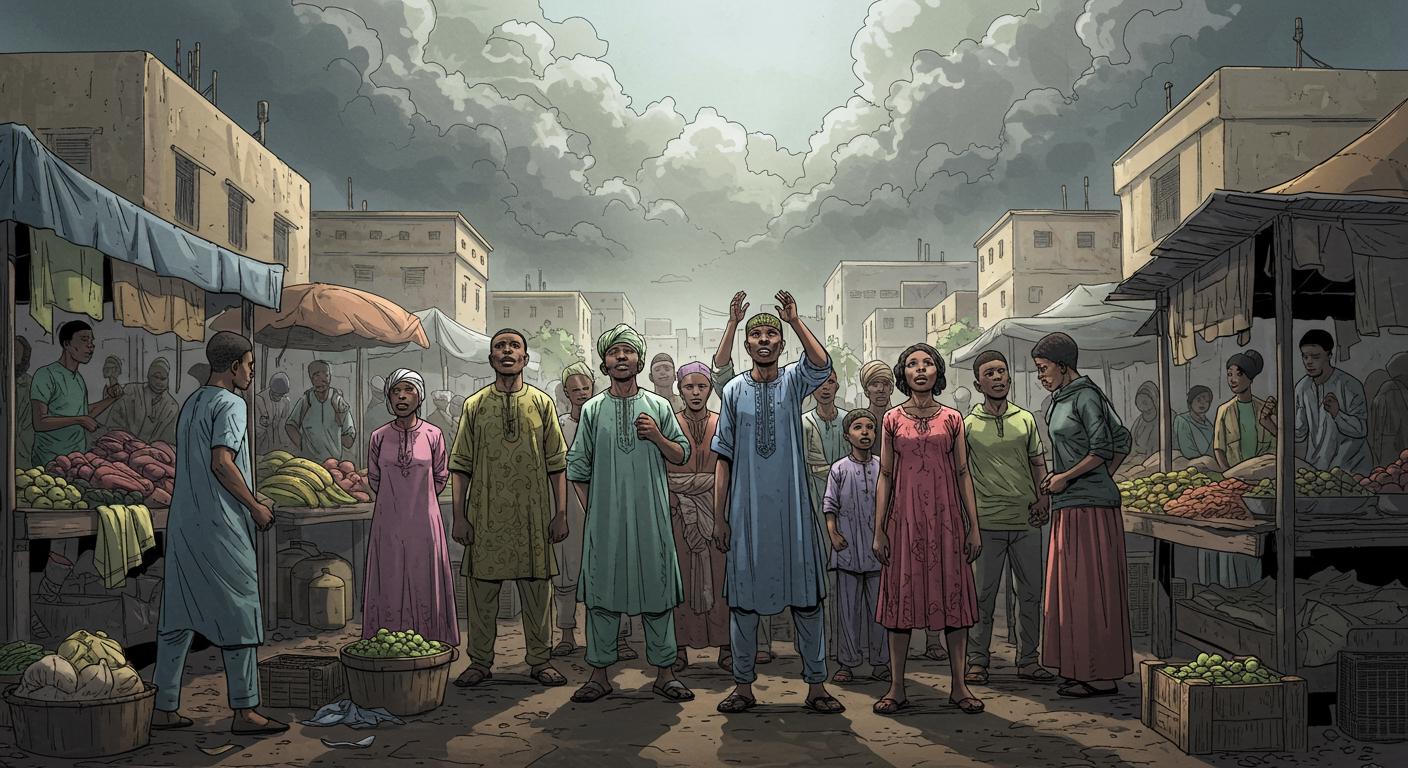
Some stories are so on the nose, they make satire seem unnecessary. “Disbelief as Nigeria urges prayer to end food shortages” — the BBC News report offers up this gem, and you have to wonder if someone, somewhere in the halls of Nigeria’s Ministry of Agriculture, looked at the ruinous price of yams and uttered, “At this point, only divine intervention can help.”
The Policy That Launched a Thousand Eye Rolls
So, what actually happened? The BBC describes an internal memo from the agriculture ministry’s human resources chief, instructing staff to participate in a series of Monday prayer-and-fasting sessions. The aim, supposedly, is achieving national food security—presumably through sheer piety and a collective rumblin’ of stomachs. In a particularly bureaucratic flourish, staff are to treat these sessions with the same seriousness as their monthly aerobic exercise or medical check-ups, all part of the package for “wellbeing.”
If this feels like the policy equivalent of shaking a vending machine and hoping a snack falls out, it’s worth pausing to consider the backdrop: the BBC highlights that at least 4.4 million Nigerians don’t have enough food as the country faces its worst economic stretch in decades. Last year, a wave of protests swept the country after food staples like yams reportedly quadrupled in price. When a root vegetable becomes a luxury item, you know things are dire.
The call for prayer, unsurprisingly, set off a carnival of online responses. Social media, as tracked by the BBC, saw suggestions that perhaps church leaders should just take over the ministry outright. At the milder end, some simply shrugged: “Nigeria is a joke.” When memes become a coping mechanism, that’s its own sort of economic indicator.
Faith, Fertilizer, and the Fine Art of Government Spin
Officials, perhaps sensing things were spiraling from “quirky workplace wellness” into farce, quickly walked things back. The press release—an exercise in cautious positioning—emphasized that prayer isn’t official government policy, merely an option for morale, joining the gym and health checks in the growing cabinet of staff supports. (One almost expects “optional group interpretive dance” to be next.)
Of course, the same announcement touts more traditional efforts: distributing over a thousand tractors, doling out millions of fertilizer bags, and, presumably, hoping these actions do more than improve optics. Yet as catalogued in the BBC’s rundown, these stopgaps can seem almost symbolic when compared to the magnitude of empty plates and the repeated annual leaps in food costs.
It’s hardly the first time in history that spiritual recourse was invited into the chambers of economic policy. In several crises, both ancient and modern, governments have called for collective prayers or fasts—sometimes as genuine gestures, other times as tacit admissions that practical solutions are outpaced by the challenge. (As a side note from the archives: During World War II, the British government staged National Days of Prayer, though no record indicates Churchill paired them with mandatory calisthenics.)
When Hope Becomes the Safety Net
Still, the uneasy blend of faith and bureaucracy raises familiar questions. At what point does calling upon the divine become a substitute for policy? The BBC notes that some critics interpret all this as a sign that the real levers of power—regulation, reform, investment—are rusted or simply not up to the task. In a context where religion has always played a powerful role in daily life, the request for solemn prayer isn’t, in itself, odd; it’s the suggestion that it could move the dial on food prices that brings out the dark humor.
Maybe it’s not so much “prayer as policy” as it is “prayer as placeholder.” When officials run out of ideas, the temptation to pass the problem up the chain—way, way up—becomes almost irresistible. Sometimes, it’s unclear whether these gestures are meant to inspire, distract, or simply let everyone catch their breath before the next wave of bad news.
It does make you wonder: in a world of spiraling crises, could government-initiated intercession become the next great wellness trend? If so, perhaps prayer sessions in the Ministry of Agriculture are just the pilot program. If only metaphysical morale boosts filled pantries and deflated yam prices as quickly as they lift spirits.