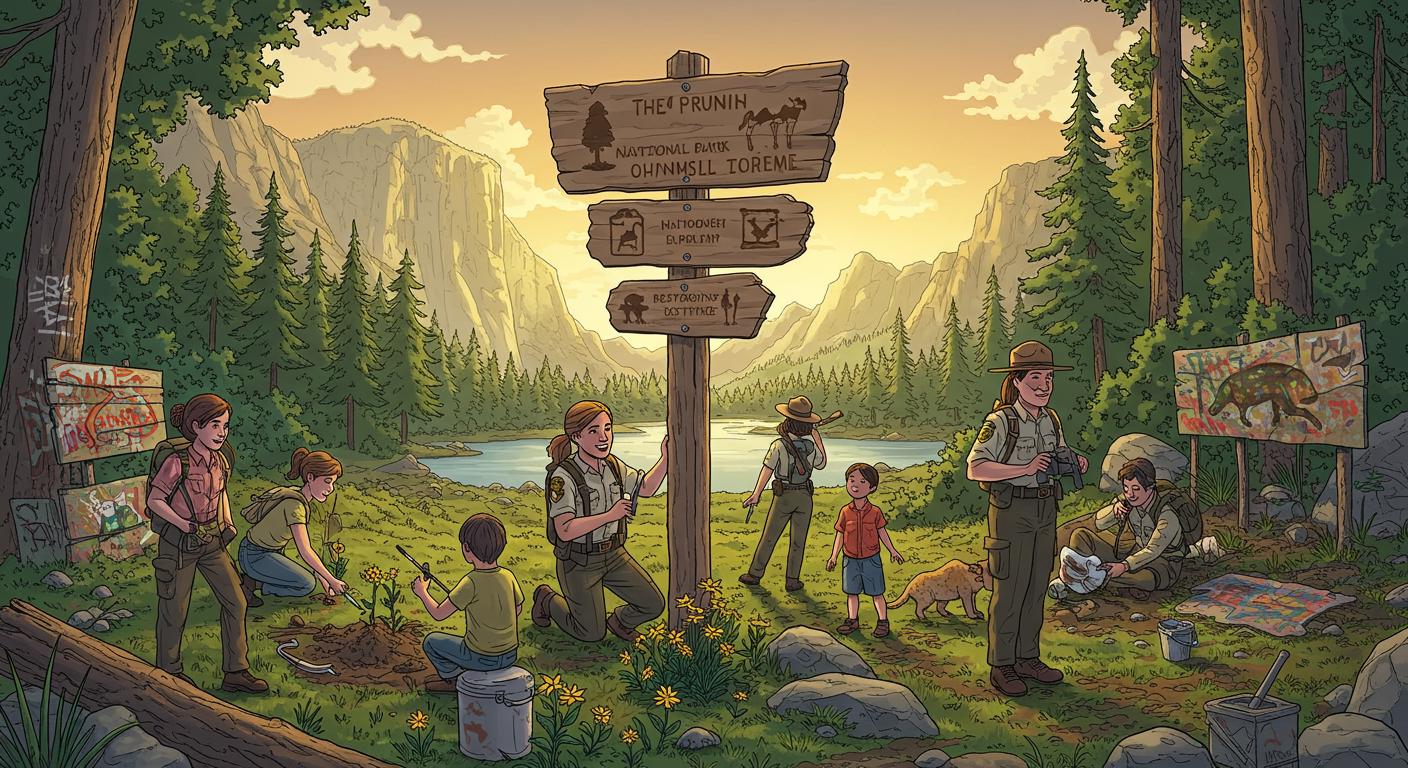
Ah, the great American outdoors: breathtaking vistas, chirping wildlife, and, apparently, a new invitation to rewrite history one QR code at a time. As detailed by NPR, the National Park Service (NPS) is set to introduce a fresh crop of signage across its many sites. But instead of cautioning against poison oak or overeager squirrels, the message directs visitors to scan a QR code and weigh in on any official stories they find too negative—be it about America’s past, its citizens, or even the land itself.
From Executive Order to Interactive Signage
This public-feedback campaign is rooted in a directive from the Department of the Interior, which NPR notes follows President Trump’s March “Restoring Truth and Sanity to American History” executive order. An internal memo, obtained by the outlet and signed by NPS comptroller Jessica Bowron, sets the ground rules: by June 13, every park must post signage inviting visitors to comment on historical or environmental information perceived as overly negative or insufficiently celebratory.
An early example, previewed for Wilson’s Creek National Battlefield (best known as the site of the Civil War’s second major fight—historically a real laugh riot), prompts guests to alert the NPS to “any signs or other information that are negative about either past or living Americans or that fail to emphasize the beauty, grandeur, and abundance of landscapes and other natural features.” The memo, as described within the NPR report, also calls for parks to audit all public-facing content by mid-July, rooting out anything that might come across as disparaging.
Relevant agencies aren’t limited to the National Park Service; the review extends to Interior groups such as the Bureau of Land Management, Bureau of Indian Affairs, and Fish and Wildlife Service. However, according to NPR, the new policies exclude properties situated on Native American lands, unless those sites are jointly managed by the NPS.
Whose History Is It Anyway?
From the official perspective, Park Service spokesperson Rachel Pawlitz frames the order as a measure to “emphasize the importance of accuracy” in storytelling, ensuring that visits are an opportunity to connect with “beauty, abundance, and grandeur” rather than a lesson in ideology. As Pawlitz put it in a statement cited by NPR, the goal is for guests to engage with national parks “free of any partisan ideology” and to appreciate the country’s multicultural narrative.
Some are far from reassured. Theresa Pierno, president and CEO of the National Parks Conservation Association, gives voice to lingering anxiety, expressing to NPR that “it’s pretty dangerous when you start rewriting history.” For her, obscuring the rough edges threatens not just historical accuracy, but the nation’s ability to reflect and learn. The notion that negative stories could be snipped out because visitors find them discomforting is, in Pierno’s words, “frightening.”
Beauty, Grandeur… and Input Overload?
Bringing the public into the maintenance of facts may sound appealing—almost neighborly. Anyone who’s ever suggested a typo correction at a local museum might feel right at home. Yet the new effort goes further, shifting from inviting suggestions about bathrooms or trail upkeep to soliciting reactions about how history itself is portrayed.
The language is conspicuously broad. With the signage flagging any “negative” portrayal of Americans, and soliciting input whenever a story fails to “emphasize the beauty, grandeur, and abundance” of the parklands, one wonders just how those very complicated and sometimes dark stories—wars, displacement, ecological damage—will fare. NPR’s account underscores this open-endedness: the new guidance seems ready to collect a flood of suggestions, but leaves the ultimate standard of “negativity” rather vague. What will happen if visitor consensus starts pulling historic narratives toward pure hagiography, giving the past an extra coat of gloss?
The Weird, Winding Road of Historical Memory
At the heart of the matter is the always-strange relationship between public memory and the institutions tasked with preserving it. NPR’s reporting makes clear the NPS isn’t replacing all history with crowd-sourced feel-good quotes just yet; still, the rules tilt heavily toward the positive. It raises a quietly unsettling question: when the truth is hedged by whichever stories visitors find most palatable, what’s left behind—other than inspirational signage and a smooth, visitor-friendly veneer?
In the end, does keeping the past “unvarnished”—warts and all—serve the spirit of these storied sites better? Or are we on the cusp of National Parks where “grandeur” becomes a requirement, not just a pleasant byproduct of the view? As guests hike the trails and scan those QR codes, it’s not just the scenery that’s being crowdsourced—it’s the official story itself. Perhaps your next visit will include a moment to ponder which histories belong on the plaque…and which fade quietly into the undergrowth.