It’s one thing to tell your own story. It’s quite another when an institution adopts it, packages it as an “inspirational” asset, and then quietly expunges it once it no longer fits a shifting narrative. Rose Ferreira has lived that odd trajectory in full: celebrated as an emblem of resilience by NASA, conspicuously erased, then ultimately nudged out the door—her story unraveling in a sequence that would seem contrived if it weren’t all so meticulously documented in Space.com’s recent investigation.
Step One: The Triumph—A Hero Framed in Spotlights
Start by finding someone whose story radiates adversity overcome, then make her a symbol. Rose Ferreira, whose childhood in the Dominican Republic was marked by deep poverty and abuse—and whose early adulthood included homelessness on New York’s streets—somehow managed to outwork the odds: GED in hand, she went on to earn degrees from Arizona State and Johns Hopkins, accrue NASA internships and fellowships, contribute to the James Webb Space Telescope project, and eventually become a full-time analyst. Her CV, brimming with extraordinary turns, quickly drew NASA’s attention. As described by Space.com, the agency transformed her path into a feature article—one eagerly adopted as classroom reading material, held up as evidence of what persistence (and perhaps, institutional benevolence) looks like.
Of course, the shine wasn’t just for internal consumption. Ferreira’s reach spread via outreach fellowships, a White House honor as a Young Hispanic Leader in the Space Industry, and even speaking roles on NASA’s multimedia projects. The message, uniformly uplifting: If she can do it, so can you. One wonders, though—does the celebration ever outpace the subtleties beneath?
Step Two: The Tactical Vanishing Act
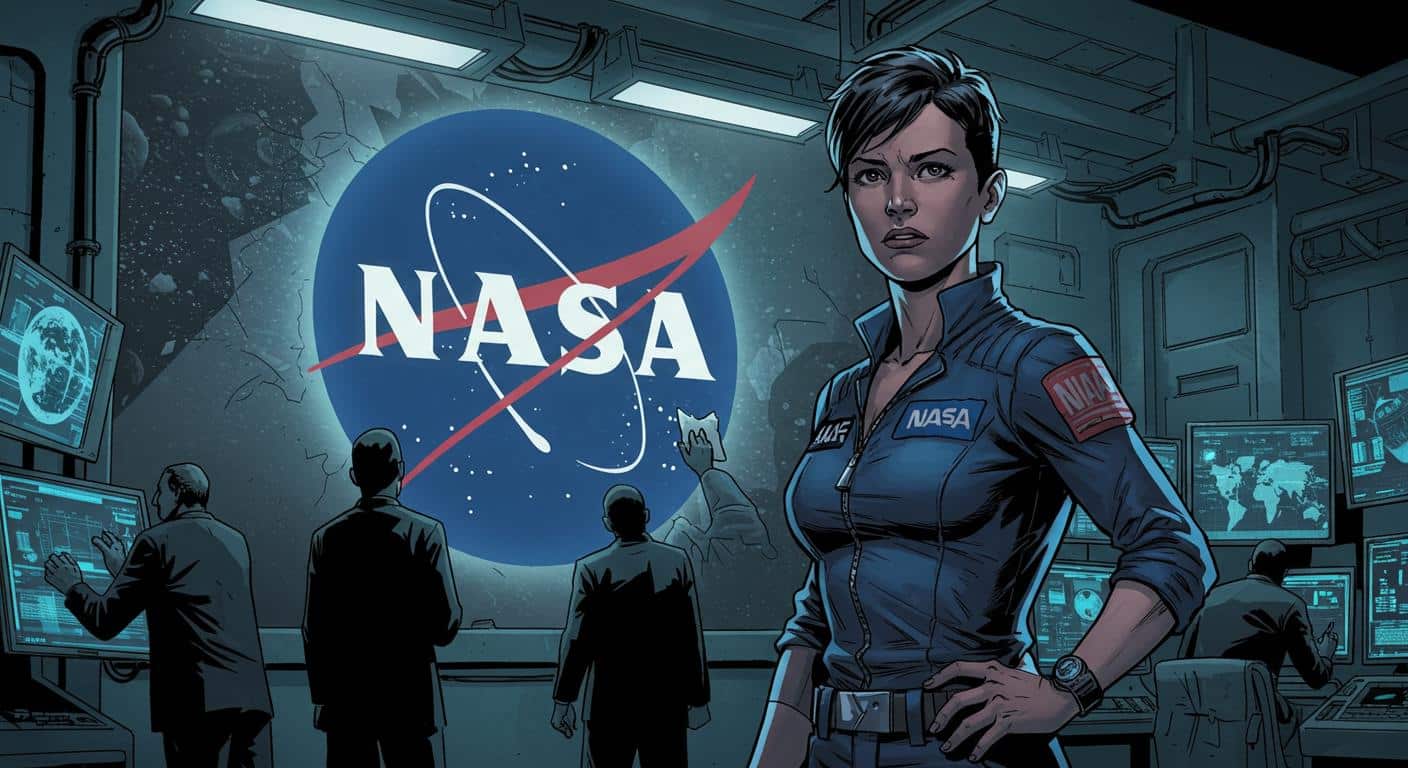
Then, with a political pendulum swing, the tone turns. Ferreira’s narrative, once promoted with gusto, suddenly vanishes from NASA’s website. The timeline is brisk—according to Space.com, the deletion happened days after the new White House directives targeting DEIA (Diversity, Equity, Inclusion, Accessibility) initiatives swept through federal agencies in early 2025. Classrooms that relied on the feature as a STEM resource found broken links; Ferreira, still in the hospital fighting pneumonia, learned of the silencing from a school teacher searching for her story.
It wasn’t just Ferreira’s profile caught in the digital pan-and-brush. The report details how NASA purged online mentions of DEIA, erased “first woman, first person of color” promises from Artemis mission pages, and shelved projects like a 2021 graphic novel spotlighting a Hispanic astronaut and her crew. Ferreira’s reaction—described to Space.com—was one of both resignation and sorrow; though she anticipated some pushback, “it did feel like a slap in the face… everything that I worked for has been taken down little by little.” As others at NASA began whispering fears about funding and firings, the intent seemed clear: stories that no longer matched the mood would be excised, with little fanfare. And once a public institution decides it’s time to forget, does anyone inside feel entirely safe?
Step Three: Restore the Archive—And the Exit Door
The digital erasure didn’t go unnoticed. When Ferreira posted about the missing NASA feature on Threads—her message quickly making the rounds with over 85,000 likes and 11,000 shares as highlighted by Space.com—there was a sudden, silent restoration. The profile quietly reappeared on NASA’s website, but no one inside the agency reached out, then or afterward, to explain the move or offer context. Ferreira, still recovering, was caught in that strange institutional fog: celebrated online by strangers one day, still vulnerable professionally the next.
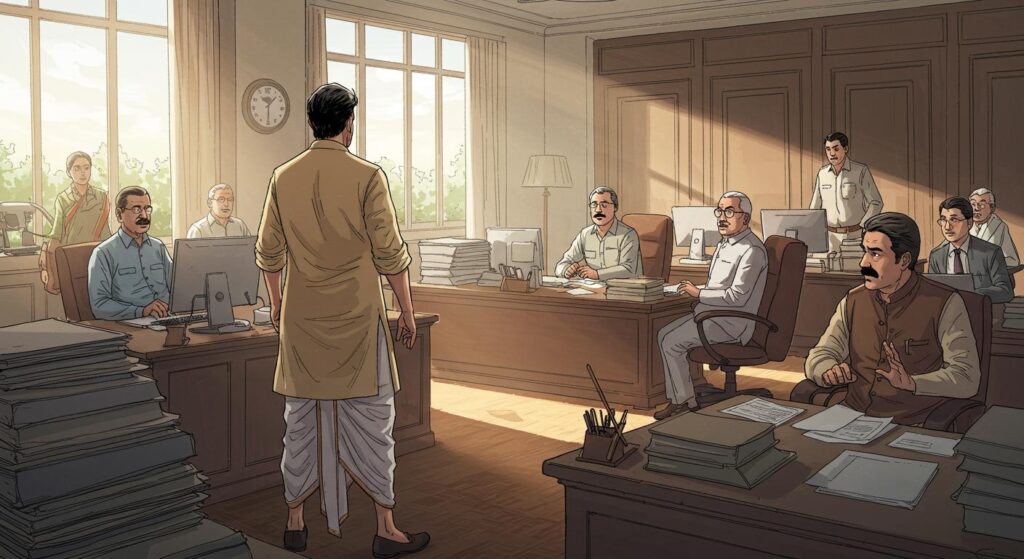
It didn’t take long for things to escalate. Returning to work post-recovery, Ferreira was summoned into a meeting—her supervisor joined by a quietly waiting HR representative. According to Space.com’s account of the encounter, she was informed she hadn’t met her position’s responsibilities and was dismissed, effective immediately. There was no discussion—her attempt to respond was waved off, and she was escorted out with little ceremony, feeling, as she told the outlet, oddly criminalized by the people she had once trusted.
Stranger still, the circumstances around her termination blur into the sort of bureaucratic ambiguity that tends to evade transparency. Ferreira was considered a provisional employee—a category many assumed would be especially exposed to layoffs. Yet Space.com references a White House notice, received by NASA prior to her firing, which actually exempted provisional staff from mass cuts. Did the viral attention surrounding her erased-and-resurfaced story play a role? Was the institutional discomfort more about optics than performance? NASA, asked for comment, resorted to the familiar default: “does not comment on personnel matters.”
The Vanishing Point of Official Memory
Maybe the oddest twist of all is how looped the cycle became. Ferreira’s rise, erasure, online resurrection, and abrupt departure read like case notes in an institutional version of selective amnesia. Space.com’s reporting captures an agency in flux, buffeted by new policies and bracing for the deepest budget cuts in its history—proposals for a 24% reduction have left even NASA’s former administrator Bill Nelson voicing concern over the future, as cited in public remarks drawn into the outlet’s coverage.
NASA’s acting administrator has even admitted times at the agency are “weird” lately, and it’s not just those at the bottom of the ladder feeling it. The ripple effect, according to Ferreira and others, has led to an atmosphere where people question not just their job security, but the very value of their past contributions. When stories and programs can be erased overnight, what reassurance is there for the individuals who embody the agency’s most resonant narratives?
Shelf Life of Inspiration
For devotees of linear plotlines—overcoming adversity, reaching the summit, being lauded—Ferreira’s journey offers a sobering footnote. Sometimes, being raised as a symbol means you can just as quickly become a liability. Space.com’s account leaves you wondering how easily institutional pride morphs into institutional forgetting. One day, you’re the face of a public campaign; the next, you’re an unacknowledged casualty of a strategic retreat. Is it just the nature of large organizations to alternate between lionizing and discarding, or is there something specifically peculiar about this moment in history, when the easiest way to handle controversy is simply to pretend it never happened?
If the official archive can shift so rapidly, who, exactly, is responsible for remembering the stories behind the slogans? And when resilience itself gets deleted, edited, then awkwardly restored, is the agency’s real achievement in engineering or in agile forgetting?