
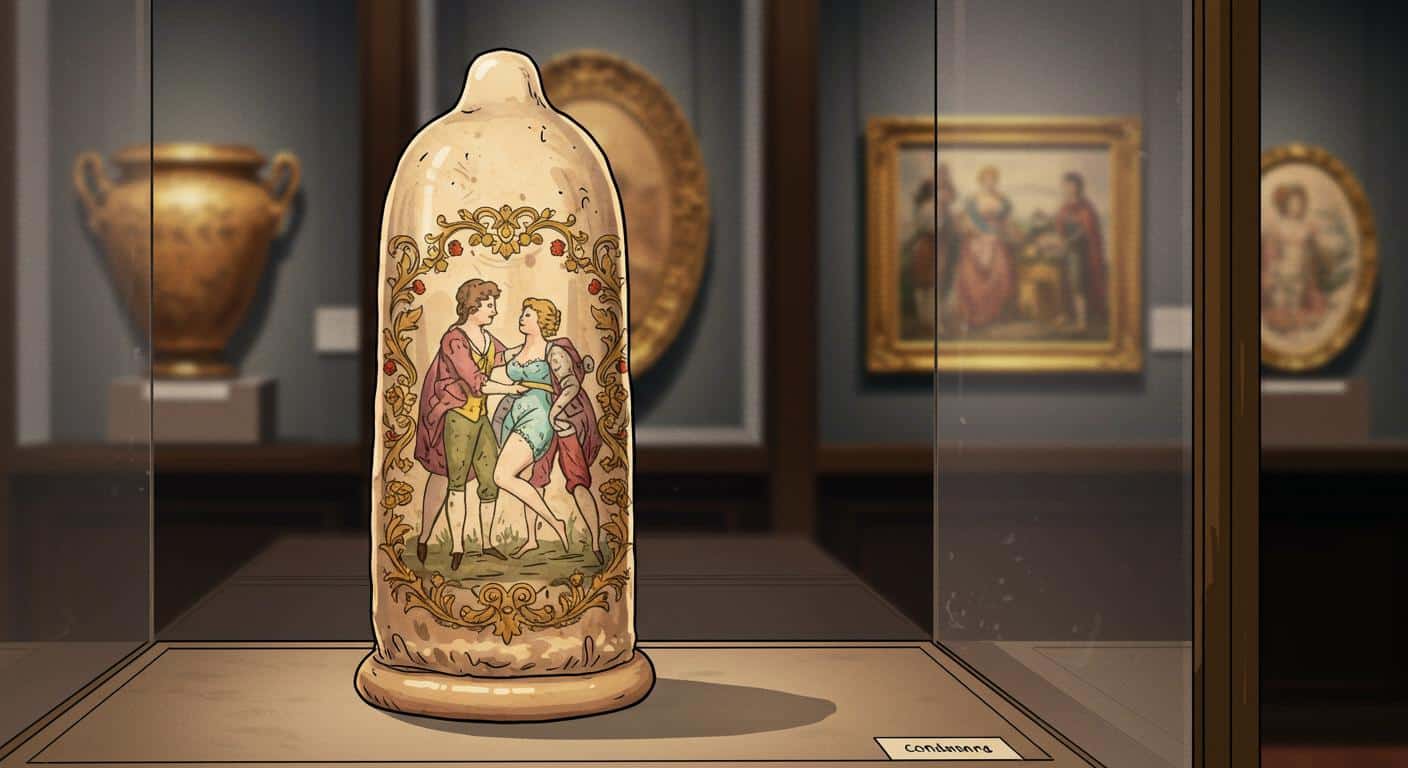
Move over, Blue Boy. The Rijksmuseum has given history lovers something a bit more risqué to ponder this summer: a nearly 200-year-old condom, decorated with what can only be described as “ecclesiastical mischief.” According to the museum’s recent exhibition announcement about 19th-century sex work, this antique sheath, crafted from a sheep’s appendix and sporting erotic artwork, now occupies a starring role at Amsterdam’s national museum.
Sheep Intestines and Sacred Scandal
It’s not every day that the hallowed halls of the Rijksmuseum pay homage to both sexual health and religious satire via livestock anatomy, yet here we are. Described by the museum as both “playful” and a reminder of the “serious side of sexual health,” this 1830s relic falls squarely in the intersection between practical and provocative. As detailed by reports on the exhibit, the item could well have served not just as a contraceptive device but as commentary—perhaps even a brothel souvenir.
Its design? An erotic depiction of a nun with three clergymen, plus the French phrase “This is my choice” running along the sheath. The museum notes that this inscription alludes to Renoir’s painting “The Judgment of Paris,” where a beauty contest amongst goddesses stands in for the complicated negotiations of choice and desire. Fewer sheep intestines there, admittedly, but perhaps just as much side-eye from the establishment.
Was this historic prophylactic meant for earnest use, or was it created for its decorative, tongue-in-cheek appeal? The specifics are elusive, but its sly wink at authority and propriety remains evident. It’s an object that refuses easy categorization.
Protection, Art, or Satire?
Today’s contraception aisle is a wonderland of synthetic innovation—there’s not a sheep’s appendix to be seen. Yet, as the exhibit details, earlier eras managed both function and statement, even when materials were decidedly more rustic. The artifact’s existence decorated with such pointed satire—nuns, clergy, and a suggestive motto—speaks volumes about social attitudes lurking behind closed doors.
The exhibition coverage highlights the blend of birth control, humor, and social critique contained in this single piece. There’s a kind of candidness to 19th-century expressions of agency: neither cloaked in euphemism nor burdened with clinical packaging, but instead choosing parody as a mode of dissent. And with the exhibit running until the end of November, it seems clear the museum expects audiences to linger—whether drawn by historical interest or curiosity piqued by the oddities of the past.
How much is this artifact a relic of an age more subversive than ours, or does it simply confirm that cheeky satire is a timeless tradition? Between the brothels and the church, and tucked into the private spaces of history, humor has always found a crack.
Shades of Choice
Of course, context gives meaning. The phrase “This is my choice,” paired with a visual allusion to judgment and beauty contests of myth, makes for a pointed—almost mischievous—statement about autonomy and the roles prescribed by society. The museum’s interpretation, cited in Citizen Tribune, associates these references with both empowerment and playful rebellion.
This item, suspended delicately between the sacred and profane, becomes a kind of time capsule for how people navigated the ambiguities of authority, sexuality, and individual agency. When protection becomes parody, is it a form of critique—or just evidence that the human appetite for irony really does transcend centuries?
A Prophylactic for the Imagination
The Rijksmuseum’s condom offers a reminder that few things in history are either purely sacred or strictly profane. Some artifacts refuse to be pigeonholed, and this one—crafted from sheep’s intestine and decorated with a wink—manages to be both conversation starter and historical puzzle.
One wonders how many more such oddities are patiently waiting in vaults, left out of the main story because they straddle that uncomfortable line between art and everyday life. And really, what went through the museum curator’s mind when unboxing this memento from 1830s sexuality?
For now, it stands behind glass—a sheepish grin from the past. If objects like this prove anything, it’s that human creativity and a healthy sense of irony are as perennial as the need for protection.