With every new Met Gala, one can count on two things: a fascinating new theme and at least one outfit destined to launch a thousand think pieces. This year, according to social media reactions and reporting compiled by The Mirror, that dubious spotlight has fallen on Lalisa Manobal—better known as Lisa from Blackpink—whose sartorial decision took a sharp left turn from bold to bewildering.
When Fashion Meets History—And Misses
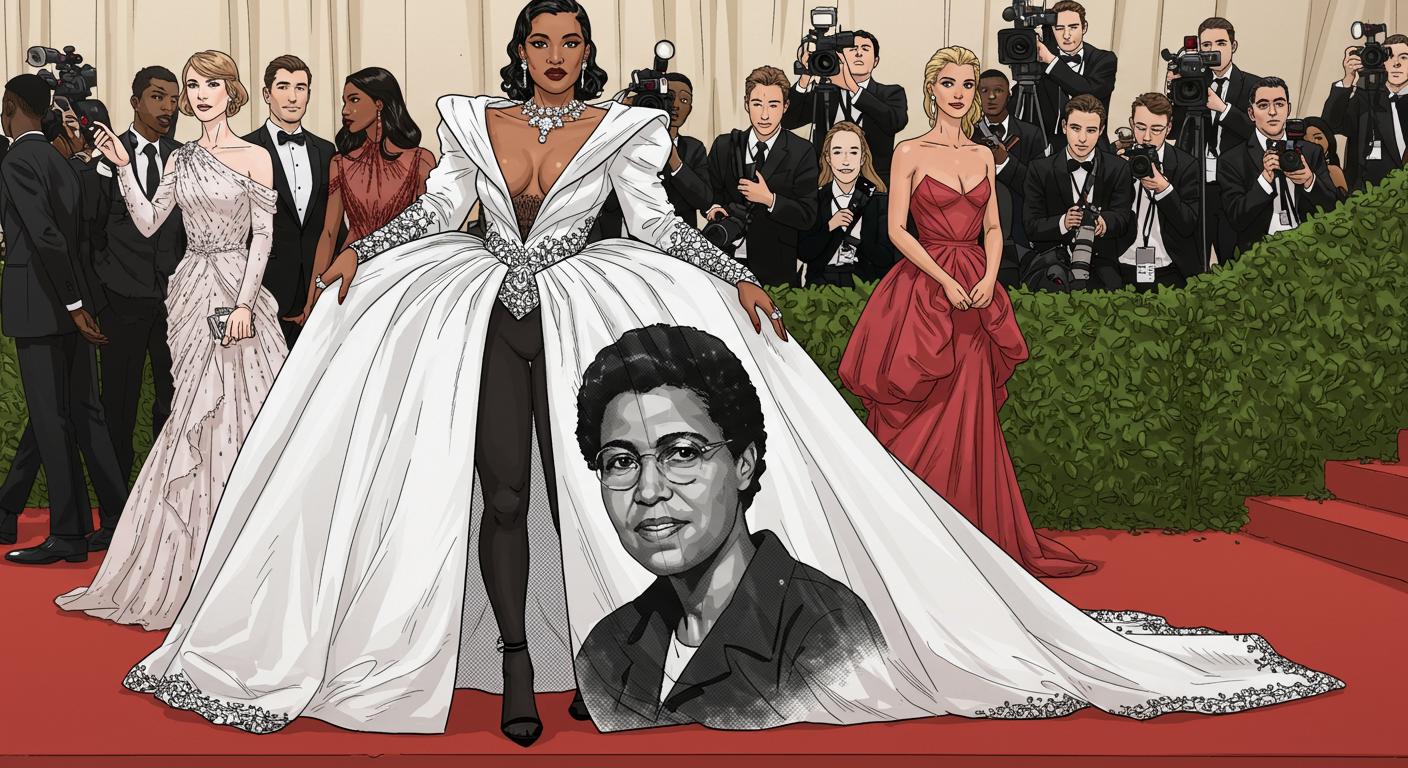
It seems nearly everyone agrees the Met Gala thrives on the unexpected, especially when invitees interpret the themes with creative license bordering on surreal. But Lisa’s ensemble, with what appeared to be Rosa Parks embroidered on her underwear—a detail noticed by sharp-eyed spectators—has prompted more than the usual gasp or raised eyebrow. As described by The Mirror, the motif is either a head-scratcher of cultural homage or, as much of the internet has argued, a painfully tone-deaf disconnect.
The context only amplifies things: this year’s theme, “Superfine: Tailoring Black Style,” paid homage to Black sartorial expression, informed in part by Monica L. Miller’s scholarly exploration of Black dandyism. The stakes for meaningful interpretation, given the weighty and specific subject matter, could not have been higher—or riskier, depending on one’s approach.
Louis Vuitton, the brand responsible for Lisa’s attire, has not officially confirmed whether Parks’ likeness was actually used. Still, the interpretation alone was enough to fuel widespread backlash. After all, the symbolism of Rosa Parks—the woman whose refusal to yield her seat ignited the Montgomery Bus Boycott of 1955—is heavy, not just as a pattern, but as a reminder of lived struggle and civil rights activism.
A Brewing Storm of Social Media Critique
Initial reactions online, as aggregated by The Mirror, ranged from incredulity to outright condemnation. Notably, commenters didn’t just recoil from the visual; many referenced resurfaced allegations of Lisa and fellow Blackpink members using a racial slur on video—a scandal that had already put their presence at this particularly themed Met Gala under scrutiny. Against this backdrop, one X user vented, “She should absolutely know who Rosa Parks is and should know better than to wear underwear with her face on it!! There’s literally no excuse…”
The outlet also highlights how, for a segment of viewers, the juxtaposition of recent controversy and the apparent fashion faux pas felt like a step beyond ignorance—a demonstration of carelessness or even defiance. Meanwhile, in the ongoing silence from Lisa’s representatives, speculation and debate have filled the vacuum.
A History of Fashionable (and Unfashionable) Provocation
The Met Gala is no stranger to questionable attempts at homage. But this moment begs a clunkily familiar question: When does “inspired by history” slide into “inappropriate appropriation”? And what does it say about celebrity understanding of the histories they’re asked, or choose, to reference?
Lisa’s look—sparkling mesh blazer, logo-stamped tights, a parade of designer details, and the now-notorious embroidered bodysuit—was no doubt interpreted by some as an homage to the style and significance of Black culture. But intention only gets you so far; history, as fans and critics alike will remind us, carries its own weight and memory. One wonders how many layers of design meetings and celebrity fittings were required before anyone thought to pause and consider: Is this really the tribute we want to make?
A Pause For Reflection
Fashion, particularly at galas where creativity is currency, has its own dialect—a swelling mix of art, rebellion, and, sometimes, genuine confusion. The remarkable part is how reliably the past comes back to register its protest when it’s lightly borrowed, misplaced, or, in this case, stitched directly across a highly questionable part of a garment.
The Mirror’s reporting leaves little doubt that the backlash is as much about a perceived lack of sensitivity as about design philosophy. Is there ever an appropriate way to use the image of a historical icon in this context, or does the very attempt risk reducing legacy to aesthetic? In parsing the difference between homage and misstep, it seems we’re left asking whether the meaning of the moment got lost somewhere between the atelier and the red carpet—or if, in some surprising twist, that confusion is the message itself.
History, as the old saying goes, is what you make of it. But sometimes, it’s what you accidentally embroider that really gets people talking.