Some stories unfold in the backrooms of history, scribbled on brittle paper or tucked into attic trunks. Others, it seems, choose a Starbucks parking lot for their stage. As UPI documents, what began as a glint on asphalt became something of a temporal handshake—an unlikely reunion of past and present, with a class ring as the go-between.
A Glint, A Clue, and a Dash of Cyber-Sleuthing
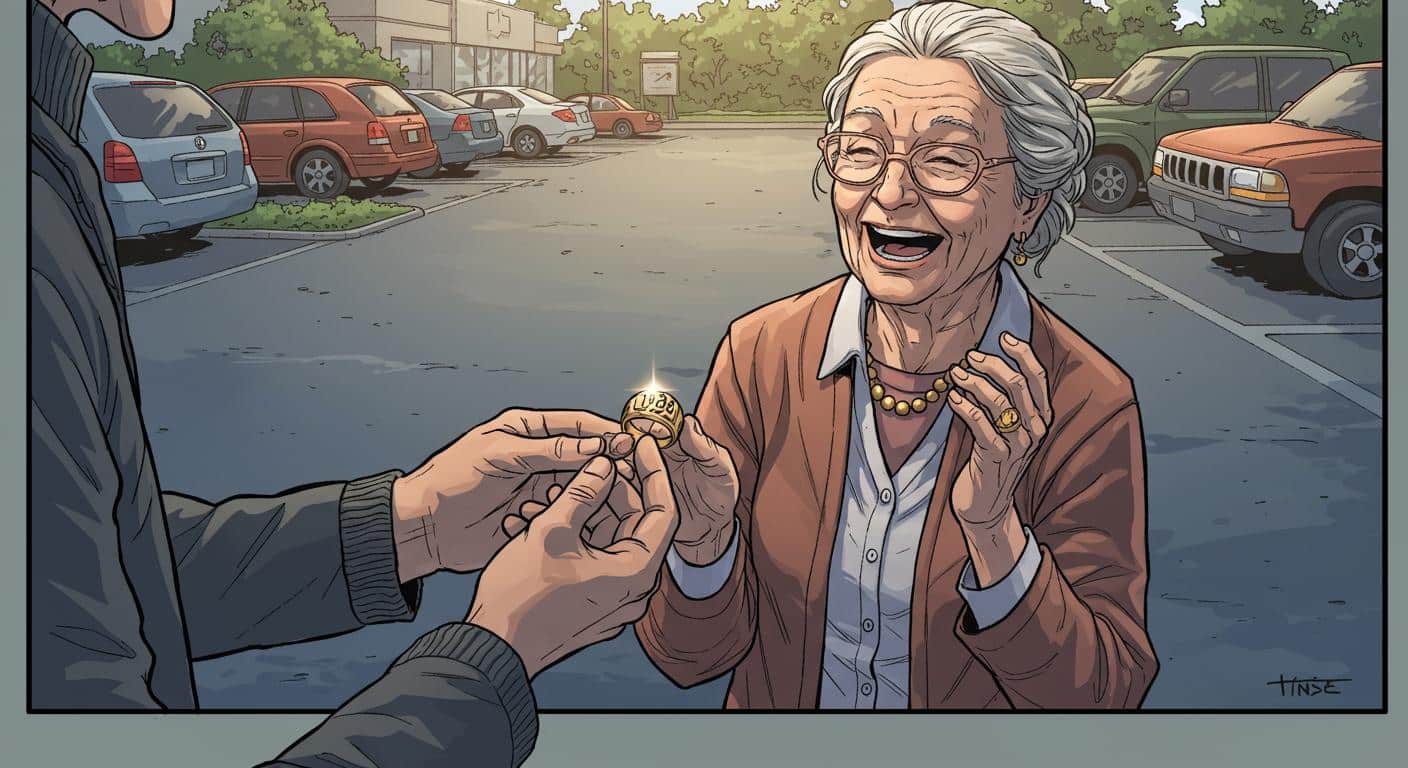
Picture Lori Rhew, scanning an ordinary Wilmington, North Carolina parking lot for caffeine rather than clues. Instead of spilled coffee, she finds a shimmering artifact: a Virginia Tech class ring inscribed with the year 1938. In her conversation with WECT-TV, as relayed in UPI’s coverage, Rhew describes the discovery as almost accidental, the sort of find seasoned archivists and sentimentalists quietly fantasize about.
Fascinated by the object’s possible history, Rhew chose not to pawn, discard, or display the ring—a decision that might baffle the less nostalgically inclined. She admits, according to UPI, “I’m a sentimental person and I appreciate family heirlooms. So, it just didn’t feel right to get rid of it or sell it or give it away.” One can imagine her standing over the ring, squinting surreptitiously through a magnifying glass, feeling a small tug of responsibility. It takes a particular breed of curiosity (and perhaps a touch of stubbornness) to treat a parking lot knick-knack as a cold-case file.
With the aid of some online sleuthing—a skill that surely earns her a gold star among amateur genealogists—Rhew identified the original owner as Wallace Garst, a 1938 Virginia Tech graduate now long deceased. UPI recounts that Rhew uncovered, through Garst’s obituary as referenced in the Wilmington Star and cited by UPI, a photograph of his son wearing that very ring on his finger. The internet, so often a landscape of lost context, for once connected the dots.
The Circuitous Route of Sentiment
In a twist worthy of a family legend, UPI conveys that Rhew located Garst’s living descendant, Laura Stoy. The ring, orphaned in a Starbucks parking lot, traversed decades and digital records to return to its family line. According to Stoy’s comments in UPI’s report, the reunion with the artifact went beyond simple sentimentality; for her, holding the ring was “like getting a piece of her father back.”
Stoy interprets the event as a kind of meaningful coincidence—serendipity, even. She shared with UPI, “I really feel like it was serendipitous that my dad was reaching out, he knew I had been thinking about him and he was popping in to say ‘I’m here.’” When chance events brush up so neatly against longing and memory, who’s to say where coincidence ends and fate begins? Is it all just lost-and-found luck, or do our artifacts sometimes find their own way home?
The Afterlife of Objects
Stories like these linger not because they’re grand in scope but because they’re quietly strange and gently affirming. A nearly century-old ring, unmoored from its owner’s hand, had every reason to end up smelted, forgotten, or as an eBay curiosity. That it instead completed a slow migration—first adorning a son, then waiting in a box (or pocket), then lying patient under a car tire—hints at the afterlife everyday objects can acquire.
Is it the ring’s connection to family that makes it valuable, or is it the act of rediscovery itself? Rhew’s willingness to investigate speaks to the overlooked network of amateur archivists and good Samaritans who quietly thread the fabric of personal history. In a detail underscored by UPI, Rhew’s only real reward was the satisfaction of witnessing a piece of history restored to its rightful context.
Objects in the Rearview Mirror
If nothing else, this odd chapter in the Starbucks parking lot suggests we’re constantly surrounded by hidden stories. Most pass us by, anonymous and unnoticed. But occasionally, a sharp-eyed passerby pauses, picks up a clue, and chooses curiosity over convenience. In those rare moments, time compresses—a ring from 1938 finds its way home in 2025, and a granddaughter is offered a tangible connection to a lineage that Starbucks employees probably never learned about.
How many artifacts, half-remembered and misplaced, drift through our daily lives, waiting for someone to recognize their weight? And would we even notice them if they shimmered at our feet?