Over the long, labyrinthine history of American lawmaking, there are moments that seem almost too on-the-nose, even for the most seasoned observer of the congressional circus. The epic all-nighter before a signature budget vote? A lawmaker missing their cue? Sure. But falling asleep and snoozing straight through a razor-thin passage of the so-called “One Big Beautiful Bill”? Congressional folklore just acquired a new legend.
Night Owl Lawmaking, With a Side of Napping
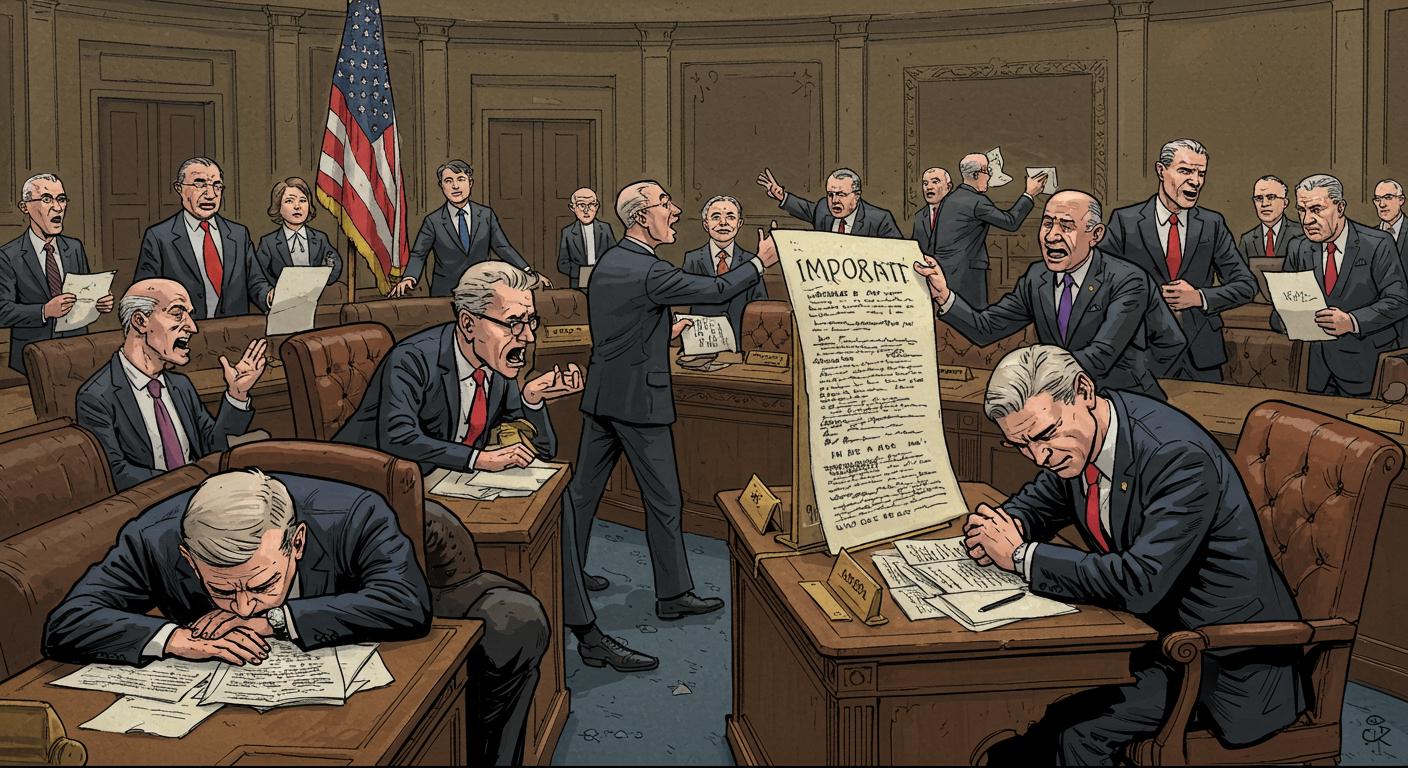
House drama is rarely so literal. In a detail described by Newsweek, the lower chamber voted on President Trump’s comprehensive budget package at dawn on Thursday, ultimately passing it with a knife-edge margin of 215–214. Yet New York Republican Andrew Garbarino was nowhere to be found at the decisive moment. His absence wasn’t due to politics or protest—according to House Speaker Mike Johnson, it simply came down to biology: Garbarino, as Johnson quipped to reporters, “fell asleep in the back, no kidding.”
This wasn’t just a stray anecdote. The New York Sun expands on Garbarino’s misadventure, noting that after a night-long session of legislative proceedings, the congressman “briefly stepped out and inadvertently missed the vote.” His spokesman voiced no small amount of exasperation, arguing that decisions of this magnitude belong firmly in daylight hours—not in twilight’s groggy embrace. It’s a distinctly human moment in the halls of government, and, intentionally or not, a small protest against the nocturnal marathon sessions that have become a congressional tradition.
A further wrinkle to this story: Arizona Republican David Schweikert came close to his own procedural mishap. Both outlets recount how Schweikert managed to rush to the floor at the last moment, ultimately being recorded as “present” when the vote closed. In Newsweek’s writeup, Johnson noted Schweikert’s sleight-of-hand with his voting card contributed to the razor-thin public tally—though the speaker later insisted “we really had 217 votes” when accounting for last-minute arrivals and subtle quirks of House process.
Imagining the House floor that morning—lawmakers in a caffeine-fueled haze, aides clutching schedules, a general sense of group jet lag—raises a curious question: If one vote can tip the scales on more than a thousand pages of legislation, what does it say about the system itself when everything hinges on REM cycles and well-timed bathroom breaks?
Legislative Pageantry and the Human Element
The episode takes on further texture when considering the political stakes. Newsweek highlights that this so-called “Big Beautiful Bill” is hardly minor fare: it bundles tax relief for tipped workers, corporate deductions, a child tax credit boost, and defense spending increases. Support was nearly unanimous among House Republicans, with the exception of two dissenting votes and one “present”—making every single body present (or not) a potential spoiler.
Adding to the pageantry, Speaker Johnson’s press conference contained a mix of affectionate ribbing and weary relief. After joking (with self-conscious hyperbole) that he’d like to “strangle” his tardy colleague, Johnson reminded reporters of the “delicate equilibrium” underpinning passage and urged Senate Republicans to limit any changes to the House product. The outlet also notes just how thin a thread the majority was hanging by, amplifying the importance of promptness, or in Garbarino’s case, the lack thereof.
If there’s a lesson, it might simply be that legislators aren’t automatons. Garbarino’s spokesperson observed, “This is one of many reasons why governing should happen in the light of day.” Who could argue with the practical implications, given the events?
The Bill’s Baggage, and Its Critics
Examining the bill’s provisions and the partisan responses, Newsweek reports a familiar pattern. The proposal, labeled “beautiful” by its architects, ran headlong into rhetorical barbed wire from Democrats. The House Minority leadership characterized the package in dire terms, accusing it of gutting healthcare and food assistance, with statements warning of hospital closures and cuts impacting children, veterans, and seniors. On the other side, Republicans—Johnson chief among them—touted the bill as a reflection of “limited government, individual freedom… fiscal responsibility,” wrapping every ideological talking point into a single slab of late-night legislative sausage.
The New York Sun, in recounting Garbarino’s specific role, notes that he has been a prominent supporter of raising the state-and-local-tax (SALT) deduction cap—a sticking point for lawmakers from states like New York. Missing a vote on a bill including that provision is, in its own way, an odd punchline to the political timing.
A Thin Margin, a Thicker Story
Moments after the drama faded, Newsweek points out that the package’s survival owed as much to procedural technicalities as to deliberate policy decisions. Garbarino’s nap, which in a different configuration could have scuttled the entire enterprise, becomes the stuff of instant Capitol Hill trivia. Even so, Speaker Johnson took pains to insist their margin was ultimately secure.
Broader questions linger: Why continue with these twilight rituals of democracy? If we trust our representatives with decisions impacting millions, does it make sense to marshal their mental faculties in the predawn hours? The machinery of government rolls on, sometimes propelled by sleep-deprived camaraderie and a hint of chaos.
As the Senate prepares to consider what’s been alternately christened “One Big Beautiful” and “One Big Ugly” bill, the episode leaves a clear imprint. Congressional history revels in such incidents—a reminder that policymaking, for all its grandeur and gravity, will always have room for a little human absurdity.