Every so often, a police blotter entry barnstorms out of rural America carrying the unmistakable scent of, well, livestock. Jonathan Mason of Murray, Kentucky, has managed to feature not just once, but repeatedly, as indicated by a WHAS11 report, and his run-ins with the law read less like ordinary trespassing and more like a livestock-themed dramatic arc.
The Raccoon Incident
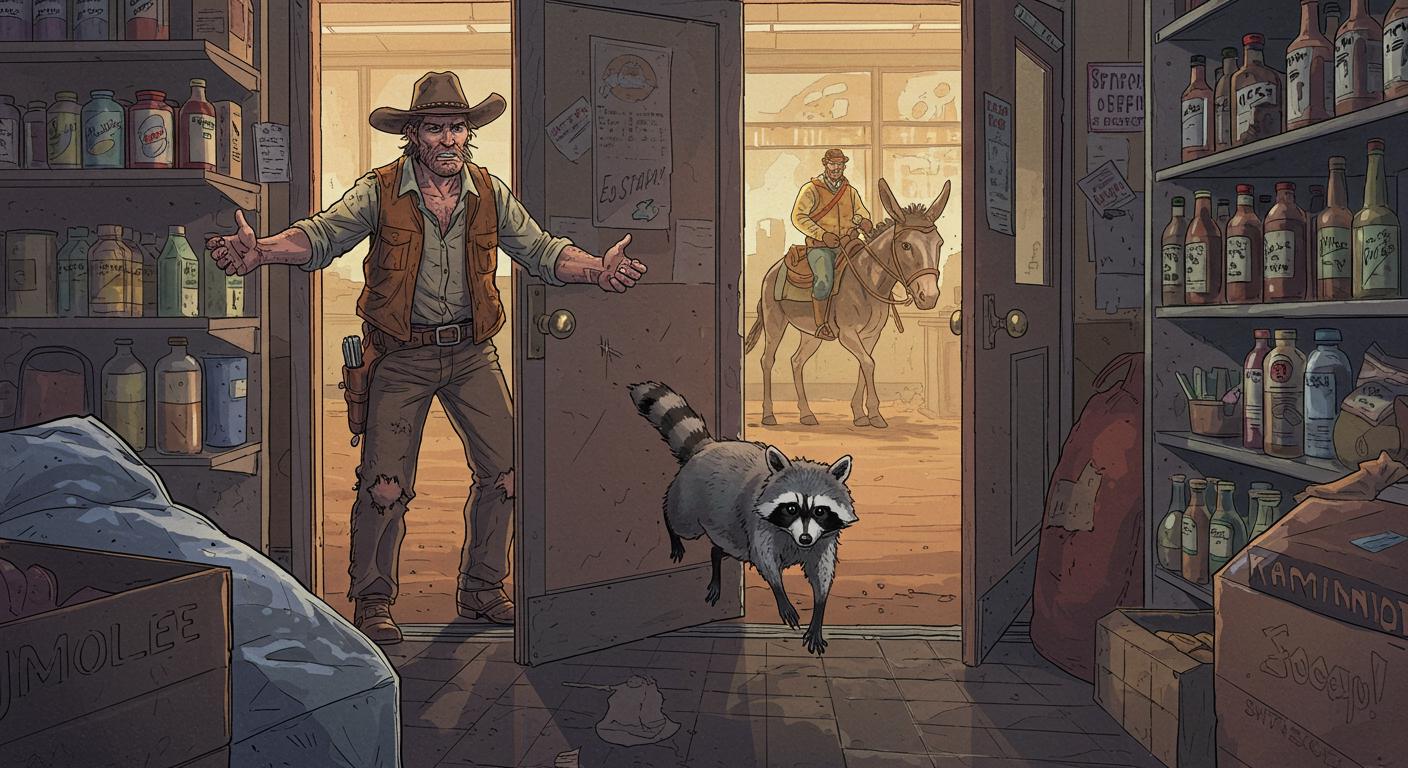
On June 6, according to details provided by the Murray Police Department and chronicled in WHAS11, officers responded to reports that a man had intentionally released a raccoon inside an open business. The animal, likely not briefed on Mason’s intentions, bit a bystander in the ensuing chaos. Mason had already fled the scene by the time officers arrived, but was soon stopped by police for a traffic violation. Described in court records cited by WHAS11, he refused to engage with officers—declining to roll down his windows or exit his vehicle—leading police to physically remove him. Officials informed the outlet that Mason had previously been warned to stay off the business’s property, a warning he seemed determined to disregard.
Mason faces a suite of charges as outlined in the police report: Assault in the 2nd Degree, Criminal Trespassing 3rd Degree, Resisting Arrest, and operating a vehicle without required insurance. He was lodged in the Calloway County Jail. In a detail highlighted by the station, the situation was made more serious by the fact that someone was bitten during the incident, underscoring perhaps how quickly forced animal involvement can spiral into genuine harm.
A History of Mule-Fueled Misadventures
Earlier in the report, it’s mentioned that Mason’s relationship with the law is not a recent development—or even limited to his foray into raccoon-assisted disruption. Back in December 2024, police in Murray responded to a call from a bar dealing with what was described as an “unruly individual” refusing to leave. Upon their arrival, as officials recounted to WHAS11, Mason was found outside the establishment, under the influence, with his chosen mode of transportation tethered nearby: a mule.
Witness testimony revealed to investigators—and documented by the station—that Mason had also been seen whipping the mule an “unnecessary amount” of times at another establishment earlier in the evening, drawing further concern for the animal’s welfare. Despite repeated attempts by police to deescalate and remove Mason from the scene, he actively resisted arrest, an action that resulted in multiple charges including Disorderly Conduct 2nd Degree, Alcohol Intoxication in a Public Place, Criminal Trespassing 3rd Degree, Resisting Arrest, and Cruelty to Animals 2nd Degree.
The outlet goes on to note that Mason’s commitment to unconventional getaways did not end there. Only two days later, he was arrested once more for attempting to flee police—again on muleback, again intoxicated on a public road. Charges of Fleeing or Evading Police 3rd Degree and an additional count of Cruelty to Animals 2nd Degree were added. The mule, authorities confirmed to WHAS11, was safely stabled after Mason’s arrests.
Rural Audacity or Patterned Chaos?
Taking a step back, it’s difficult not to be struck by the almost folkloric quality of these incidents. Each time law enforcement attempts to intervene in what would otherwise be garden-variety trespassing or public disorder, Mason seems to raise the stakes—not through escalation, but through eccentricity. Does the presence of a raccoon or a beleaguered mule add an unintended farce to the legal process, or does it say something deeper about the intersection of rural culture and personal rebellion?
As the outlet documents across both episodes, Mason’s choices repeatedly put both people and animals at unnecessary risk. Yet while the animal escapades may ignite laughter or headshaking, there’s a throughline of real victims—business owners coping with disruption, a person bitten, and a mule roped into repeated disruptions. Is it simply rural resourcefulness gone awry, or are these acts an expression of something more ingrained in the local landscape?
Closing Thoughts on a Local Legend
In towns like Murray, characters like Mason achieve a kind of notoriety that leaves neighbors guessing what combination of animal and circumstance might trigger the next call to police. The narrative, as tracked by WHAS11, never feels overtly malicious—just an ongoing parade of impulsive acts and unauthorized menageries. As we read stories like these, one has to wonder: Is there any endgame when the cast of accomplices ranges from the barnyard to the wild, or is that unpredictability part of the enduring charm (or frustration) of small-town life? How long before the next headline leaves us questioning both human nature and the motives of a raccoon forced to become an unwitting participant in Kentucky’s quirkiest crime circuit?