
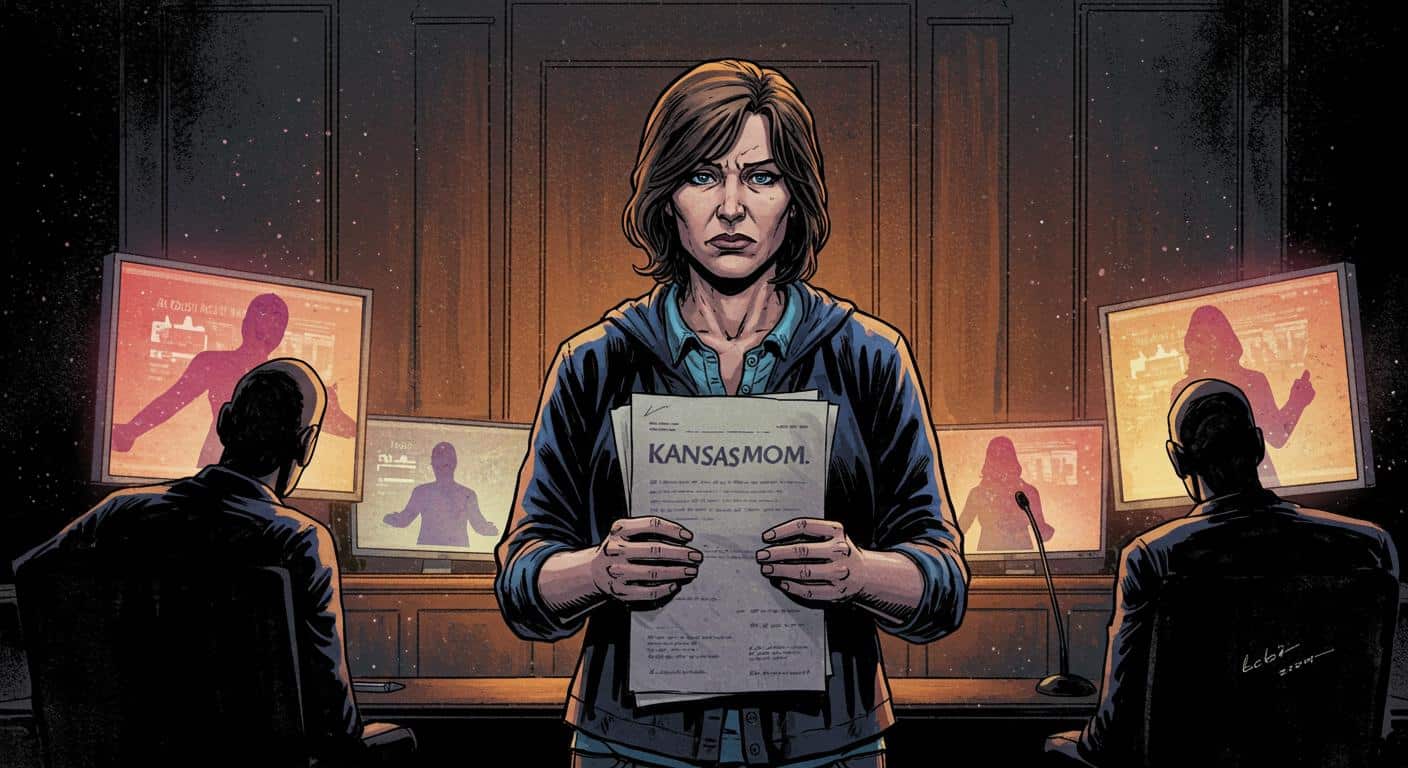
If there’s a contemporary parable for our uneasy relationship with the internet, it might be this: a forgotten laptop, a curious teenager, and an Olathe mother now taking on the adult web industry, one federal lawsuit at a time. The details, as chronicled by the Kansas Reflector, 404 Media, and the Lawrence Journal-World, are both specific and deeply familiar—equal parts personal mishap and policy collision.
From Closet Discovery to Federal Court
In August of last year, according to lawsuits filed in U.S. District Court in Kansas, a 14-year-old Kansan—identified as “Q.R.”—unearthed a classic adolescent discovery: Mom’s old laptop, still operational and tucked away in a closet. As the Journal-World recounts, this now-infamous device became the springboard for a two-month odyssey through the racier corners of the internet. The complaints state that Q.R. accessed four major pornography sites—Chaturbate, Jerkmate, Superporn.com, and Hentai City—not just thirty times, as this headline cheekily suggests, but over 170 times in the span, with some accounts specifying 185. The “thirty clicks” is more a nod to the archetype than the arithmetic.
The lawsuits, detailed by the Kansas Reflector, allege that these sites ran afoul of a newly enacted Kansas law (in effect since July 2024) requiring age verification to ensure minors can’t freely browse adult content without meaningful impediment.
Just Click “I’m 18”… and That’s It?
If you’ve spent at least five minutes online, odds are you’ve encountered the ceremonial “Are you 18?” pop-up—a digital speed bump that requires nothing more than clicking “I agree.” The Journal-World highlights that age verification advocates see this measure as nearly useless, essentially trusting users to self-report against their own curiosity.
Court records reviewed by the Kansas Reflector and Lawrence Journal-World detail how sites like Jerkmate and Chaturbate presented only an “I AGREE” confirmation or similar warnings, with no robust age gate to actually enforce Kansas law. In 404 Media’s reporting, the mother argues that this left her son with “unfettered access”—a term that almost feels quaint in the context of today’s internet.
The National Center on Sexual Exploitation (NCOSE), co-counsel for the plaintiffs, is adamant about shifting responsibility to the websites, as their general counsel was quoted saying by the Journal-World: “The average person … doesn’t understand how extreme and crazy it’s gotten.” One of the goals, as they told the outlet, is to set precedent and potentially spark a “floodgate” of similar litigation nationwide.
Law, Tech, and the Lure of the Forbidden
The legal jousting is hardly confined to Kansas. The Journal-World also reports on Texas’ nearly identical statute, which is currently entangled in a First Amendment challenge at the U.S. Supreme Court. The ultimate resolution there could ripple across dozens of states jumping on the age verification bandwagon.
On the flip side, the Free Speech Coalition—a trade group for the adult entertainment sector—argues in a 2023 report, referenced by the Journal-World, that age verification laws threaten user privacy by requiring the collection and possible transmission of government ID data. Even if these laws prevent companies from retaining IDs, simply sending that information across the web opens up fresh targets for hackers and data breaches. So, the debate circles endlessly: is it riskier to let teens click through, or to subject adults to potential digital exposure in a different sense?
And, as is often the case, the science lags behind the lawsuits. According to the Journal-World, a 2022 survey found that over 70% of teens had viewed porn online—most before age 12—while scholarly conclusions about the true harms or risks remain mixed. If an “I’m 18” button is a sieve, then robust identity verification might be likened to rolling barbed wire across the road—potentially keeping out minors, but also ensnaring many who’d rather their personal information not be caught in the crossfire.
The Absurdity of the Everyday
The specifics in this saga—an old laptop, a couple hundred clicks, and the classic “just say you’re 18” prompt—offer an unintentional (and slightly ironic) snapshot of our digital reality. Can we really expect teens to resist temptation when the virtual candy store is unlocked—or, more accurately, locked with a sign that says “Please don’t eat the candy”? On the other hand, should adult websites be tasked with verifying the age of every clicker from Ardmore to Olathe, with all the data collection headaches that brings?
The Kansas Reflector also notes that Governor Laura Kelly allowed the age verification law to take effect without her signature, warning it could “end up infringing on constitutional rights” while signaling a reluctance to block legislation that passed the state Senate unanimously. Whether out of confidence or caution, lawmakers seem intent on at least appearing proactive—even if the technical solution remains as rickety as an old closet laptop.
Closing Ruminations
At root, the case of the Kansas mom and her son’s thirty (or technically, 185) virtual visits isn’t just about age gates or forgotten laptops. It’s an ongoing negotiation—between law, technology, family, and the persistent thrill of the forbidden. The mother’s lawsuit, bolstered by advocacy groups, shines a neon light on a question most would rather sidestep: In a world where everything is a click away, whose hand should be on the mouse?
Perhaps, in a decade or two, this mix of legal wrangling, tech workarounds, and embarrassed parents will seem quaint—like locking the liquor cabinet and pretending that’s the end of the story. For now, though, in Kansas and beyond, the debate rages on. Are we witnessing the start of a digital age of consent, or simply the next episode of “Whack-a-Mole” for lawyers and lawmakers? Do the adults really have a handle on the internet, or are we all just hoping the next kid who finds an old laptop in a closet won’t click “I AGREE”?